

Are you looking for effective ways to help your kids improve their English vocabulary? Expanding their vocabulary range is an essential element of learning English. Not only does it enhance their communication skills, but it also boosts their confidence and academic performance.
Encouraging your children to develop their varied vocabulary allows them to express themselves more clearly and understand others better. It’s especially important for children learning English as a second language, as it helps them integrate more seamlessly into English-speaking environments. By incorporating fun and effective techniques, you can turn vocabulary learning into an engaging, productive, and enjoyable activity for your kids.
From reading together regularly to integrating new words into daily conversations, these simple yet powerful strategies will make a significant difference. Let’s explore some tips to improve English vocabulary for your children and enjoy the learning process together.

Table of Contents
- The Importance of Expanding English Vocabulary For Kids
- Benefits of Improving English Vocabulary
- Effective Strategies for Teaching English Vocabulary At Home
- Tips for Parents to Support English Vocabulary Expansion
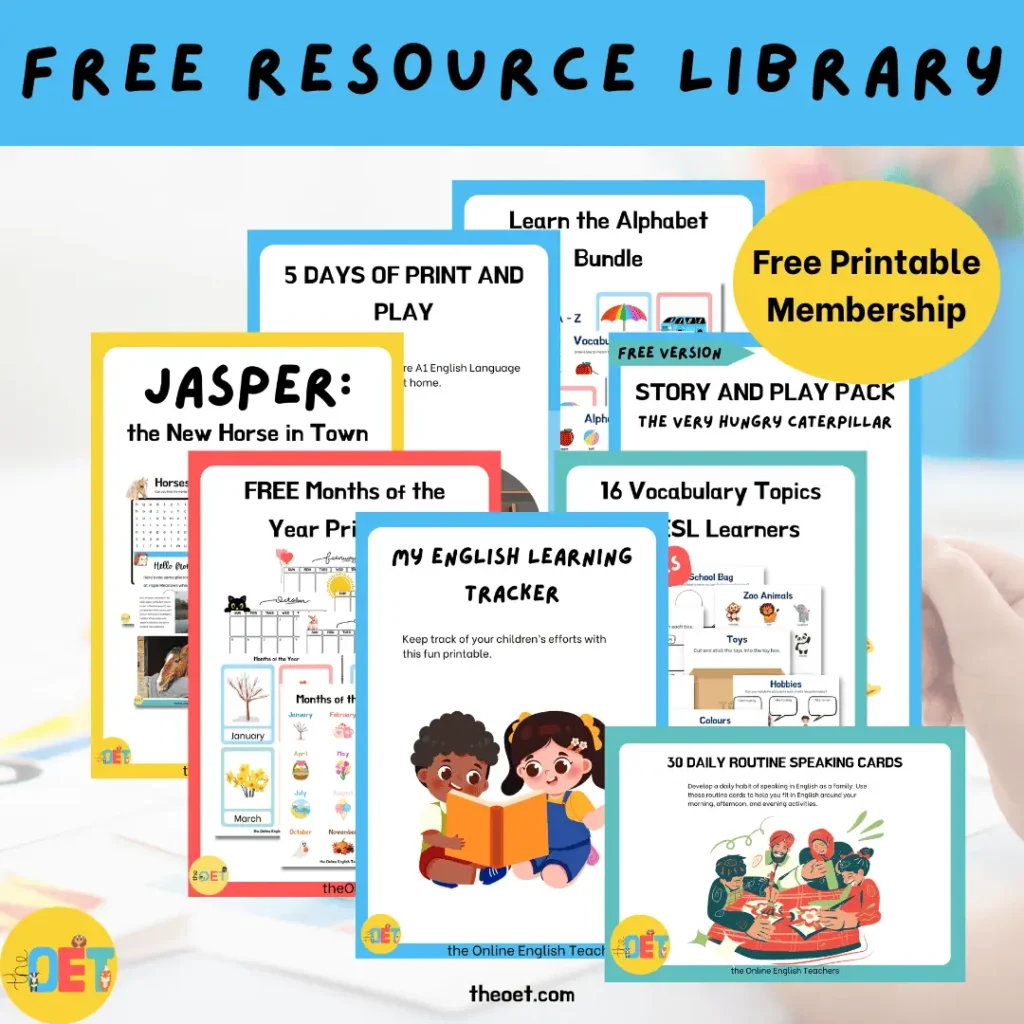
Join the FREE Resource Library
Looking for FREE quality printables, templates, and guides to help you teach your kids ESL at home?
Join theOET’s FREE Membership and gain access to 10s of resources designed by a qualified teacher to help your family learn English at home.
New resources are added every month. Save time, money, and stress with pre-made educational printables and guides.
The Importance of Expanding English Vocabulary for Kids
Expanding your kids’ English vocabulary is crucial for their overall academic success and communication skills. When children have a wide range of words at their disposal, they can express themselves more clearly and confidently. Here’s why it’s essential to focus on improving your kids’ English vocabulary:
Building Strong Foundations for Learning
Building a rich vocabulary from an early age sets a strong foundation for learning. As children encounter new words and concepts, they are better equipped to understand complex ideas and engage meaningfully with their studies.
Enhancing Communication Skills
A varied vocabulary enhances children’s communication skills, enabling them to articulate their thoughts, feelings, and ideas effectively. It also helps them engage in meaningful conversations and express themselves creatively.
Opening Doors to Academic and Career Opportunities
A robust English vocabulary opens doors to various academic and career opportunities for children in the future. It equips them with the language skills needed to excel in school, pursue higher education, and succeed in their chosen professions.
Supporting Multilingual Development
For children learning English as a second language, expanding their vocabulary not only strengthens their English language skills but also enhances their overall language proficiency and cognitive development.

Benefits of Improving English Vocabulary
Expanding your children’s English vocabulary has a multitude of benefits. It not only enhances their language skills but also boosts their overall cognitive development and self-confidence. Here are some key advantages of improving English vocabulary:
Boosts Academic Performance
A strong command of vocabulary is crucial for academic success. It enables children to comprehend complex texts, write cohesive essays, and engage actively in classroom discussions. With an expanded vocabulary, children can excel in various subjects and boost their overall learning outcomes.
Fosters Creativity and Critical Thinking
A diverse vocabulary stimulates creativity and enhances critical thinking skills. When children have built a large vocabulary range, they can think more imaginatively, solve problems creatively, and approach challenges with flexibility and innovation.
Strengthens Reading and Writing Skills
Improving English vocabulary directly impacts children’s reading and writing abilities. A rich vocabulary enhances reading comprehension, enabling children to grasp the nuances of texts and infer meanings from context. Likewise, a varied vocabulary enriches writing by enabling children to convey their ideas more vividly and precisely.

Cultivates Confidence and Self-Expression
A broad vocabulary empowers children to communicate confidently and express themselves with clarity. When children feel equipped with the right words to convey their thoughts and emotions, they develop a sense of self-assurance and assertiveness in their interactions with others.
Facilitates Social Interaction and Empathy
Having a diverse vocabulary enhances children’s social skills by enabling them to communicate effectively with peers, teachers, and family members. It also fosters empathy as children can better understand and relate to the experiences and emotions of others through the nuanced use of language.
Improving your children’s English vocabulary is a powerful investment in their future success and personal growth. By actively engaging in vocabulary-building activities and incorporating new words into their daily interactions, parents can provide valuable support in enhancing their children’s language proficiency and overall development.
Join the FREE Resource Library
Looking for FREE quality printables, templates, and guides to help you teach your kids ESL at home?
Join theOET’s FREE Membership and gain access to 10s of resources designed by a qualified teacher to help your family learn English at home.
New resources are added every month. Save time, money, and stress with pre-made educational printables and guides.
Effective Strategies for Teaching English Vocabulary at Home
Teaching your children to expand their English vocabulary at home can be both enriching and rewarding. Let’s explore some effective strategies to support your kids in improving their vocabulary skills.
Create a Language-Rich Environment
Immerse your children in English by incorporating the language into daily activities and conversations. Providing plenty of opportunities to learn English exposes them regularly leading to improved results. A few ways you can create a language-rich environment are:
- Labelling items around the house in English as well as your native language
- Providing access to reading materials such as comics, bilingual stories, and picture dictionaries
- Creating a simple word wall of themed vocabulary words
- Offering activities in a designated learning space such as matching pictures with the correct words, word searches, or spelling puzzles
Use Engaging Learning Tools and Resources
Make learning enjoyable for your children with the help of online platforms, educational apps, and interactive games. Websites and apps like DuolingoABC and educational apps like ABCmouse can offer a fun and interactive way for kids to learn new words. Plus by incorporating technology, you are supporting your children’s digital literacy skills and hand-eye coordination alongside their English vocabulary.

Encourage Reading and Storytelling
Reading to your children not only helps them develop a love for books but also exposes them to a wide range of vocabulary. Make storytelling a part of your daily routine, whether this involves reading stories aloud to your kids, listening to your children read, or incorporating a range of story-based activities such as role-playing, prop creation, or writing book reviews.
Practice Regular Vocabulary Exercises
Engage your children in vocabulary-building exercises such as word association games, crossword puzzles, or even creating word banks. Make learning new words a fun and interactive experience that your kids can look forward to each day. You can also create or purchase vocabulary printables such as flashcards, word wheels, or tricky word reference sheets to aid your children.
Utilise Multimedia and Visual Aids
Enhance vocabulary learning by incorporating multimedia and visual aids. Use a range of educational videos, flashcards with pictures, and colourful illustrations to reinforce the meanings of new words and concepts. Alternating the resources you use helps pique your children’s interests and motivates them to continue learning.
YouTube is a particularly good resource for exposing your children to new vocabulary words. My own children have benefited from YouTube videos during their language-learning journey. Videos that offer limited vocabulary per session, are around 10-20 minutes long, and are highly repetitive have been the most effective and what I would recommend for you to look for with your children.

Celebrate Progress and Offer Encouragement
Acknowledge and celebrate your children’s milestones in vocabulary development. Positive reinforcement and encouragement can boost their confidence and motivation to continue expanding their English vocabulary. Consider using reward charts and recording what your children have learnt within an educational learning journal.
Tips for Parents to Support English Vocabulary Expansion
Expanding your children’s English vocabulary is not only beneficial but can also be a fun and rewarding experience. By incorporating simple yet effective strategies into your daily routine, you can help your kids develop a rich repertoire of words that will serve them well throughout their lives. Here are some final tips to help you support your children to improve their English vocabulary.
Set Realistic Learning Goals
As a parent, it’s essential to set achievable milestones for your children’s vocabulary growth. By creating a structured plan and tracking their progress, you can motivate them to strive for improvement. Celebrate each milestone reached to encourage continued learning.
For younger children, consider setting just one topic a week e.g. numbers 1-10, family, pets, etc. For older children, expose them to a new vocabulary word each day that relates to their prior knowledge. For example, if they already know the word “big”, you could introduce them to large, huge, gigantic, and colossal.
These goal ideas are realistic and achievable, minimising overwhelm for your children and helping them stay on track to make progress. I personally use this approach for my own children and have noticed a huge improvement when we focus on a specific topic each week.

Engage in Conversations and Discussions
Encourage open dialogues with your children to enhance their language skills. Engaging in conversations about various topics exposes them to new words and helps them understand how to use them in context. Ask them questions, listen actively, and provide feedback to enrich their vocabulary.
These open dialogues do not have to have perfect grammar or pronunciation at this stage. The focus should be consistent, short dialogue every day. For example, greeting your children in the morning in English and asking how they are, offering them 2 snack food options in English, or asking them how their day was at dinner time.
Incorporate Vocabulary Building into Daily Routines
Integrating vocabulary learning into daily activities makes it more accessible and enjoyable for children. Consistent routines help children as they set up learning expectations, enable children to build on their prior knowledge, and support knowledge retention.
When creating a daily routine for your children, make sure that the time you set aside for learning English is achievable. It’s much better to learn English for 10 minutes each day than for 1 hour a week. Think consistency over intensity.
The best way to stay consistent with a new daily routine is to incorporate learning English alongside the activities you already do. Place flashcards on the items your children regularly use at home, print out a scavenger hunt with English words for your children to read on a walk, or give instructions in English during a family board game.
Explore Word Origins and Meanings
Delve into the origins and meanings of words to deepen your children’s understanding of the English language. Exploring etymology and discussing the context in which words are used helps expand their vocabulary in a meaningful way. Encourage them to connect new words to their real-world experiences.
Foster a Love for Language Through Play
Make learning vocabulary a playful and engaging experience for your children. Incorporate language-based games, puzzles, and role-playing activities into their daily routine. This approach not only makes learning fun but also reinforces their understanding and retention of new words.
Helping improve English vocabulary for your children can be a truly rewarding journey. By incorporating daily reading, engaging in storytelling, playing word games, and encouraging the use of new words in conversations, you can create an enriching environment for them.
A wide vocabulary range boosts your children’s confidence, enhances their academic performance, and aids in effective communication. As parents, your support and involvement are beneficial in nurturing their language skills.
Embrace these strategies at home and create a routine that works with your family’s availability and interests to improve English vocabulary for your children.
Join the FREE Resource Library
Looking for FREE quality printables, templates, and guides to help you teach your kids ESL at home?
Join theOET’s FREE Membership and gain access to 10s of resources designed by a qualified teacher to help your family learn English at home.
New resources are added every month. Save time, money, and stress with pre-made educational printables and guides.
Related Posts
- A Step-by-Step Guide to Teaching Vocabulary to Kids for ESL Families
- Top Websites to Level Up Your Child’s English Vocabulary
- 11 Engaging Vocabulary Activities For Kids To Learn English
- How to Improve Your Children’s English Listening Skills
- 28 Of The Best English Apps For Children To Improve Their English Language Skills

