

Do you want to make learning English more exciting for your children? Fairy tale crafts may be just what you need. By combining the use of stories with hands-on activities, you can enhance your children’s language skills while keeping them engaged.
Imagine creating puppets, play mats, and story stones to bring your favourite tales to life. These crafts aren’t just fun; they help improve vocabulary, comprehension, and storytelling abilities.
From shadow puppets to themed colouring books, there are endless ways to spark creativity and learning. Keep on reading to gain 12 fairy tale crafts you could make at home as part of your English learning journey.
Table of Contents
- Benefits of Fairy Tale Crafts for Language Learning
- Essential Materials for Fairy Tale Crafts
- 12 Fairy Tale Craft Ideas for Language Learning
- Craft Ideas for Specific Fairy Tales
- Top Tips When Creating Fairy Tale Crafts
Join the FREE Resource Library
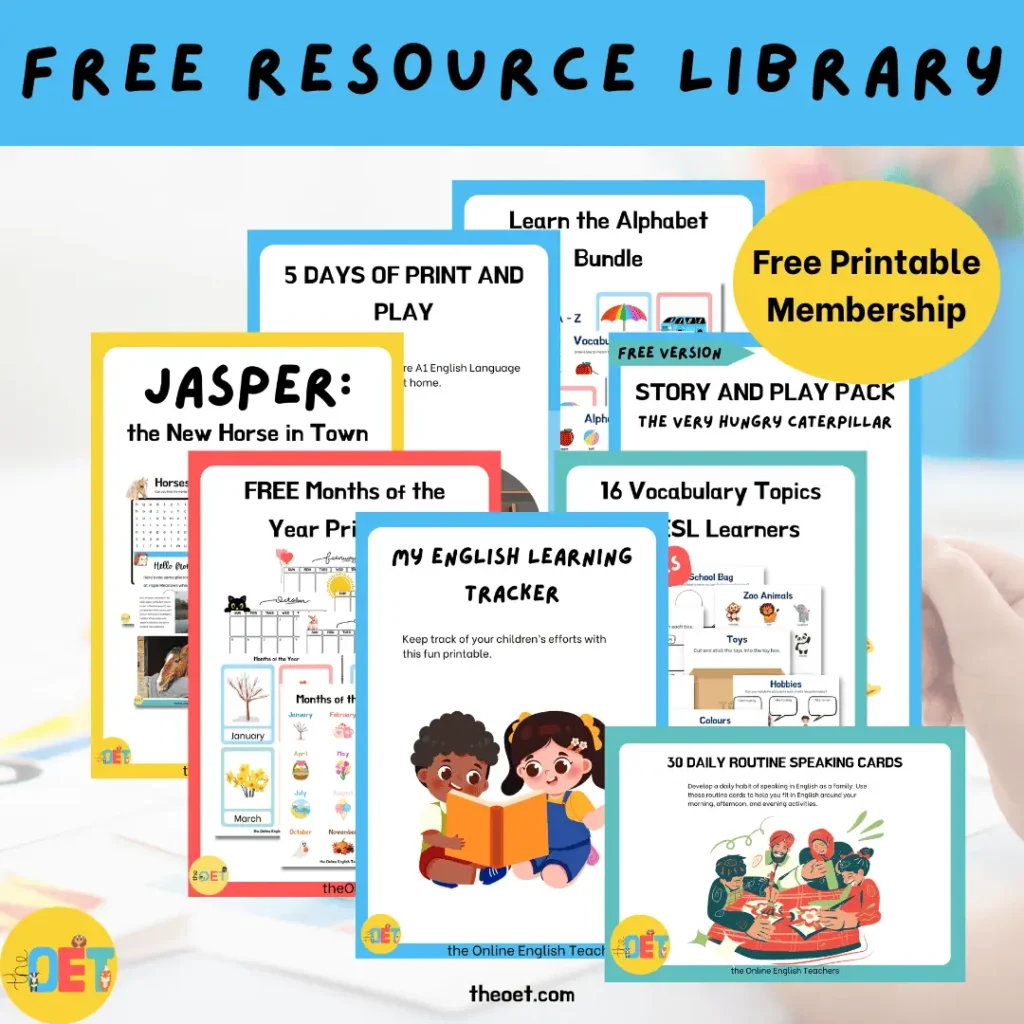
Looking for FREE quality printables, templates, and guides to help you teach your kids ESL at home?
Join theOET’s FREE Membership and gain access to 10s of resources designed by a qualified teacher to help your family learn English at home.
New resources are added every month. Save time, money, and stress with pre-made educational printables and guides.
Benefits of Fairy Tale Crafts for Language Learning
Fairy tale crafts are not just fun activities; they also offer numerous developmental benefits for children learning English. They can help in improving language skills and fostering creativity in a way that is both engaging and educational. Here are some advantages of incorporating fairy tale crafts into your children’s language learning schedule:
Enhancing Language Skills
Fairy tale crafts provide a great opportunity to enhance your child’s language skills. When working on these crafts, children are naturally introduced to new words and storytelling techniques. This can happen with:
- Vocabulary Expansion: Craft activities often require children to describe what they are doing. For instance, when creating a puppet of Cinderella, your children might use words like “prince,” “ball,” and “glass slipper.” This helps in building a rich vocabulary.
- Storytelling Abilities: As your children create objects related to fairy tales, they are encouraged to tell the story behind the craft. This could be through narrating how the steps in making a shadow puppet relate to the story of Peter Pan. This practice helps in structuring stories, understanding plot development, and using descriptive language.
Here’s a list of craft ideas that can improve language skills through fairy tales:
- Puppets
- Playmats
- Story stones
- Theatre box
- Shadow puppets
- Story props
- Themed colouring pages
- Storybook collage
- Masks and costumes
- Recycled scenes such as castles
- Salt dough decorations
- Fairy tale-themed miniature gardens
Encouraging Creativity
Crafting with fairy tales doesn’t just aid in language development; it also sparks creativity. Imagination is an important skill, and fairy tale crafts inspire children to think creatively and express themselves in unique ways. Children can explore:
- Imaginative Thinking: When children are given materials to create their own fairy tale characters or scenes, they are encouraged to think outside the box. Whether it’s making a dragon out of construction paper or designing a fairy garden, these activities allow children to bring their imagination to life.
- Personal Expression: Crafting gives children a platform to express how they perceive and interpret different stories. For example, by making story props from “The Three Little Pigs,” your children can show their understanding of the tale and add their own twist to the characters or setting.
Fairy tale crafts offer a hands-on, multisensory approach that reinforces learning in a fun and engaging manner. Through these creative activities, children can explore different aspects of fairy tales while simultaneously developing their cognitive and social skills.
Essential Materials for Fairy Tale Crafts
Creating fairy tale crafts can be a fun experience, especially for children learning English. The right materials can be the difference between a successful project and an epic fail. It’s important to be prepared in advance to maintain your children’s focus and attention whilst bringing a fairy tale to life through crafts. Here are some essential materials and suggested items that will help with your family crafting projects:
Basic Craft Supplies
Every craft cupboard needs a few basic items to get started. These are the building blocks of most projects and will ensure you can handle a wide variety of fairy tale crafts.
- Paper: Coloured paper, construction paper, and plain white sheets are a must. They can be used for drawing, cutting out shapes, or making backgrounds.
- Glue: Both glue sticks and liquid glue are useful. Glue sticks are great for lightweight paper and cards, while liquid glue can handle heavier materials. A glue gun is also very handy if your children want to make fabric-based puppets and is very versatile to have on hand.
- Scissors: Safety scissors for young children and regular scissors for adults. Make sure they are sharp enough to cut through various materials.
- Markers and Crayons: Colourful markers, crayons, and pencils add life to your crafts. They’re perfect for detailing and adding finishing touches.
- Paints: Non-toxic, washable paints are best for kids. Watercolours, acrylics, and poster paint can help keep crafting interesting and produce different effects.
Specialised Craft Materials
To create more intricate fairy tale crafts, you’ll need some specialised materials. These items help to add that extra bit of magic to your creations.
- Glitter and Sequins: These provide sparkle and shine, making any craft a bit more magical.
- Fabric and Felt: Perfect for creating costumes, puppets, and soft scenes. Felt is easy to cut, doesn’t fray, and is a cheaper material to use.
- Googly Eyes: These bring characters to life, especially puppets and masks.
- Pipe Cleaners: These are useful for making flexible characters, wands, and decorative elements.
- Craft Foam: Great for creating sturdy shapes and props.
- Buttons and Beads: Add detail and texture. They can be used for eyes, decorations, or to create patterns.
Recycled Materials
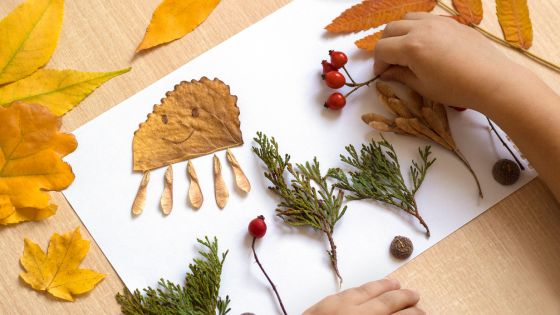
Fairy tale crafts don’t have to be expensive. You can use recycled materials from your home every day to create magical scenes and props.
- Cardboard Boxes: These can be turned into castles, theatres, and other structures.
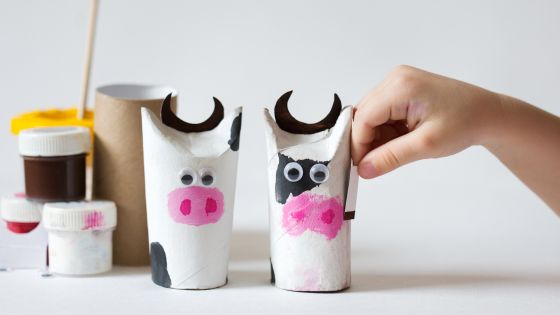
- Toilet Paper Rolls: Transform them into characters, towers, or even storytelling props.
- Plastic Bottles and Caps: Perfect for making miniature gardens or storybook scenes.
- Old Magazines: Use them for collages and cut-out characters.
12 Fairy Tale Craft Ideas for Language Learning
Crafting is a wonderful way to blend creativity with learning, especially when it comes to enhancing English skills. Here are some engaging fairy tale craft ideas that can help your family improve their English through interactive and imaginative play.
Puppets
Creating puppets of fairy tale characters is a brilliant way for children to learn English through interactive storytelling. Use materials like felt, fabric, or paper to craft characters from your favourite fairy tales.
Step-by-Step Guide:
- Choose a character.
- Draw the character’s face on a piece of felt or card.
- Cut it out and stick it onto a stick or a glove
- Add details like eyes, a nose, and a mouth.
Once your puppets are done, you can use them to act out scenes from the fairy tales. This helps children practice speaking, improve their vocabulary, and develop their narrative skills.
Join the FREE Resource Library
Looking for FREE quality printables, templates, and guides to help you teach your kids ESL at home?
Join theOET’s FREE Membership and gain access to 10s of resources designed by a qualified teacher to help your family learn English at home.
New resources are added every month. Save time, money, and stress with pre-made educational printables and guides.
Play Mats
Designing play mats based on fairy tale settings can encourage role-playing and narrative skills. Draw scenes from fairy tales like castles, forests, and villages on large sheets of paper or fabric.
To Make One:
- Pick a setting from a fairy tale.
- Draw the main elements on a large piece of paper or fabric.
- Let your children colour it in and add details like roads, trees, and houses.
- Use it as a mat for your children to play on with play dough, stickers, or puppets they have made themselves.
With play mats, children can use toy figures to act out stories, fostering their ability to create and narrate their own tales.
Story Stones
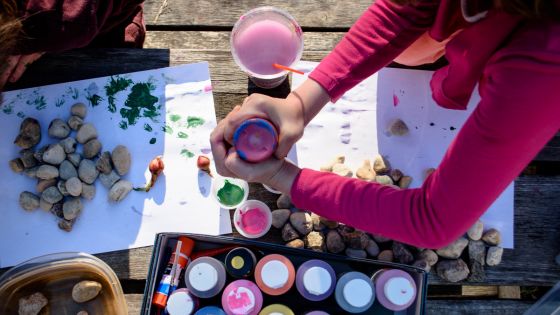
Story stones are stones painted with images or symbols from fairy tales. They are wonderful tools for sparking creativity and dialogue.
How to Create Story Stones:
- Collect smooth stones.
- Paint symbols or characters on each stone.
- Let them dry.
- Add a clear varnish coating to protect each picture.
Take story stones even further by drawing your own ideas to create new stories, enhancing their imagination and storytelling skills.
Theatre Box / Diorama
A theatre box, also known as a diorama, can be a fun way for children to practice speaking and presentation skills. Use a shoebox to create a small stage.
Making a Theatre Box:
- Cut out one side of the shoebox.
- Decorate the inside to look like a stage.
- Create small props and characters.
Children can perform fairy tales or create their own stories, which boosts their confidence in speaking and presenting.
Shadow Puppets
Creating shadow puppets introduces a different medium for storytelling. Use black card and sticks to make characters.
Steps to Make Shadow Puppets:
- Draw the character’s outline on black card.
- Cut it out.
- Attach it to a stick.
Use a light source to cast shadows on a wall and act out scenes, helping children understand the flow of a story while practising their English.
Story Props
Using props to reenact fairy tales makes comprehension and engagement easier for children.
Ideas for Props:
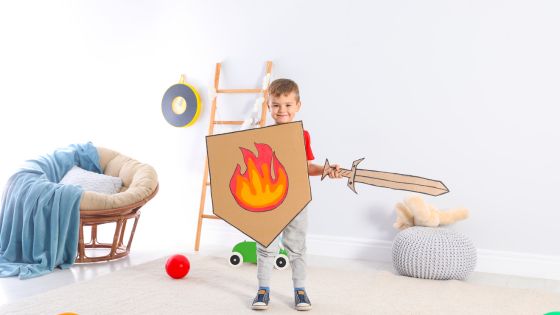
- Crowns and swords for royal stories.
- Magic wands and potions for fantasy tales.
- Animal masks for stories involving animals.
These props make storytelling a much more enjoyable exercise and help encourage children to add a bit more excitement and energy when telling stories.
Themed Colouring
Themed colouring sheets can reinforce vocabulary and story comprehension. Find printable sheets that depict scenes and characters from fairy tales.
How to Use Them:
- Colour the sheets with your child.
- Discuss the scenes as you colour.
- Ask questions about the characters and actions.
This not only makes learning fun but also helps reinforce new vocabulary and story elements. It’s also ideal for younger children, or children who aren’t really into bigger craft projects.
Storybook Collage
Creating collages from fairy tales can help summarise the story and improve recall.
To Create a Collage:
- Gather old magazines, newspapers, or printouts.
- Cut out images.
- Paste them onto a large sheet in the sequence of the story.
This visual activity helps children remember the story better and retell it in their own words.
Masks and Costumes
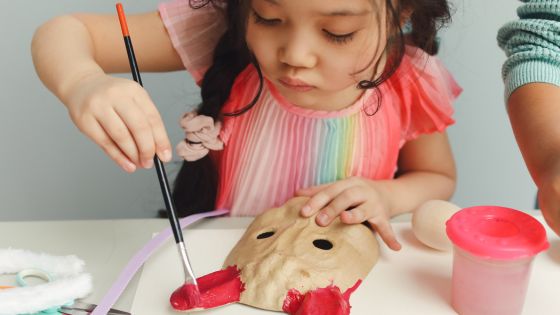
Making masks and costumes encourages children to immerse themselves in the characters and narratives.
Crafting Masks and Costumes:
- Use card or felt to make masks.
- Add strings to hold the masks in place.
- Create simple costumes using old clothes or fabric.
Immersing in role-play enhances understanding of the characters and stories, promoting their English skills through play.
Recycled Scenes
Creating scenes like castles using recycled materials not only encourages storytelling but also teaches environmental awareness.
How to Build Recycled Scenes:
- Collect cardboard boxes, tubes, and bottles.
- Assemble and decorate them to resemble a castle or forest.
- Use these scenes to act out fairy tales.
This way, children learn to appreciate the environment while enjoying storytelling.
Salt Dough Decorations
Making salt dough decorations related to fairy tales offers a tactile and sensory experience.
Salt Dough Recipe:
- Mix 2 cups of flour, 1 cup of salt, and 1 cup of water.
- Shape the dough into characters or objects.
- Bake on a lower heat of 150 degrees for 3 hours or until solid.
- Paint and decorate them ready to play.
This activity allows children to create their own fairy tale elements, improving both their English and creativity.
Fairy Tale-Themed Miniature Gardens
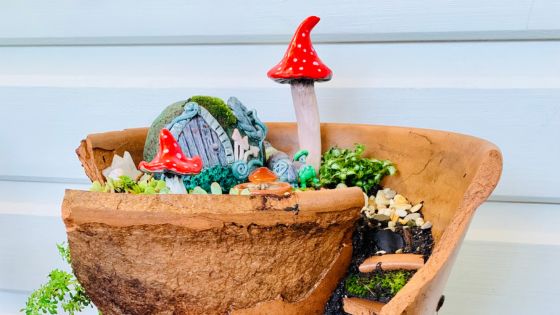
Creating miniature gardens inspired by fairy tales can spark storytelling and imaginative play.
Creating a Miniature Garden:
- Use a shallow container.
- Fill it with soil.
- Add small plants, stones, and fairy tale figurines.
Children can create stories around the garden, enhancing their creative thinking and storytelling.
These fairy tale crafts are a fun way to help your children improve their English skills while engaging in creative activities. Whether you’re making puppets or designing play mats, each project supports language development excitingly and interactively.
Craft Ideas for Specific Fairy Tales
We’ve looked at 12 different fairy tale crafts you can make at home with your children. Here is some additional inspiration with examples of crafts that you can make when reading specific fairy tales together.
1. The Three Little Pigs
- Paper House Models: Create houses using paper and recycled materials. Encourage kids to describe each house type in English, discussing the materials used (straw, sticks, bricks).
- Puppet Play: Make simple puppets of the pigs and the wolf. This could be by painting wooden spoons or making paper cutouts and attaching them to popsicle sticks. Put on a short play to practice speaking and listening skills.
2. Cinderella
- Magic Wand Craft: Use a stick and some sparkly decorations to craft a magic wand. Children can learn magic-related vocabulary and phrases.
- Glass Slipper Diorama: With a small box and art supplies, recreate the ballroom scene. Practise descriptive language by narrating the scene.
3. Jack and the Beanstalk
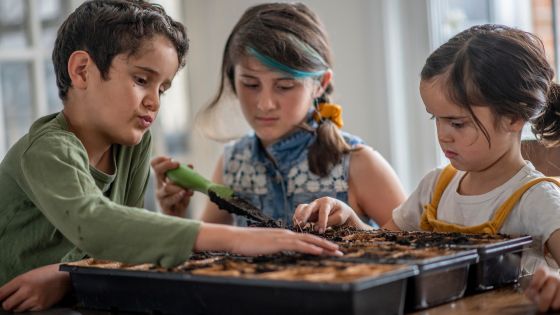
- Bean Planting Activity: Plant beans and chart their growth over time. Use this opportunity to discuss growth stages in English alongside practising writing skills by keeping a growth diary.
- Giant’s Castle Model: Build a castle from blocks or cardboard. Use adjectives to describe the castle’s features and size.
4. Little Red Riding Hood
- Red Cloak Sewing Project: If sewing is an option, make a simple red cloak. Talk about clothing vocabulary and the weather.
- Story Map: Draw a map of Little Red Riding Hood’s journey to her grandmother’s house. Practise using prepositions of place and direction words.
5. Hansel and Gretel
- House Construction: Build a house with candy, gingerbread or cardboard. Discuss food-related words and house components.
- Forest Scene Diorama: Arrange a forest scene to retell the story. This helps with environmental vocabulary and storytelling skills.
6. Beauty and the Beast
- Character Masks: Craft masks of Beauty, the Beast, and other characters. Role-play scenes, focusing on emotions and expressions.
- Enchanted Rose Craft: Use tissue paper for an enchanted rose. Incorporate discussions about enchantments and appearances.

7. Goldilocks and The Three Bears
- Bear Family Portraits: Draw or paint pictures of the bear family. Use words to compare sizes: small, medium, large.
- Oatmeal Cooking Session: Cook porridge together and talk about recipes and flavours in English.
8. Rapunzel
- Yarn Hair Craft: Create long strands of yarn to mimic Rapunzel’s hair. Discuss terms related to appearance and length.
- Tower Building Activity: Construct a simple tower using blocks. Talk about structure, height and stability.
9. The Little Mermaid
- Seashell Jewellery: Make jewellery with seashells and beads. Discuss ocean-themed vocabulary and accessories.
- Underwater Scene Collage: Craft a collage of an underwater world. Use this to talk about sea creatures and colours.
Crafting enhances your child’s learning experience by immersing them in language and creativity. These activities not only bring fairy tales to life but also provide a unique way to expand vocabulary and communication skills.

Top Tips When Creating Fairy Tale Crafts
Creating fairy tale crafts can be a magical way to bond with your children and boost their story-telling skills. But how do you get started?
- Start by choosing a well-loved fairy tale that your little one enjoys. This sets a solid foundation for your craft adventure.
- Make sure you’ve got all your materials ready before you begin – there’s nothing worse than stopping mid-project to search for a pair of scissors!
- Use simple tools like paper, scissors, and coloured pencils to bring characters to life.
- Encourage your children to think about how each part of the story can be shown through their craft. Maybe Snow White’s apple can sit on a popsicle stick chair!
- Ask questions as you create: “What colours should the dragon’s scales be?” or “How should we make a tiny crown for the princess?”
- Don’t worry about the mess – that’s part of the fun. Celebrate the creativity and see how your children’s version of the tale unfolds. It’s not just about the end result but the joy in the crafting process and the stories that emerge along the way.

Fairy tale crafts offer a playful approach to boost your child’s English while enjoying creative activities. Engaging in these projects strengthens language skills, stimulates imagination, and fosters family bonding.
Incorporating fairy tale crafts into your routine makes learning English fun and memorable. Share your favourite craft ideas and experiences with others in my Facebook community for families learning English. Let’s inspire one another to give our children the best language-learning experience possible.
Join the FREE Resource Library
Looking for FREE quality printables, templates, and guides to help you teach your kids ESL at home?
Join theOET’s FREE Membership and gain access to 10s of resources designed by a qualified teacher to help your family learn English at home.
New resources are added every month. Save time, money, and stress with pre-made educational printables and guides.

