
Bedtime is already a great time to incorporate learning ESL. When you add rhythm, repetition, and a simple call-and-response, your children get to hear English again and again, without it feeling like homework. That’s why traditional African folktales work so well as ESL lessons at home. They’re meant to be told out loud, with voices, pauses, and a bit of participation from listeners.
These stories are usually easy to follow, even for beginners. The same phrases are repeated, the characters make clear choices, and the morals are taught in a way a child can remember (be kind, be brave, don’t be greedy). As a result, you can build listening skills, useful vocabulary, and confident speaking in just a few minutes a day.
In this post, you’ll get 12 family-friendly tales grouped by region, so you can travel across Africa one story at a time. Each one comes with a quick 5 to 15-minute activity, target words, simple questions, and tiny tasks that work for mixed ages. You can keep it cosy and low-pressure, while still making real progress.
Traditional African folktales offer a great resource for children learning ESL. They help develop stronger core language skills while exposing children to cultural stories from around the world with important moral lessons.
Disclaimer: This post contains affiliate links. If you choose to make a purchase using these links, I may earn a small commission at no additional cost to you. You can view the full affiliate disclosure here.
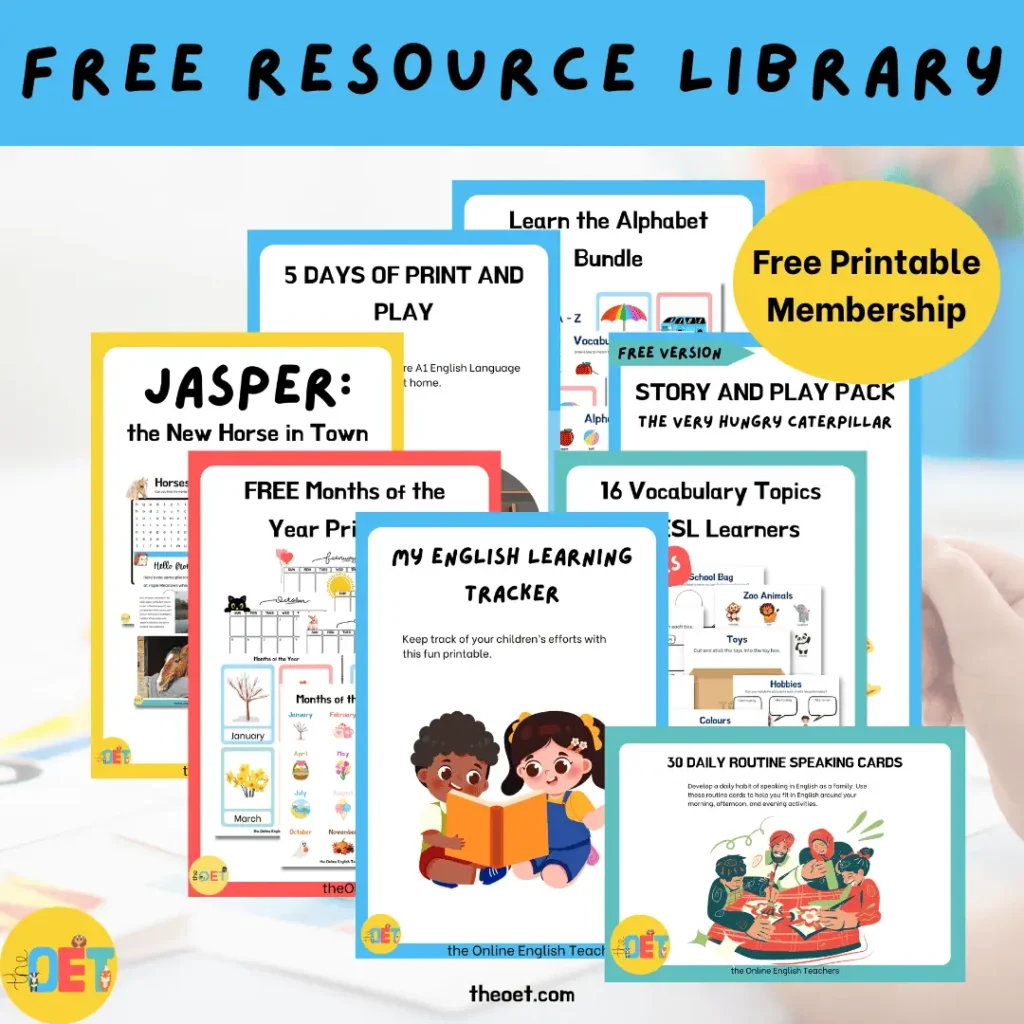
Join the FREE Resource Library
Looking for FREE quality printables, templates, and guides to help you teach your kids ESL at home?
Join theOET’s FREE Membership and gain access to 10s of resources designed by a qualified teacher to help your family learn English at home.
New resources are added every month. Save time, money, and stress with pre-made educational printables and guides.
Why Traditional African Folktales Are Perfect For Young ESL Learners
Traditional African folktales were made to be told out loud, not silently read. That matters for ESL at home, because your children need to hear English patterns, then try them, little by little. These tales often use repeated lines, clear actions, and simple cause-and-effect, so your children can follow the meaning even when they aren’t familiar with every word.
Folktales give you a safe, playful way to practise speaking. You can act out animal voices, copy a short line together, then pause and let your children jump in when they feel ready. Over time, English stops feeling like a test and starts feeling like a fun learning experience for everyone.
How Rhythm and Repetition Help Your Children Speak With Confidence
When a folktale repeats a phrase, your children are provided with a second chance to understand it. Then they get a third, and a fourth. That repetition, though it may seem pointless on the surface, it actually helps your children move from simply listening to understanding and speaking without panic.
Start by choosing one short line to echo. Keep it the same every time, with the same beat. For example, you can add a simple chorus (one line you both say) and use clapping to hold the pace. A steady beat also helps shy speakers, because they know when to talk.
Try these easy ways to build confidence:
- Echo key lines: You say it first, then your children copy you. Keep your voice calm and slow.
- Use a simple chorus: Pick one line that appears often, and make it your family chant.
- Clap the beat: Clap once per word for short lines, or clap on the strong words.
- Pause for one missing word: Say most of the line, then stop and ask your children to fill the gap.
Here are a few simple prompts you can use again and again:
- “Say it with me.“
- “Your turn.“
- “What comes next?“
If your children only say one word at first, that’s ok. One clear word today becomes a full sentence later as their confidence grows.

What Your Children Learn Beyond English
Folktales do more than teach words. They show choices and results in a way children remember. Because the characters are often animals, your children can talk about that behaviour without feeling judged. That makes it easier to connect the moral to everyday life.
You can link story lessons to simple family moments, like sharing snacks, keeping a promise, or playing nicely with a sibling. Many traditional African folktales also warn about rushed trust and unsafe choices. In other words, they help you teach English and values at the same time.
Common morals that transfer well to real life include:
- Sharing (not grabbing, not hiding)
- Keeping promises (doing what you said you would do)
- Teamwork (asking for help, taking turns)
- Thinking before you trust (not following every sweet voice)
- Kindness (helping someone smaller)
- Safe choices (stopping, looking, asking an adult)
To keep the talk simple, reuse the same question stems after each tale:
- “What was the problem?“
- “Was that fair?“
- “What would you do?“
- “How can we do that at home?“
Finish with one tiny action your children can do after reading the story together. When the story connects to real life, it’s easier for your children to remember and retain new information.

12 Traditional African Folktales To Read At Home
When you use traditional African folktales at home, you get stories that naturally support ESL. There are repeated phrases, clear problems, and easy solutions. Your children can predict what happens next, even with new words.
Below, you will find 12 well-loved tales grouped by region. Each one comes as a mini activity you can use straight away, with a short summary, a simple moral, and one quick activity.
Traditional Folktales From West and Central Africa
These stories often feature clever but selfish characters who try to win. Then the story shows the cost of greed, pride, or selfishness. That clear cause-and-effect makes them perfect for prediction practice.
Anansi and the Pot of Wisdom (Ghana, Akan)
In Anansi and the Pot of Wisdom, you meet Anansi the spider, who wants to keep all of the wisdom for himself. So he collects it and hides it in a pot, because he thinks wisdom will make him powerful. Next, he tries to climb a tall tree with the pot to hide it far away. However, the pot gets in his way, and he cannot climb well. Then he falls, the pot breaks, and the wisdom spills out to everyone. As a result, the village can learn and grow together.
- Prediction-friendly pattern: He wants… so he… however… then… as a result…
- Try this (sequencing task): Write these on four slips and ask your children to put them in order: collects wisdom, climbs the tree, falls and pot breaks, wisdom spreads. Then retell using First, Next, Then, Finally.
- Moral: Sharing knowledge helps everyone.

Why the Sky Is Far Away (Nigeria, Yoruba)
In this story, the sky is close to people at first. People can reach it easily, and they take pieces for food. At the start, it seems helpful, however, some people become careless. They take too much, and they waste what they take. So the sky moves away to protect itself, and it becomes far above the earth. The story explains distance as a lesson about respect and limits.
- Prediction-friendly pattern: At first… but then… so…
- Try this (speaking prompt): Pause and ask, “What do you think will happen if they take too much?” Let your children choose between The sky stays close or The sky moves away.
- Moral: Be grateful, don’t waste what you’re given.
Why Tortoise’s Shell Is Cracked (Nigeria, Igbo)
Within this African folktale, Tortoise wants more than his share. He uses tricky words to get extra food, and he pretends it is fair. For a while, the plan works. Yet, as with all tricksters, the truth catches up with him. In many versions, Tortoise falls and his shell breaks, or he gets hurt because of his selfish choices. After that, the cracked shell becomes a sign where you can see what greed can do.
- Prediction-friendly pattern: He tricks… it works… but… then…
- Try this (role-play task): Act out a simple “sharing scene” with snacks (real or pretend). You say, “Let’s share fairly.” Your children can be Tortoise and practise polite English to fix it: “Sorry. Can we share?”
- Moral: Greed breaks trust, and it can hurt you, too.
The Leopard and the Ram (West Africa)
In The Leopard and the Ram, the leopard seems strong and scary. The ram looks smaller, but he stays calm. Often, the ram uses smart thinking, timing, or teamwork in order to escape danger. The story teaches your children that power is not only physical strength, brains and steady choices matter, too. But also, the story shares the importance of communication.
- Prediction-friendly pattern: I need… I think… I will…
- Try this (quick dialogue): You play Leopard: “I am hungry.” Your children play Ram: “Stop. I have an idea.” Add one more line each. Keep it short and repeat it twice.
- Moral: Stay calm, think first, and you can find a safe way out.
Home tip: Keep one “story sentence” for the whole week, such as “However, that plan didn’t work.” Your children will start using it in daily life.

East and the Horn of Africa
Many tales from this region reward patience and careful choices. Your children are exposed to lots of useful language for feelings, waiting, and problem-solving. They also fit well with drawing and labelling, which helps new vocabulary retention.
The Lion’s Whisker (Ethiopia and Eritrea)
In The Lion’s Whisker, someone needs a lion’s whisker for a hard problem, often to heal a relationship or calm anger. At first, the task feels impossible, because lions are dangerous. Still, the character does not rush. They take small steps, get closer over time, and stay patient and brave. In the end, they learn that patience and kindness can change even a difficult situation. The whisker becomes a symbol of steady courage.
- Feelings vocabulary activity: Ask, “How do you feel now?” at three core moments of the story: start, near the lion, after success. Use a small set: scared, calm, brave, proud.
- Moral: Patience and courage solve problems that force can’t.
The Monkey and the Shark (Swahili coast, Kenya and Tanzania)
In this story, the monkey ends up in danger, often because the shark wants to trick him. The monkey listens, thinks fast, and uses words to escape. Many versions include a clever lie, such as claiming his heart is not with him. The shark believes him, and the monkey gets back to safety. Your children see a clear “trap and escape” pattern, which is great for retelling.
- Labelled picture task: Draw a simple scene with a river or sea and a tree. Your children label the monkey, shark, water, tree, and home. Then point and say, “The monkey is in the tree.”
- Moral: Quick thinking and calm speech can keep you safe.

Hare and Hyena (East Africa)
In Hare and Hyena, Hare is small but smart. Hyena is bigger and often tries to bully or grab more than his fair share. However, Hare always has a clever plan up his sleeve. Hyena rushes in without thinking, and that choice causes trouble. The ending usually makes children laugh, yet the message remains important: slow down and think.
- Prediction-friendly pattern: Hyena wants… Hare plans… Hyena rushes… Hyena loses.
- Try this (mini speaking game): Say two options and let your children choose: “Does Hyena think or rush?” Repeat it each time Hyena appears.
- Moral: Don’t rush. Think before you act.
Why the Giraffe Has a Long Neck (East Africa)
In Why the Giraffe Has a Long Neck, the giraffe changes over time because of a problem, often reaching food, avoiding danger, or learning a lesson. The story explains an animal’s features as a result of actions and needs. This is perfect for simple cause-and-effect sentences. Your children can practise “because” without pressure with this fun and gentle story.
- Labelled picture task (second option): Draw a giraffe with a long neck and label: neck, head, legs, tree, leaves.
- Moral: Your choices and habits shape what happens next.

Southern and North Africa
These tales are gentle ways to talk about safety, strangers, and trust. You can keep it clear, especially for younger children, without making it scary. Focus on simple rules your children can repeat, like “Stop, think, ask an adult.”
The Jackal and the Lion (Khoikhoi and San, Southern Africa)
In this African folktale, Lion has strength, and Jackal uses tricks. Jackal often uses flattering words or clever excuses to escape a tight spot. Sometimes he causes trouble too, because he wants an easy win. Your children can spot the warning signs of rushed choices and poor listening. That makes it a strong story for practising safe language.
- Problem-solution foldable task: Fold paper in half. On the left write Problem, on the right write Solution. Your children draw Lion’s problem (tricked or angry) and Jackal’s solution (a plan to escape). Then retell using: “The problem is… The solution is…”
- Moral: Think carefully when someone uses tricky words.
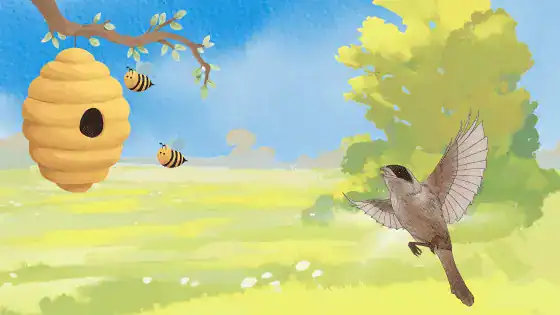
The Honeyguide’s Revenge (San, Southern Africa)
In The Honeyguide’s Revenge, a small bird helps a person find honey. The person takes the honey, but does not share, even though the bird guided them. After that, the bird decides to teach a lesson, often by leading the person into trouble or towards a dangerous animal. The message is clear and gentle, don’t use helpers and then ignore them. Kindness keeps you safe, because friends warn you when something is wrong.
- Safety language: Practise one family rule: “We share, and we say thank you.”
- Moral: Be fair to helpers, or you lose their help.
The Girl Who Married a Lion (Bantu, Southern Africa)
This story focuses on a girl facing a risky situation, often because something is not what it seems. The story warns about judging too quickly and the importance of taking the time to help others and not judge by how something first appears. Keep the discussion calm, practical and relatable to real-life situations.
- Gentle safety talk: Talk about instances where you might have misjudged someone and what to do instead.
- Moral: Don’t judge others just by their appearance.
The Gazelle with the Golden Horns (Morocco, Amazigh/Berber)
In The Gazelle with the Golden Horns, the gazelle’s special horns bring attention, and attention brings risk. Some characters want the horns because they are rare and valuable. The gazelle must rely on good choices, kindness, or clever escapes to stay safe. The story is a useful way to talk about protecting what is special, including your own body and your own space, without heavy language.
- Four-picture retell task: Your children draw four small boxes and sketches: 1) Gazelle is happy, 2) Someone wants the horns, 3) Gazelle escapes or gets help, 4) Gazelle is safe. Then they retell using First, Next, Then, Finally.
- Moral: Protect what matters, and choose safe paths.

A Quick Checklist Before Reading Each Tale
Before you start, take one minute to set the story up well. These small habits keep your ESL time clear, and they also help you share the tale with respect.
- Name the place clearly: Say the country (and group if you know it), for example, “This story comes from Ghana (Akan).”
- Use respectful language: Avoid silly accents, mocking voices, or “primitive” type words. Keep your character voices playful, not pointed at any culture.
- Keep the lesson goal simple: Pick one focus, like First, Next, Then, Finally or three target words. Too many goals can make the story feel like a test.
- Check tricky words first: Look for 3 to 5 words your children may trip on (for example, whisker, shell, greedy). Say them once before the story.
- Invite gentle call-and-response: Choose one repeat line, such as “Are you ready?” and encourage your children to answer. Keep it short so they can succeed.
- Handle scary parts softly: If a scene feels tense, slow down and use safety language like “Stop, think, ask for help.” You can skip details without breaking the story.
- Ask one question at the end: Choose one easy question, for example, “What was the problem?” or “Was that fair?” Then let your children answer in one sentence.
When you follow this checklist, you teach English with confidence, and you also show your children how to treat traditional stories with care.
Join the FREE Resource Library
Looking for FREE quality printables, templates, and guides to help you teach your kids ESL at home?
Join theOET’s FREE Membership and gain access to 10s of resources designed by a qualified teacher to help your family learn English at home.
New resources are added every month. Save time, money, and stress with pre-made educational printables and guides.
Traditional African folktales give you a simple way to grow your children’s English without battles, because the rhythm invites listening, the repetition invites speaking, and the morals lead to real-life lessons. At the same time, you build family connection, because you share laughs, practise turn-taking, and end up with a few lines you both remember.
Next, pick one West African trickster tale or one gentle origin story, set aside 10-minutes this week, and reuse one activity (story map, four-picture retell, or a two-line role-play). Remember, small consistent efforts go a long way to helping your children progress with their English.
Related Posts
- 12 Traditional Folktales from Around the World for ESL Learners
- Using Folktales For Effective Storytime The Whole Family Can Enjoy
- Fable Creative Writing Exercises for Fun and Effective ESL Learning at Home
- Top 11 Fable Stories for Kids to Build English Language Skills
- How to Use Bedtime Stories to Teach English at Home
Hi, I’m Catherine
I help children learn English at home through stories and play with affordable and accessible resources. With over 10 years of experience educating children and over 5000 online ESL classes, I’ve learnt what methods work to keep children engaged and motivated to learn.
I look forward to helping your children develop their English skills!


