

You want your children to speak English with confidence, but home life is busy, and you may not feel like a teacher. The good news is that you do not need perfect English or fancy materials to help them grow. You just need a bit of imagination and some simple role play ideas for teaching English at home.
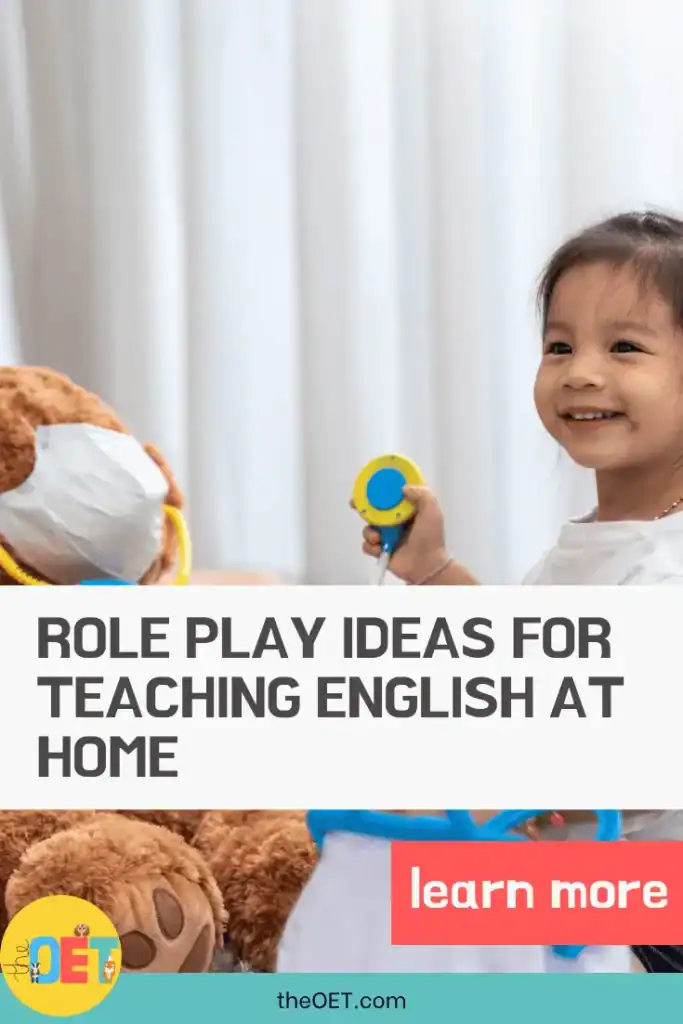
Role play means pretending to be someone else in a simple story. You and your children might play shop, visit a doctor, or fly on a plane in your living room. In these games, your children use real English phrases in a safe, playful way.
Role play helps your children practise real-life English, build confidence, and feel less afraid of speaking. I’ve tried these activities myself with my own children. We even made a café with real menus that they chose to create, and went on a teddy bear safari around the house. Role-play provided a fun, low-pressure way to learn a second language and have fun together.
In this guide, you will find clear, low-prep role-play ideas that you can start today. The whole family can join, and you do not need to be fluent or trained. Your care, attention, and willingness to play are what matter most.
Why Role Play Works So Well for Learning English at Home
Role play looks like simple play, but it gives your children powerful language practice in a very natural way.
In everyday life, you would speak to shop staff, teachers, doctors, friends, family, and neighbours. Through role-play, your children can experience the same language practice, but in a safe and friendly environment from the comfort of their home. It minimises the pressure of “getting it right” without compromising on using appropriate vocabulary, grammar, and full sentences.
Here are a few ways that role-play at home can help your children’s language skills:
Role play turns shy children into confident English speakers
Many children feel nervous when an adult says, “Speak English.” They worry about mistakes or about sounding silly. In role play, the focus shifts from “speak correctly” to “act out the story”.
If your children are superheroes, doctors, or shopkeepers, they can hide a little behind those characters. The costumes or props become a kind of shield, so speaking feels less scary.
You might see a quiet child suddenly call out, “Next customer, please!” or “Sure, I can help you with that” just because they are in character. They are not thinking, “I must speak English perfectly.” They are thinking, “I am the doctor, who can I help?”
Role play also gives your children a safe place to make mistakes. If one of them says, “He have pain” instead of “He has pain”, you can keep the game going and model the correct phrase. Your children hear the correction, and they can try again in their own time, whilst increasing their confidence. No red pen, no test, just a fun scene.
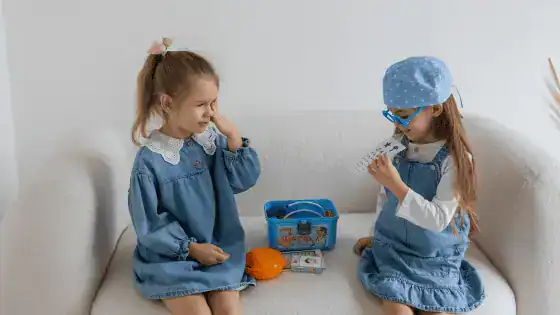
Role play helps children remember new English words and phrases
When your children use new English words in a real situation, even a pretend one, their brains connect the sound, the action, and the feeling, linking them altogether.
Think of a pretend shop. One child says, “Can I have some milk?” while holding a carton. They hear you reply, “Here you are.” They pay with coins, say “Thank you,” and walk away with the milk. That small scene creates a strong memory.
In role play, your children repeat useful phrases many times.
- “What would you like?”
- “How much is it?”
- “My arm hurts.”
- “Where are you going?”
This kind of repetition feels natural, not like textbooks. Your children are focused on the scene they are creating with you, but their brains are building strong links to the language. Over time, those phrases move into long-term memory and are easier for your children to refer to when needed.
Role play makes real-life English situations feel familiar
For many ESL children, real-life English situations feel stressful. Meeting a teacher for the first time, talking to a doctor, or paying in a shop can feel like a big test with lots of pressure to get everything right.
If you copy these situations at home in a playful way, they become familiar and less intense. Your children know the basic steps and the key phrases before they experience them for real.
You might:
- Practise greetings and small talk before a new school.
- Play doctor and patient before a real appointment.
- Act out ordering food before going to a café.
Your children then arrive in real life and think, “Oh, we know this game.” They have already tried, “Hello, how are you?” or “Can I have a sandwich, please?” in your living room. This is especially helpful if you live in an English-speaking country and your children need to use English outside every day.
Role play is flexible and works for different ages and levels
One of the best parts is how easy it is to adapt role play for your children.
For toddlers and very young children, you can focus on single words and simple phrases.
- “Milk, please.”
- “My tummy.”
- “Big train.”
Use lots of gestures and pictures, and keep the story short.
For primary school children, you can use full sentences and begin to include descriptions.
- “I would like an apple juice, please.”
- “What time does the bus leave?”
- “I have a headache.”
For older children or early teens, you can add more detail and polite language.
- “I would like to return this, it is the wrong size.”
- “Could you tell me how to get to the station?”
- “I have had a sore throat for two days.”
You can adjust the level by:
- Using picture cards for younger learners.
- Adding new phrases or questions for older children.
- Letting stronger learners play more complex roles, such as manager or doctor.
You can keep the same role-play ideas for years, just changing the language and the level as your children grow.

How to Set Up Simple Role Plays for English Learning at Home
You do not need a theatre or special props to start. A few minutes of preparation is plenty, so it’s a great activity for even the busiest of families.
Here is a simple plan you can use for any role-play idea in this post.
Choose real-life situations your children already know
Start with scenes from your children’s everyday life. If the situation is familiar, your children will relax more and can then focus their energy on the English.
Good places and situations include:
- Kitchen or dining table (meals, café, restaurant)
- Living room (doctor’s surgery, travel, school meeting)
- Bedroom (tidying toys, bedtime routine)
- Supermarket or market (shopping)
- Playground or park (friends meeting, lost toy)
- Bus or train (tickets, directions)
Think about what your children often do or worry about. If they are nervous about school, play “teacher and students”. If they love going on holiday, play “airport travel”.
Pick a few useful English phrases for each role play
Before you start, choose 5 to 10 key phrases for the scene. You can use a mix of complete sentences and short phrases they can refer to.
For example, for a shop you might choose:
- “Can I have…?”
- “How much is it?”
- “It is three pounds.”
- “Anything else?”
- “Here you are.”
- “Thank you.”
Write them on a piece of paper or sticky notes to turn them into flashcards. You can keep the notes nearby or stick them on the table. You can also draw a small picture next to each phrase for younger children.
Focus on a small set of phrases at a time. It is much better for your children to use a few phrases many times than to hear twenty phrases once. It minimises overwhelm and increases the number of times they’ll practice the same sentences, supporting their confidence and growth.
Use simple props and costumes from around your home
Props help children stay inside the story and in English for longer. They do not need to be perfect or completely accurate.
Be as creative as you like and encourage your children to take the lead. Here are some ideas of things you can use:
- Old packets, tins, and bottles for a shop or café.
- Toy food, toy money, or homemade paper money.
- A shoebox or a small table as a shop counter.
- A blanket as a cape or coat.
- Old clothes as costumes for doctors, waiters, or travellers.
- Hand-drawn signs on scrap paper, such as “SHOP”, “CAFÉ”, “HOSPITAL”.
The point is not to create a Pinterest-style, picture-perfect scene. The point is to give your children something to touch and hold, so the language connects to real action.
When I was teaching live classes, I would incorporate a physical prop as much as possible. It helps children gain context and meaning behind new vocabulary words. Otherwise, when taught alone, there is little support for children to interpret and understand a new word.

Keep the English role play short, fun, and repeatable
Children learn best when they are interested and relaxed. Short, playful sessions work very well.
Aim for:
- 5 to 10 minutes for younger children.
- Up to 15 or 20 minutes for older ones, if they want more.
Try to stop while your children are still having fun. That way, they will be happy to play again another day.
Repeat the same scene on different days, but change small details. In a shop role play, you can:
- Sell different items.
- Change the prices.
- Add a problem, such as “Sorry, no apples today.”
- Don’t be afraid to make it silly e.g. “I want a purple banana, please”.
The scene is familiar, so your children feel safe, but the small changes keep it fresh and give more practice.
Support your children in English without stopping the game
Your job is to keep the story moving forward and gently support the language.
You can:
- Model phrases: “What would you like?” then wait for your children to answer.
- Repeat and expand: One child says, “Juice”. You say, “You would like juice, please?”
- Offer sentence starters: “Can I have…”, and your children add “a sandwich, please?”
- Use gestures and pointing first, then your home language if needed.
Try not to stop the game to give long grammar talks. It is enough to say the correct phrase and move on. Praise effort, not just accuracy. A little bit of positive praising can go a long way to support your children’s confidence, e.g. “that was a great sentence”, “well done for using our new word today”.
Practical Role Play Ideas for Teaching English at Home
Now it is time for some ready-to-use role play ideas for teaching English at home that you can start this week. Pick one that fits your children’s interests and your family routine.
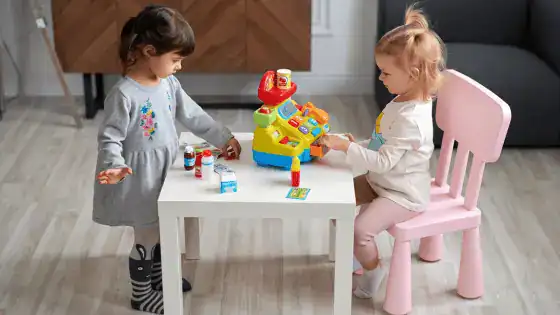
Create a pretend shop to practise asking and buying in English
Turn a table, sofa, or blanket on the floor into a small shop or market.
Scene: A small food shop, toy shop, or bookshop at home.
Roles: Shopkeeper, customers, helper to pack bags or handle money.
Use real packets, toy food, or pictures you draw and cut out. Put prices on sticky notes or scraps of paper.
Useful language:
- “Hello, can I help you?”
- “Can I have some bread, please?”
- “How much is it?”
- “It is two pounds.”
- “Anything else?”
- “Here you are.”
- “Thank you, goodbye.”
You can let your children be the shopkeepers first, since this role repeats a lot of phrases. Then swap roles so they hear more language, and get to practise customer phrases too.
For older or more advanced children, add:
- Returns: “I would like to return this, it is broken.”
- Complaints: “This is the wrong size.”
- Discounts: “Can I have a discount?” or “It is on sale today.”
You can even create a “sale day” or a “busy market day” with more family members as customers.
Act out a restaurant or café to practise polite English
Use your dining table to create a cosy café or restaurant.
Scene: Family café, breakfast bar, or fancy restaurant.
Roles: Waiter or waitress, chef, customers.
Use paper plates, cups, and napkins. Write simple menus on paper or card.
Useful language:
- “Hello, welcome.”
- “What would you like?”
- “I would like a sandwich.”
- “Anything to drink?”
- “Here is your food.”
- “The bill, please.”
- “Thank you, have a nice day.”
Children love designing menus. They can draw pictures of food, write prices, and give funny names to dishes. This brings in reading and writing without it feeling like a chore.
You can create a weekly family routine, such as “English café night”. Once a week, everyone orders in English at dinner. You can keep it simple, for example:
- “I would like pasta, please.”
- “I would like water, please.”
Over time, you add more details and polite phrases.
Run a home doctor’s surgery to learn health and feelings words
This role play works well for children who worry about doctor visits. It lets them explore health words in a calm, playful way.
Scene: A small clinic or GP surgery at home.
Roles: Doctor, nurse, patients, receptionist.
Use a toy medical kit if you have one, or make simple tools:
- Paper thermometer.
- Bandages from cloth or tissue.
- Clipboard from cardboard and paper.
Useful language:
- Body parts: head, arm, leg, tummy, back, throat.
- Simple problems: cold, cough, fever, cut, headache, stomach ache.
- Questions: “What is the matter?”, “Where does it hurt?”, “Does it hurt here?”
- Answers: “I have a headache.”, “My arm hurts.”, “I feel sick.”
- Advice: “You should rest.”, “Drink some water.”, “Take this medicine.”
You can start with very simple scenes, such as a sore knee from the park. For older children, add more detail, such as time words:
- “I have had a cough for three days.”
- “I feel worse in the morning.”
Talk gently about real visits, and remind your children, “You already know this game, you can use these words with the real doctor too.”
Incorporating props such as bandages can also level up the amount of fun your children have whilst learning. When we’ve played doctors, my children’s favourite part was wrapping up different body parts, e.g. arms, legs, even my head, as part of the role-play.
If you’re children love animals, make slight changes to this role-play setup to create a vet practice. Use stuffed toys as the patients and think of creative stories to practice English.
Set up a family travel role play with tickets and passports
Use chairs in a row to become a bus, train, or plane. Use backpacks or bags as luggage.
Scene: Trip to another town or country.
Roles: Ticket seller, passengers, security staff, flight attendant or driver.
Make simple tickets and passports on paper. Draw a map of where you are going.
Useful language:
- “Where are you going?”
- “We are going to London.”
- “Can I have two tickets, please?”
- “Here is my ticket.”
- “What time does it leave?”
- “Please put your bag here.”
- “Enjoy your trip.”
You can link this role play to real-life travel. Show simple videos of airports or train stations, or look at a map together. Ask, “Where would you like to go?” and build the story around that place.
For more advanced learners, add problems:
- “The train is late.”
- “I have lost my ticket.”
- “I am in the wrong seat.”
This gives your children phrases they can use in real travel situations later.

Use everyday home routines as quick daily English role plays
You do not always need a full setup. You can turn small parts of your day into short role plays that keep English alive.
Some ideas:
- Teacher and students during homework: Your children are the teachers who check your “homework” in English.
- News reporters at breakfast: Your children report the “news” of the day. “Today, we are going to school. The weather is sunny.”
- Chefs and helpers while cooking: Use English to talk about ingredients and steps. “Cut the carrots.”, “Stir the soup.”
- Shoppers and cashiers when tidying toys: Toys go “on sale”. Your children “buy” them back before putting them away.
These tiny scenes, even just two or three minutes long, build a habit. English becomes part of normal family life, not a separate lesson. Your children get many chances to speak without pressure.
Tips to Keep Role Play English Learning Positive for the Whole Family
To keep using these role-play ideas for teaching English at home over time, you need a friendly routine and a kind atmosphere. Here are some ways to protect that.
Make role play a relaxed part of your weekly routine
Set regular, relaxed moments for role play. For example:
- Friday evening shop.
- Sunday café breakfast.
- A 10-minute role play after school on two days.
Short, regular sessions beat long, stressful ones. When your children know, “On Friday we play shops in English,” they feel ready and may even look forward to it.
Keep the mood gentle. If someone is tired or upset, it is fine to skip a session. You want role play to feel like a treat, not a requirement.
Let your children lead and change the story
Children speak more when they feel they can take an active role and make decisions. Try to follow their ideas, even if the story becomes wild or silly.
If one of your children says, “The doctor is also a dragon,” you can reply, “Oh, a dragon doctor. What is the matter today?” and keep the English going inside that story.
Say yes to ideas, then add small bits of new language. If your children want a superhero shop, you can still use “How much is it?” and “Can I have…?” with superhero items.
When children feel free to change the story, they take more risks with language and enjoy speaking more.

Focus on communication, not perfect grammar
Your main goal is to help your children share ideas in English and feel brave enough to speak. Perfect grammar can come later.
Try to correct only a few important mistakes, and do it gently. A good method is to repeat the sentence correctly without a long explanation.
Child: “He have a fever.”
You: “Yes, he has a fever. He has a high temperature.”
The game continues, and your children hear the correct form. Save detailed grammar talks for another time.
Keep praising effort, long answers, and creative ideas. Smiles, laughter, and kind words make your children want to keep trying.
Use simple records to see your children’s English progress
Seeing progress keeps everyone motivated. You do not need tests. Just small records are enough.
You can:
- Take short videos of your role plays every few weeks.
- Keep a notebook of new words or favourite phrases.
- Use a sticker chart each time you do a role play in English.
From time to time, watch an older video together. Notice how your children use more words now or speak with more confidence. This gives real proof that these small games are working.
Role play ideas for teaching English at home are simple, fun, and powerful for your whole family. With a few props and a bit of imagination, your children can practise useful phrases, build confidence, and prepare for real-life English situations, all in a safe and playful space.
You have seen how role play helps shy children speak more, how it makes phrases stick in memory, and how it turns everyday scenes like shops, cafés, doctors, and travel into friendly language practice. You can adjust every idea for toddlers, primary children, or early teens, and you never need perfect English, only a willing heart and some playful time together.
Choose just one easy role play, perhaps a pretend shop or a small café at dinner, and try it this week. Keep it short, smile a lot, and enjoy the mistakes as part of the game. Over time, these small, relaxed steps will add up

Explore the FREE Resource Library
Fun, educational activities for children aged 3–8 completely free!
Discover a growing collection of printable games, vocabulary activities, crafts, and themed resources designed to help children build language and literacy skills through stories, play, and creativity.
Spend less time searching for activities and more time learning, playing, and creating together.
Related Posts
- Why Storytelling Builds Confidence in Kids Learning English
- Using Folktales For Effective Storytime The Whole Family Can Enjoy
- How to Teach English to Kids in a Fun Way
- 20 Fun and Educational Word Games for Kids Learning English
- 15 Interactive Storytelling Games for Children Learning the English Language

