
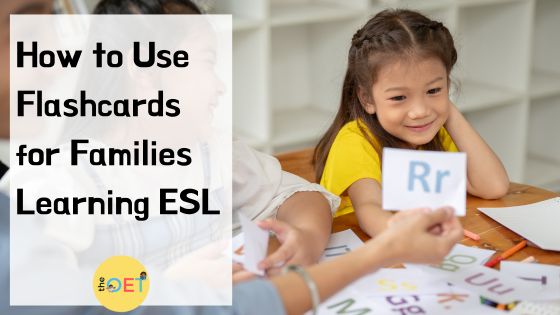
Flashcards are a simple yet powerful learning tool that can make a big difference for ESL learners. They’re simple, effective, and versatile, making them suitable for learners of all ages. By turning studying into a fun and interactive activity, they help children remember words, phrases, and concepts more easily.
For families, flashcards create opportunities to practise together. Using flashcards turns studying into a hands-on activity rather than just staring at a textbook. This makes it easier for children to stay engaged while also improving memory in a fun and interactive way. Whether you’re teaching vocabulary, grammar, or pronunciation, flashcards bring variety and engagement into your routine.
In this post, you’ll discover practical tips on how to use flashcards effectively and being able to adapt them to fit your family’s needs.

Table of Contents
- What are Flashcards?
- Benefits of Using Flashcards for Learning
- How to Create Effective Flashcards
- Using Flashcards for ESL Learning
- Activity Ideas for Families
- Tips for Consistent Use of Flashcards

Explore the FREE Resource Library
Fun, educational activities for children aged 3–8 completely free!
Discover a growing collection of printable games, vocabulary activities, crafts, and themed resources designed to help children build language and literacy skills through stories, play, and creativity.
Spend less time searching for activities and more time learning, playing, and creating together.
What are Flashcards?
Flashcards are small cards that typically feature a question, word, or image. Though designs can vary, typically one side features a specific element and the corresponding answer or explanation on the other.
For example, one side might show an English word like “apple” with an illustration, while the reverse side has the word’s spelling and pronunciation. In the case of grammar, the front could ask, “What’s the past tense of ‘go’?” with the answer, “went,” on the back.
They’re easy to make yourself using index cards or paper, or you can buy pre-made sets tailored to ESL learning. There are even digital flashcard apps that mimic the traditional card format but come with additional features like audio for pronunciation.
By nature, flashcards are simple, but that’s exactly what makes them so effective. They break information down into manageable chunks, making it easier to focus and absorb knowledge little by little.

Benefits of Using Flashcards for Learning
Flashcards aren’t just convenient, but they’re simple to make and extremely effective in supporting your children’s English skills. Here’s why they’re such a valuable tool for language learners, especially kids:
1. They improve memory through active recall.
Using flashcards encourages active recall, which means pulling information from memory rather than passively recognising it. For instance, when your children are asked to name the colours of the rainbow, they must think back and remember. This process strengthens their memory over time.
2. They engage visual learners.
Flashcards are highly visual, and many children learn better when they can see information. Flashcards with pictures or bright colours grab attention and help tie words to images, making it easier to remember vocabulary.
3. They’re easy to customise.
Every child learns differently. The beauty of flashcards lies in how customisable they are. You can focus on the words your children struggle with most or even make sets based on their interests e.g. animals, sports, or everyday items.
4. They make learning interactive.
Learning doesn’t have to feel like a chore. Flashcards let you turn study time into a game. You can make a quiz out of them, play tic tac toe, or even ask your children to ‘teach’ you using the cards. This interaction turns language learning into a shared, enjoyable experience.
5. They’re portable and versatile.
Flashcards can be used anywhere—on the bus, during a quick break, or at the dining table. You’re not tied down to a screen or heavy books. Whether five minutes or fifty, any spare time can be turned into an opportunity to practice.
6. They reinforce learning through repetition.
Repetition is key when learning a new language. Flashcards give you an easy way to repeat and review tricky words or concepts until they stick. This repetition is especially helpful for children, who may need that extra practice to build their confidence.
With these benefits in mind, it’s clear why flashcards are one of the best tools for helping your children pick up English faster and more effectively.

How to Create Effective Flashcards
To create effective flashcards, you’ll want to focus on content, design, and perhaps even incorporate technology. By tailoring your flashcards to your children’s learning styles and needs, you can turn study time into something they’ll look forward to. Here are some tips for creating flashcards for your children at home.
Choosing the Right Content
Flashcards don’t need to be complicated; in fact, one of the reasons they work so well is because of their simplicity. Focus on what content is most relevant to your children’s language goals.
- Start with key vocabulary and phrases. Think about the words and sentences they’re likely to need in everyday conversations. For instance, words like “dog,” “jump,” or “hello” are foundational for beginners.
- Target specific problem areas. Do your children struggle with irregular verbs or tricky pronunciation? Create cards to tackle these challenges head-on.
- Build around their interests. If your children love animals or sports, include vocabulary related to these topics. When kids connect emotionally with the content, learning feels more natural.
Remember, it’s better to work with fewer cards that are focused and meaningful than to overwhelm with a stack that covers multiple elements of English.
Designing Your Flashcards
A well-designed flashcard should hold your children’s attention and make information easier to absorb. Though you don’t have to be an artist to make good flashcards, there are some things to keep in mind. Here are some tips to refer to when creating flashcards at home:
- Keep the layout simple. Use one side of the card for the question, word, or image, and the other side for the answer or explanation. Avoid cramming too much information onto one card.
- Use colours wisely. Bright colours can help differentiate categories. For example, nouns could be written in blue, verbs in green, and adjectives in yellow. Just don’t overdo it—too many colours on one flashcard can be distracting.
- Incorporate images or symbols. Visuals make a big difference, especially for young learners. A picture of an apple paired with “apple” not only reinforces vocabulary but also strengthens the word-image connection.
- Make cards sturdy. If you’re writing by hand, choose thick paper or index cards to avoid wear and tear. Laminate cards if you want them to last longer.
The key is to balance creativity with clarity. The flashcards should invite curiosity without overwhelming your children.
Using Technology for Flashcards
While traditional flashcards work brilliantly, digital options can add an extra layer of convenience and engagement. There are plenty of apps and tools to help speed up the process of creating your own flashcards whilst also utilising pre-made templates and images.
- Explore flashcard apps. Apps like Quizlet, Anki, and Brainscape allow you to create custom digital decks. Some even include features like pronunciation audio or spaced repetition techniques that help with long-term memory retention.
- Use images and sound. Most apps let you attach pictures and audio to flashcards. For example, hearing the word “cat” alongside seeing its picture helps reinforce both pronunciation and recognition.
- Track progress. Many tools let you monitor which words your children are mastering and which need more practice. This insight can help you refine what to focus on.
- Sync across devices. Digital flashcards can be accessed on phones, tablets, or laptops, making it easier to practise anytime, anywhere.
Technology doesn’t replace traditional flashcards, but it can complement it. If your children enjoy screen time, digital options may be a great way to keep things engaging and fun whilst incorporating education.
By picking the right content, designing your cards thoughtfully, and making use of apps or digital tools, you’ll soon build a flashcard system that helps your children learn English quickly and confidently.

Using Flashcards for ESL Learning
Flashcards can offer children a hands-on way of learning language skills. From vocabulary expansion to understanding grammatical terms, you can create flashcards for everything. They are a more accessible resource for all ages and language levels, making them engaging whilst being practical.
The best part of using flashcards for language learning is that they’re adaptable to fit your children’s needs. Here are some practical strategies to maximise their benefits in your family’s ESL journey.
Explore the FREE Resource Library
Fun, educational activities for children aged 3–8 completely free!
Discover a growing collection of printable games, vocabulary activities, crafts, and themed resources designed to help children build language and literacy skills through stories, play, and creativity.
Spend less time searching for activities and more time learning, playing, and creating together.
Active Recall Techniques
Active recall is one of the most powerful ways to use flashcards. Instead of just recognising the answer, your children actively retrieve the information from memory. This strengthens their ability to recall it later and forms a solid foundation for language retention.
Here’s how you can use flashcards to practise active recall:
- Start simple. Introduce new ideas with flashcards, allowing your children to explore both sides and play fun games with them e.g. tic tac toe.
- Move on to only share one side with your children e.g. the picture or question. Encourage them to answer or identify what it is before turning over the flashcard to reveal the answer. For example, show the word ‘cat’ and wait for them to say it aloud or spell it.
- Be consistent. Repeat this process daily, even for just 5–10 minutes. That way, your children build familiarity with vocabulary or grammar rules over time.
- Mix it up. Don’t just go through the cards in order. Shuffle frequently to avoid memorisation based on sequence alone.
As your children build memory links between the images and words, it helps improve their memory muscle and increases their recall ability.
Spaced Repetition System (SRS)
Children have a lot of information they are expected to remember across all subjects. Quite often, they can forget things! But that’s normal.
What you can do to help is to complete lots of repetition. Spaced repetition is a proven method of retaining information whereby people review information at increased intervals over time. This helps ensure information stays fresh in your children’s minds without overwhelming them.
Here’s how your family can use spaced repetition with flashcards:
- 1. Start with all the cards. Review the entire stack initially to introduce the content.
- 2. Create tiers dividing the cards into three groups:
- Easy: Cards your children remember after one or two tries.
- Medium: Cards that need a few more attempts to get right.
- Hard: Tricky cards that your children often struggle with.
- 3. Review strategically.
- Review hard cards daily until they move to the medium pile.
- Review medium cards every couple of days.
- Review easy cards weekly.
This system ensures your children focus on what they need most without wasting time on information they’ve already mastered. Many apps like Anki automate this process, but you can easily replicate it with physical flashcards too. Though Anki is a great tool for reviewing flashcards, it hasn’t been designed specifically for children and can lack appeal. Hence, creating your own colourful and inviting flashcards at home may be the best way forward.
Engaging Activities with Flashcards
Learning doesn’t always have to be serious, it just needs to be effective. Not all children learn in the same way but the great concept about flashcards is how adaptable they are.
Some children may prefer to use them for revision, while others need a higher level of interaction with them in order for them to work. Incorporating flashcards into games can be a brilliant way to involve the whole family whilst retaining your children’s attention.
Here are a few interactive ways to use flashcards:
- Memory match. Lay the cards face down on a table in a grid. Take turns flipping two cards to find matching pairs. For instance, match a picture of an ‘apple’ with the word ‘apple’. This helps with recognition and reinforces vocabulary.
- Quick draw. Grab a timer and see how many cards your children can answer correctly in 60 seconds. Make it competitive by letting siblings or parents take turns.
- Act it out. Use action words like ‘jump’, ‘cry’, or ‘run’ and act them out when the card is pulled. This adds a physical element that’s great for active learners.
- Create stories. Together, pick a few random cards and weave them into a short story. If the flashcards include words like ‘dog’, ‘run’, and ‘park’, for example, it could inspire a sentence like, “The dog ran to the park.”
- Hide and seek. Place flashcards around the room and let your children find them. When they do, they must say the word or answer the question to keep the card.
These activities turn language practice into quality family time, reinforcing learning while keeping everyone engaged.

Activity Ideas for Families
Flashcards can make a great activity for the whole family to do together. They are interactive, have diverse uses, and can help everyone learn English together. Here are some simple and creative ways to maximise flashcards at home.
Flashcard Games
Turn flashcards into engaging games that you can play with your children. By adding a playful element, you turn language learning into something to look forward to. Here are some ideas to start with:
- Tic Tac Toe: Shuffle the cards and lay them down in a tic tac toe square ( 9 cards in rows of 3). Take turns choosing e a card and turn it over. On each turn, the person must be able to identify what the card is showing. Take it to the next level and encourage your children to create a sentence with the item on the card. Whoever gets 3 correct answers in a row wins the game.
- Flashcard Bingo: Create bingo grids with words or pictures from your flashcard set. Call out items randomly as your children mark them on their board. The first to get a full row or column shouts “Bingo!” It’s a fun game that helps with listening and recognising vocabulary.
- Pop Quiz Stack: Shuffle the deck and take turns drawing cards. Each player must answer the card without seeing the reverse side. Correct answers keep the card; incorrect ones go back into the pile. Whoever collects the most cards wins!
Games like these bring energy into practice sessions, and you’ll find your children learn faster when they’re enjoying themselves.
Themed Flashcard Sessions
Sometimes, focusing on one topic can help kids build a stronger connection with the material. Themed sessions add structure to learning and make it easier to retain new vocabulary.
- Pick a Subject: Choose a theme, like “foods,” “animals,” or “weather.” Spread out flashcards related to that topic on the table.
- Ask Questions: For example, if the topic is animals, you could ask, “Which one barks?” as your children point to the “dog” card.
- Incorporate Daily Life: Use themes your family encounters daily. For instance, a session on “colours” can include going on a scavenger hunt around the house to find real-life objects that match the cards.
When you tie lessons to topics kids find interesting, they become more willing to engage in the activities. Themed sessions can help learning to remain interesting and focused.
Storytelling with Flashcards
Use flashcards to make up stories as a family. This exercise not only promotes language development but also strengthens imagination and problem-solving skills.
- Choose Random Cards: Pick 3–5 flashcards from the deck. For example, you might draw “dog,” “run,” and “park.”
- Build a Story Together: Start with a sentence like, “One day, a dog ran…” Encourage your children to add the next line based on the cards.
- Encourage Creativity: Let the story go in whatever direction your children’s imagination takes it. There’s no wrong way to do this, and it’s bound to lead to some rather interesting stories along the way!
Storytelling helps reinforce vocabulary and grammar in a relaxed way. Plus, by involving your children, you make them an active participant in their learning journey.
Flashcards don’t have to stay in a structured format. By trying these games and activities, you’ll turn them into an adaptable tool that fits your family’s style. Practising together helps your children progress with their English skills, and also forms stronger bonds as a family.

Tips for Consistent Use of Flashcards
Sticking to a flashcard routine can be a challenge, but consistency is what makes this tool so effective. With just a little planning and creativity, you can incorporate flashcards into a regular routine that fits naturally into your family’s daily life. But if you aren’t sure how, here are a few tips to help set you up:
Setting a Routine
Consistency starts with a clear plan. The more predictable the routine, the easier it is to stick with it. It’s also important to ensure that the routine you plan meets your family’s needs. Each family is different, with differing schedules and daily demands. Designing a routine that fits into your daily life will increase the chances of your family sticking to it. Here’s how you can establish a flashcard schedule that works for your family:
- Pick the best time of day. Choose moments when your children are relaxed and focused. For some, mornings work best, while others do better in the afternoon or evening.
- Keep sessions short. Aim for 5–15 minutes to avoid overwhelming your children. A short, focused session is far more effective than a long, tiring one.
- Set reminders. Whether it’s a daily alarm or a note on the fridge, reminders help keep everyone accountable.
- Attach it to an existing habit. Pair flashcard time with something your family already does, like breakfast or bedtime. For example, “We’ll do five cards together after dinner.”
Starting small is key. Once a habit is built, you can gradually increase the time or frequency if needed.
Incorporating Flashcards into Daily Life
The beauty of flashcards is how easily they can fit into your everyday routine. You don’t need to carve out special time; instead, weave practice into moments that are already part of your day. Here are some simple ideas to try:
- During car rides or walks. Keep a small stack of cards in your bag or car. Ask questions while walking to school or driving to the shop.
- At the dinner table. Turn practice into a mini trivia game. Each family member can take turns answering a card.
- While waiting. Whether you’re in a queue or waiting for an appointment, flashcards are a great way to pass the time productively.
- Bedtime review. End the day on a learning note. Go through a few cards together right before bed to reinforce the day’s efforts.
- Turn chores into opportunities. Fold laundry or wash dishes together while you quiz your children.
It’s about finding those small pockets of time that might otherwise go unused. By doing this, flashcards become less of a task and more of a natural part of your family’s day.

Using flashcards for ESL learning offers your family an engaging and practical way to build language skills. With benefits like improved memory, active learning, and flexibility, they’re an invaluable tool for children tackling a new language.
Make the most of flashcards by combining consistent practice with fun, interactive activities. Incorporate them into part of your family’s routine, bringing learning and connection into your daily life.
Start creating or using flashcards today, and watch as your children gain confidence while having fun. When used consistently and creatively, flashcards can fit seamlessly into your life, helping your child stay motivated on their ESL journey.
Language learning doesn’t have to be stressful—it can be something your family looks forward to together!
Explore the FREE Resource Library
Fun, educational activities for children aged 3–8 completely free!
Discover a growing collection of printable games, vocabulary activities, crafts, and themed resources designed to help children build language and literacy skills through stories, play, and creativity.
Spend less time searching for activities and more time learning, playing, and creating together.

