

As a parent, it is only natural to want to know the average age children achieve developmental and educational milestones. One of the questions you might be asking is what age should a child read fluently? Just as learning new vocabulary and developing strong listening skills are important, learning to read in English is also vitally important.
Typically, children achieve reading fluency around the ages of 7 to 8. However, don’t panic if your children aren’t quite there yet. There are so many factors to consider when it comes to developing strong reading skills, on top of the fact English is a second language for your children.
Understanding what reading fluency entails and what the average child achieves at different ages will help you identify where your children’s reading levels currently are. With this knowledge and additional tips to encourage more reading time at home, you can implement a plan to support your children in achieving reading fluency.

Key takeaway: Though the average child achieves reading fluency between 7 and 8 years of age, there are many factors that can affect reading fluency. It is important to be aware of the average whilst taking into account your own children’s current reading level, their learning style, and implement a positive strategy to help them improve.
Table of Contents
- Understanding Reading Fluency
- Typical Age Range for Reading Fluency
- Factors Influencing Reading Fluency
- Supporting Your Child’s Reading Development
- At What Age Should a Child Read Fluently
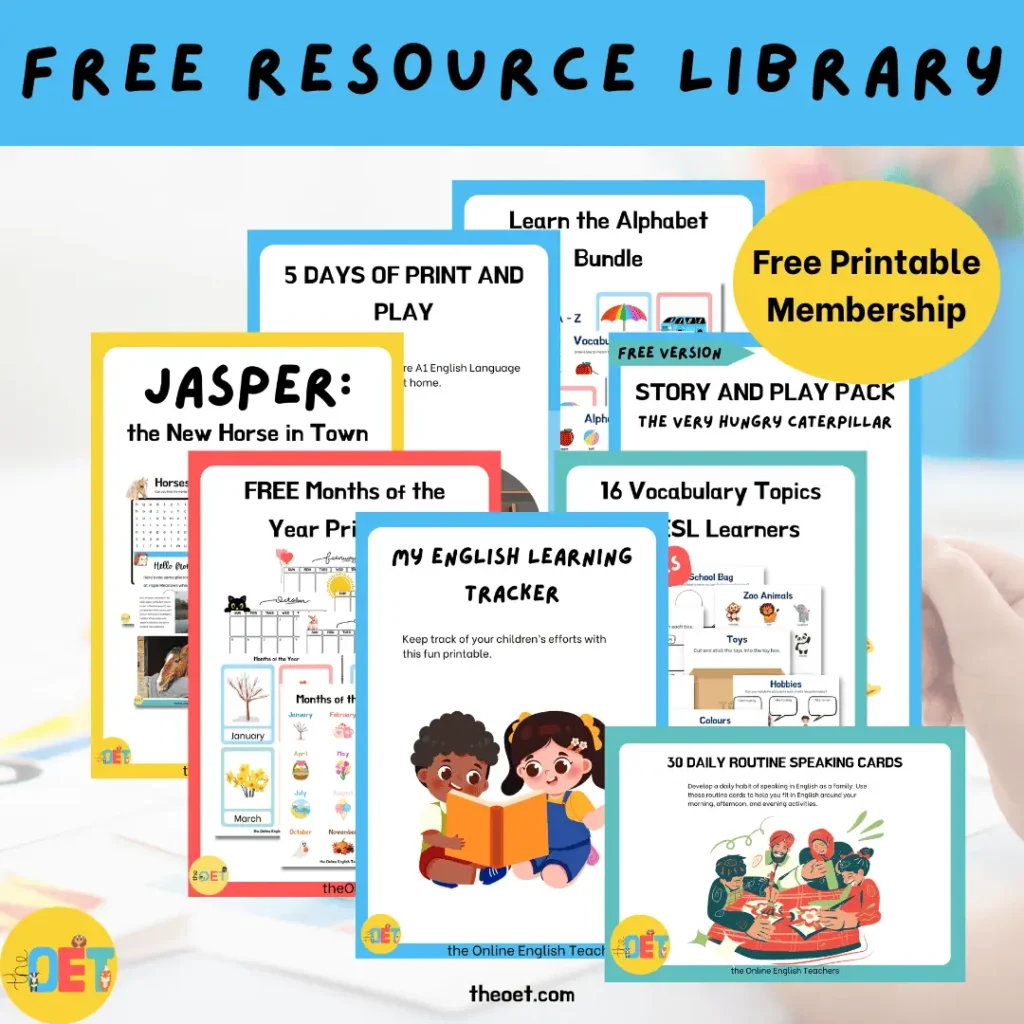
Join the FREE Resource Library
Looking for FREE quality printables, templates, and guides to help you teach your kids ESL at home?
Join theOET’s FREE Membership and gain access to 10s of resources designed by a qualified teacher to help your family learn English at home.
New resources are added every month. Save time, money, and stress with pre-made educational printables and guides.
Understanding Reading Fluency
Many families just like yours want to know what age should a child read fluently. It is an important educational milestone that will help your children be able to access more challenging vocabulary and texts, and improve their comprehension and analytical skills.
But what is reading fluency? What do children need to achieve in order to be fluent readers? Here’s a breakdown of what reading fluency entails:
Definition of Reading Fluency
Reading fluency is much more than just reading words on a page. It includes:
- Speed: This is how quickly a child can read the text. The focus is on maintaining a pace that allows understanding without unnecessary pauses, rather than being the fastest reader.
- Accuracy: This involves reading the words correctly. A fluent reader can recognise words effortlessly and pay attention to pronunciation.
- Expression: Sometimes referred to as prosody, this is about reading with the right intonation, emotion, and phrasing. This helps bring the words to life, adding meaning and aiding the reader’s comprehension and understanding of the characters.
Fluency is essential because it bridges the gap between word recognition and comprehension. It helps children move on from simply reading words on a page to being able to answer questions about the text they’ve read, empathising with the characters, or analysing the author’s work.
Components of Reading Fluency
There are several factors to be aware of when children are improving when developing reading fluency. These are:
- Phonemic Awareness: This is the ability to hear, identify, and manipulate individual sounds in spoken words. It’s the foundation which children in UK schools are taught in order to begin reading simple words such as cat, pig, or web.
- Vocabulary: A rich and varied vocabulary allows a child to recognise and understand new words quickly. The more words that can be recognised, the faster their reading pace and understanding of what is being read.
- Comprehension: Fluency isn’t just about reading fast, it’s also about understanding what is being read. Comprehension can be demonstrated by answering questions about the text or holding discussions focused on the plot or characters, for example.
Each of these skills is fundamental for a child to read fluently. They build a solid foundation for early reading skills which sets children up for success in reading fluency.

Typical Age Range for Reading Fluency
Understanding the typical age range for reading fluency can help you better support your children’s journey to becoming confident readers. Every child is unique and progresses at their own pace, but there are general milestones you can expect along the way.
Though these milestones are organised within average age ranges, let me make it clear that these are averages and by no means include every child. Use this for what it is, a guide, to help identify your children’s current reading levels, and to put in place a personalised plan to help your children read fluently.
Early Readers: Ages 4-5
At this stage, children are being introduced to early reading skills focused on learning phonics. They are beginning to recognise letters and understand that words are made up of different sounds. You might notice them attempting to read:
- Simple words like ‘cat’, ‘dog’, and ‘hat’
- Short sentences like “The sun is hot.”
Books with repeating phrases and sentence patterns are popular with children aged 4-5 as the repetition can help them listen to the sounds and new vocabulary words they have learnt. With this repetition, they have the opportunity to practice reading simple words and sentences and feel more confident as they do so.
Developing Fluency: Ages 6-7
Between the ages of 6 and 7, reading starts to become more than decoding words. They start to make sense of what they are reading, can answer more comprehension questions, and can start recognising more complex words. At this stage, your children may:
- Recognise many sight words like ‘because’, ‘could’, and ‘there’, which allows them to read smoothly
- Read longer sentences and understand basic punctuation.
This is a big step towards reading fluency, progressing from simple sentence structures and repetitive stories to short chapter books. It’s a lovely stage where children can start to take an interest in reading more independently and choose stories they may wish to read aloud or alone without support.
Fluent Readers: Ages 8-9
At this age, reading fluency progresses significantly. With a solid phonics awareness, increased vocabulary range, plus years of reading practice, children between 8-9 years of age are becoming confident readers.
Children aged 8 to 9 typically read with:
- Expression brings characters to life as they understand the tone of the text.
- Comprehension, grasping the meanings of stories and the emotions behind them.
With your children now reading effortlessly, they can tackle chapter books and comprehend stories independently. Their reading is not just about the words—it encompasses vocabulary, comprehension, expression, and awareness.
As your children navigate through these reading fluency stages, remember: that the journey is unique to each individual. Some children may find particular skills difficult and take longer, while others may be more naturally skilled at reading. It is important to use this information as a guideline and adapt your expectations to suit your children’s development.

Factors Influencing Reading Fluency
Understanding what age a child should read fluently involves considering numerous factors. It isn’t just about their age, but also about whether they are a native English speaker or not, their exposure to appropriate texts, the support they receive, whether they have specific struggles with reading e.g. dyslexia, and whether they enjoy reading or not. Let’s explore the key influences that can steer your child towards reading success.
Join the FREE Resource Library
Looking for FREE quality printables, templates, and guides to help you teach your kids ESL at home?
Join theOET’s FREE Membership and gain access to 10s of resources designed by a qualified teacher to help your family learn English at home.
New resources are added every month. Save time, money, and stress with pre-made educational printables and guides.
Individual Differences
Each child should be treated as the individual they are. No two children are the same, and hence, each will experience a different journey to reading fluency. Their interest in reading, exposure to language, and even their personal learning style can affect their development in reading fluency.
- Interest: Some kids are naturally curious about words and stories. They tend to pick up reading skills quicker because they’re driven by their own curiosity.
- Exposure: Being surrounded by books, conversations, and interesting stories helps kids absorb language like a sponge.
- Learning Style: Some children learn best by listening, others by seeing or doing. Knowing your child’s style can help you tailor their reading experiences to what works best for them.
Ask yourself, how can you support your children’s individual journey? Can reading become a shared adventure that matches their unique way of learning?
Educational Environment
If your children attend school, they will obviously teach a specific reading-focused curriculum and skills to help your children learn to read. However, not all schools will provide that for your children when it comes to learning to read in English. You must provide a positive home educational environment to set up your children’s reading fluency skills.
- Role-Model: Be a role model for your children by reading a variety of texts at home. From chapter stories to nonfiction, show your children that reading can be enjoyable.
- Storytime: Create a storytime routine that the whole family can get involved in. Not only does this provide quality time together, but also introduces your children to fun, child-friendly stories and extended activities.
- Educational Resources: Ensure your children have access to a variety of resources that can aid their reading fluency. This could be in the form of YouTube videos to practice phonics sounds, educational apps introducing new vocabulary, or digital libraries to read new stories together.
This extra support and guidance from you at home can make a huge positive impact on your children’s ability to read fluently.

Supporting Your Child’s Reading Development
Helping your child learn to read fluently can feel a bit overwhelming in the beginning. But with the right guidance and encouragement, you can make this journey enjoyable and efficient. Building a strong foundation in reading is not just important for school success; it also sets your children up for a lifetime of learning and discovery. So, how do you support your child’s reading development without turning it into a chore?
Encouraging a Love for Reading
One of the most effective ways to boost your child’s reading skills is to make reading as enjoyable as playing their favourite game. Here’s how you can do that:
- Read Together: Sharing a book with your child can be a magical experience. Sit together and take turns reading parts of the story. This not only improves their reading skills but also creates a special bonding time. Children love spending time together with their parents.
- Choose Engaging Books: Remember, one size does not fit all. Pick books that interest your child. If they love dinosaurs, find and read books about different dinosaurs. They’ll be driven by their interests so your children will be keen to read the words on the page.
- Use Different Voices: Bring characters to life by using different voices. Don’t be afraid to get creative, too. Surprise your children with comical choices such as a squeaky voice for a fierce dragon or a gruff voice for a tiny fairy princess. Your children will be in stitches from laughing so much, which all adds to making reading a positive and enjoyable experience.
Setting a Routine
Consistency is key when it comes to reading fluency. Establishing a daily routine can make reading a habit rather than a chore. Here’s how you can set one up:
1. Choose a Regular Time: Whether it’s after breakfast or before bedtime, find a time that works for you and your children. Stick to it daily to develop consistency.
2. Create a Reading Space: Set up a cosy corner with pillows and their favourite books. A welcoming space can make all the difference.
3. Limit Distractions: Make sure this is a special time for reading without disruptions. Turn off the TV, keep toys aside, and let the magic of books unfold.
Using Phonics and Sight Words
Understanding phonics and sight words can hugely boost your children’s ability to read fluently. As mentioned above, schools within England teach phonics as part of the National Curriculum to children from an early age. It is a recognised approach to teaching children how to read. Here are some ways to help your children with these essential skills:
- Play Phonics Games: Turn learning into fun by using games that focus on sounds and letters. Apps and board games can be great tools for this.
- Highlight Sight Words in Books: As you read together, point out common sight words. These are words your children will encounter frequently, such as said, and recognising them on sight improves fluency.
- Create Flash Cards: Make flashcards of sight words and use them for quick practice sessions in a game format. It’s a simple and effective way to reinforce memory.

At What Age Should a Child Read Fluently?
As you’ve read, answering the question “What age should a child read fluently?” isn’t as straightforward as it seems. Although many children can achieve reading fluency around the ages of 7-8 years, this isn’t the case for every child.
Every child develops at their own pace, finding some skills easier than others. Some children will find maths comes more naturally to them, or art or music. Others will find learning English as a second language and reading skills easier to develop.
Identifying how your children learn best and adjusting your expectations to match your children’s abilities is the first step to offering them support. Then, ensure to set up a positive and encouraging learning environment at home with access to resources, fun activities, and a structured reading routine. This will guide your children to achieve reading fluency at a pace that suits them as individuals.
Support, encouragement, and fostering a love for reading from a young age will positively impact your children’s English ability and reading fluency.

Join the FREE Resource Library
Looking for FREE quality printables, templates, and guides to help you teach your kids ESL at home?
Join theOET’s FREE Membership and gain access to 10s of resources designed by a qualified teacher to help your family learn English at home.
New resources are added every month. Save time, money, and stress with pre-made educational printables and guides.
Related Posts
- The Power of Storytelling: How Stories Can Enhance English Language Learning
- Creating a Storytelling Routine: Incorporating English into Your Family’s Daily Life
- How To Use Fairy Tales To Teach Your Kids English
- A Step-by-Step Guide on How to Teach a Child to Speak English
- A Step-by-Step Guide to Teaching Vocabulary to Kids for ESL Families

