

Storytelling has been used for generations as a way of teaching language, important lessons, and history to children. Nowadays, stories continue to provide a natural method of developing language skills, but also help families form stronger connections. Children enjoy storytime with their family, and parents can use stories as a core resource to teach their kids English.
Stories are not only enjoyable, but also support children’s listening skills, grow their word bank, and make speaking easier. Research shows that kids remember new words and ideas better when they learn through stories. Some of the biggest benefits include:
- Stronger listening and speaking skills
- More confidence using English in real life
- Easier recall of new words and phrases
But did you know that you can do more with a story than simply reading it together? There are multiple ways to teach English through stories at home, from incorporating props to extending learning through crafts.
Keep reading to find out more about what makes stories such a beneficial tool for language development and how to choose the right story for your children.
Table of Contents
- Benefits of Using Stories for English Learning
- How to Choose the Right Stories for Your Family
- Practical Ways to Teach English Through Stories at Home
- Overcoming Common Challenges When Using Stories
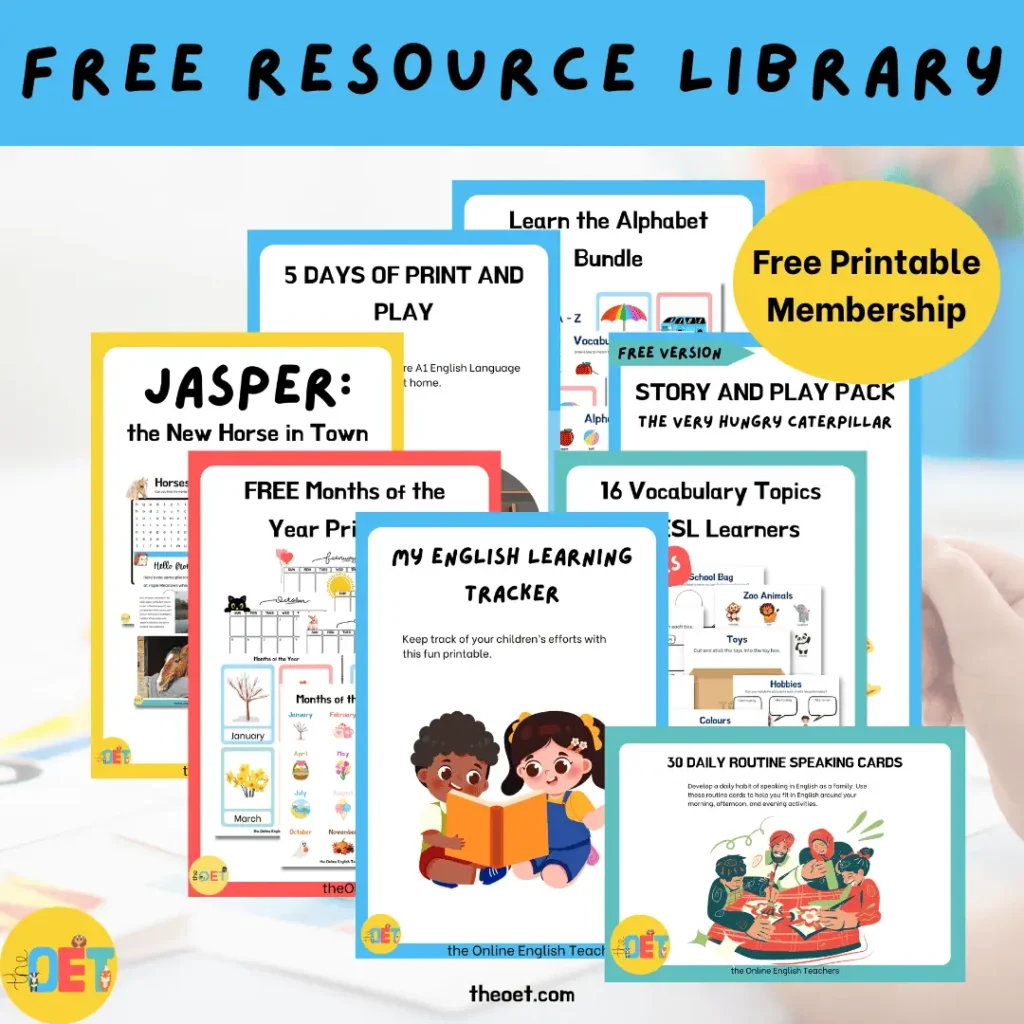
Join the FREE Resource Library
Looking for FREE quality printables, templates, and guides to help you teach your kids ESL at home?
Join theOET’s FREE Membership and gain access to 10s of resources designed by a qualified teacher to help your family learn English at home.
New resources are added every month. Save time, money, and stress with pre-made educational printables and guides.
The Benefits of Using Stories for English Learning
Stories provide a more natural way of supporting your children’s language skills. They help introduce new vocabulary in meaningful ways, demonstrate accurate grammar, and invite open discussions. Not to mention, stories offer a more enjoyable learning experience compared with traditional methods, e.g. workbooks. Take a look at some of the benefits stories provide for young language learners:
Boosting Vocabulary and Confidence
Children pick up phrases as they listen, see, and imagine what the characters are doing. Instead of learning a list of words, your children understand and can apply that language to everyday life. Here’s how stories help:
- Context matters: New words are easier to understand when placed in stories, making them far more memorable.
- Natural repetition: Key words and phrases appear throughout the story, so your children hear them more than once.
- Increased confidence: Speaking about familiar characters and events helps children find their voice in English.
When you talk about the story with your children, encourage them to use new words. Ask simple questions, let them retell parts of the tale, or act out scenes together. Every bit of extra practice adds up, and you’ll soon see their comfort with English grow.
Improving Listening and Speaking Skills
Listening closely to stories will help your children absorb how words are pronounced and how sentences flow. You can make the most of storytime by:
- Reading aloud and letting your children repeat their favourite part.
- Using different voices or expressions to make characters stand out.
- Pausing to check if your children understand or want to share their ideas.
This back-and-forth supports good pronunciation and clear speaking, as your children get used to the sound of English in a natural setting. The more they hear, the more confident they become when speaking up, even if it’s just adding a few new words each week.
Creating Positive Emotional Connections with English
Stories invite children to enjoy the learning process. When they enjoy an activity, they form a positive connection with it and generally choose to participate in that activity again. If your children laugh at a funny story or feel proud when they finish a book, they’re much more likely to want to read and speak English again.
- Emotional moments stick: Children remember words linked to feelings, whether it’s excitement, silliness, or a cosy bedtime tale.
- Eases worries: Stories can help children relax, lowering the pressure often felt when using a new language.
- Builds strong habits: Enjoyable routines create a home environment where English is part of daily life, not a set task.
When storytelling is fun, children look forward to it, and English becomes something positive. Over time, you’ll hear smoother conversations and see more smiles while learning together.

How to Choose the Right Stories for Your Family
Choosing the right stories is the first step to making storytime both enjoyable and helpful for your children’s English. When you teach English through stories, picking the correct book can make a huge difference in your children’s interests, attention span, and ability to improve their English skills. These tips will help you select stories your whole family will love and learn from.
Focusing on Your Children’s Ages and Language Levels
Stories work best when they match your children’s ages and current skills in English. If a story is too hard, children will lose motivation and interest very quickly. If it’s too simple, they may get bored and easily distracted.
Younger children often love stories with bright pictures, simple words, and lots of repetition. Books such as fairy tales and picture books have clear scenes and familiar settings. Try to focus on stories that incorporate their interests, e.g. dinosaurs, and are funny.
Older children or those with more English can enjoy longer stories as they have a longer attention span. Stories that offer more plot twists, new words, or even chapter books are suitable. Perhaps include stories that cover challenging topics, such as endangered species from climate change or share moments in history. These books offer cross-curricular learning opportunities as well as plenty of discussion topics.
Start by reading a page aloud. If your children can follow the story and join in with key words, it’s likely a good fit. If they look confused or lose interest, try something a bit simpler. As their skills grow, you can introduce longer sentences or new themes.
Learning should feel like a friendly walk, not a race up a steep hill.
Picking Topics That Interest Your Children
Your children will look forward to English storytime when the books align with what they’re curious about. Children remember better when the topic grabs their attention and feels personal.
Consider stories such as:
- Animals, vehicles, or adventures for children who love discovery
- Family, friends, or daily routines offering relatable content for very young children
- Mystery or jokes for children who enjoy a good surprise or giggle
Ask your children what they want to read, or give them a choice between two books. Point to favourite characters or topics, and watch what holds their attention. You might be surprised by their choices. When you let your children lead and offer choices in their education, they gain more confidence and interest in reading.
Balancing Classic Tales and Modern Stories
A good mix of traditional and new stories keeps storytime fresh, interesting, and helps expose your children to different stories and writing styles. Classic tales offer familiar characters, simple morals, and repeated phrases. These help children learn key words quickly.
Modern stories, on the other hand, can tackle key topics such as friendship, diversity, or everyday challenges your children face.
Try alternating between classic tales such as “The Three Little Pigs” or “Goldilocks and the Three Bears” and modern stories with relatable heroes or funny twists.
Choosing the right stories for your children can make a world of difference to story time. Stories that match their age, interests, and English level will lead to an increase in their participation. Offering stories that provide morals or classic tales they might have heard at school helps connect valuable lessons across the curriculum.
Join the FREE Resource Library
Looking for FREE quality printables, templates, and guides to help you teach your kids ESL at home?
Join theOET’s FREE Membership and gain access to 10s of resources designed by a qualified teacher to help your family learn English at home.
New resources are added every month. Save time, money, and stress with pre-made educational printables and guides.
Practical Ways to Teach English Through Stories at Home
Teaching English through stories at home is easier than you might think. By bringing the story to life and inviting your children to join in, you can help them build core ESL skills and memories at the same time.
You don’t need any expensive resources or to spend hours planning activities. You just need a little creativity and a willingness to have fun together.
Below, you’ll find easy techniques you can use right away, plus simple activities and ideas for using what you already have at home to support every story session.
Storytelling Techniques That Engage Children
How you tell the story has a big effect on how much your children connect with the language. Using your face, hands, and voice, you can turn even the simplest tale into an exciting lesson. You might feel silly at first, but children notice, laugh, and mimic you, which is a great way to start off the learning process. Try some of these ideas for your next story time:
- Use gestures for actions: walk your fingers for a character walking, or spread your arms wide to demonstrate something big.
- Make facial expressions to show emotions.
- Change your voice for each character: make it high and squeaky for a little mouse or low and slow for a bear.
- Speak louder for exciting parts and softer for mystery or quiet moments.
- Pause and point to pictures or act out phrases, giving your children a chance to join in.
These extra effects help draw in your children’s attention and make the language easier to follow. Children who are able to participate in story time are more likely to remember the words and join the fun.
Interactive Activities to Reinforce Learning
Storytime doesn’t need to stop once you have finished reading the book. Simple activities post-reading can help your children practise their English skills. When you teach English through stories, try one or two of these ideas after reading together:
- Roleplay scenes: invite your children to play a character or act out parts of the story with you.
- Retell the story: Ask your children to retell what happened in their own words using new words from the story.
- Draw favourite scenes: Grab some crayons and paper. Drawing can help children remember and talk about what they’ve seen, plus reinforce new vocabulary.
- Create puppets: Use socks, paper bags, or even spoons to make characters. Then, bring the story to life with a puppet show.
- Make up a different ending: Invite your children to imagine what could happen if xyz did or didn’t happen, and help them say it in English.
Each activity helps your children practise listening, speaking, and thinking in English. Choose what suits your family best and make it part of your own routine.
Incorporating Props and Visual Aids
You don’t need special materials to teach English through stories. Every day items that you have lying around at home will be enough to create storytelling tools. Props and visual aids not only make stories more fun, but they also support children’s understanding.
Here are some ideas to get you started:
- Use cushions as stepping stones for story adventures across the room.
- Tie tea towels or blankets as capes for different characters
- Name different soft toys or action figures as characters from the book to show who is talking or moving
- Collect kitchen spoons or wooden blocks to use as magic wands, houses, or any object in the story
- Make simple drawings to show places or events as you tell the tale.
Hold up the prop, name it, and use it as you read together. Move the teddy when the bear jumps, or cover a doll with a blanket when it’s bedtime in the story. Don’t worry about doing it perfectly or things looking exactly like the book. Children learn best when everyone is relaxed and enjoying the moment together. Once your children see you use them first, they’ll soon feel motivated and excited to join in.
Make use of what you have at home, play together, and focus on engagement rather than results, and you’ll soon find teaching English through stories beneficial.

Overcoming Common Challenges When Using Stories
Even the most well-prepared and experienced families can run into a few bumps when they teach English through stories at home. Not every child will be eager to join in straight away, and families often juggle mixed language levels or busy routines. The good news? Simple tweaks can help you keep story learning smooth, fun, and low-pressure. Here are a few top tips to help you overcome some common difficulties:
My child is reluctant to join in
Some children love stories from day one, while others are less enthusiastic. Reluctance is normal, especially if a child feels shy about speaking English. You can gently encourage them without turning storytime into a battle.
Try these ideas to encourage children who aren’t big fans of English storytime:
- Let your children choose the story. Children are more inclined to participate if it includes something they like.
- Start with small roles. If reading aloud feels scary, invite your children to add sound effects, guess what happens next, or act out with a toy.
- Use favourite toys as helpers. Let a teddy or action figure “read” a simple line or join in acting. Your children will probably join in pretending to be their toy.
- Celebrate tiny wins. A willing smile or joining in with a new word is a real step forward.
Stay relaxed. If your children refuse to join in on some days, read aloud anyway and let them listen from the side. With time, most children will join the fun at their own pace. It’s all about positive exposure and consistency rather than pressure and stress.
My children are at different levels in English
Many families have children at different stages of English. One child may chat away while another is still learning simple vocabulary. One misconception is to teach your children individually with separate lessons. But you don’t need this. It will take twice as long and double the amount of resources. Instead, it is much easier to adapt one lesson that includes both children with just a few simple changes.
Here’s how to make stories work for everyone:
- Share simple, repetitive stories first. Younger children can join in by repeating phrases or words. Older children can add more detail or guess what happens next.
- Give everyone a speaking part. Assign simple lines to beginners whilst advanced learners retell longer sections or answer “why” and “how” questions about the plot.
- Encourage siblings to help each other. Older children are great role models for younger kids and can help teach new concepts or read stories to their siblings. They benefit from reviewing content whilst younger children listen to correct pronunciation, learn new vocabulary, and bond with their siblings.
- Switch up activities. Younger children may draw their favourite part, while older siblings write or speak a sentence about it.
With these tweaks, storytime turns into family time where everyone learns together, no matter their level.
My family has a very busy schedule
Busy schedules, working parents, and tired kids can make it hard to fit stories into daily life. The key is to set up a routine that’s easy for your family to stick with, but flexible enough not to add stress. What works for one family might not work for yours, so it is important to design a schedule right for you.
Follow these tips for a relaxed, happy routine:
- Pick a regular, calm time. After dinner, just before bed, or right after school can all work well.
- Keep it short and sweet. Ten minutes of storytime is enough. Some days, even two minutes is okay.
- Have a “story basket” ready. Keep favourite books or props in one spot, so no time is wasted hunting for them.
- Let go of “perfect.” If you miss a day or your children don’t appear to be listening, it’s still progress. The goal is to show that English stories are part of normal life, not a chore.
Every family finds its own rhythm. By keeping things relaxed and with realistic expectations, you’ll find that regular storytime soon becomes a habit everyone enjoys.
If you’d like a hand getting started, try our free ESL Routine Maker tool here.

Stories make it easy to teach English at home. Your children can learn new words, listen to the language, and join in at their own pace. Using stories is a natural and relaxed method of teaching ESL that can fit into every family’s routine, no matter your time constraints or children’s English level.
Every story brings your family closer together and makes learning feel less like work. As you use stories, you’ll see English become a natural part of everyday life.
Ready to make story learning simple and fun? Sign up for your free storytelling tools and props here:
Join the FREE Resource Library
Looking for FREE quality printables, templates, and guides to help you teach your kids ESL at home?
Join theOET’s FREE Membership and gain access to 10s of resources designed by a qualified teacher to help your family learn English at home.
New resources are added every month. Save time, money, and stress with pre-made educational printables and guides.
Related Posts
- Engaging Your Child’s Imagination: Story-Based English Learning Activities
- 12 Traditional Folktales from Around the World
- 30 Engaging Fairy Tale Activities for Kids Learning English
- 15 Interactive Storytelling Games for Children Learning the English Language
- How To Use Fairy Tales To Teach Your Kids English

