

As a caregiver, your days are often very busy. You cook, work, clean, answer questions, break up arguments, and try to keep everyone healthy and happy. By the time bedtime comes around, you are tired, your children are tired, and long, complicated English lessons feel impossible.
The good news is that you already have a quiet moment of your day that you can turn into a gentle English lesson. Bedtime is the perfect opportunity as it is already calm, a regular routine, and full of cuddles. With a few simple habits, you can use bedtime stories to teach English to all of your children at the same time.
You do not need to be a perfect English speaker or a qualified teacher. You only need a story, a few minutes, and a willingness to read, repeat, and have fun. In this guide, you will see how to use bedtime stories to teach English by:
- Choosing the right stories for different ages and levels
- Using simple techniques while you read
- Adapting one story for several children
- Keeping your family motivated night after night
Bedtime is one of our favourite times of the day. Everyone is together, our children get to enjoy their favourite stories, there is no pressure, and everyone feels relaxed and engaged before going to bed.
You can incorporate English into your daily routine by using bedtime stories to teach English at home. Everyone is already feeling relaxed, it’s a low pressured time of the day, and the whole family can get involved. Your children naturally pick up new language, are exposed to different ideas, and can enjoy English as part of their daily routine.
Why Bedtime Stories Are a Powerful Way to Teach English
Bedtime stories can offer much more than simply family time at the end of a busy day. They are also a smart, low-stress, low-pressure way to build your children’s English skills.
The best part is, you aren’t trying to fit in an extra task to an already busy day, but are utilising the time and routines you already have in place.
Here are some reasons as to why you should consider using bedtime stories for language learning:
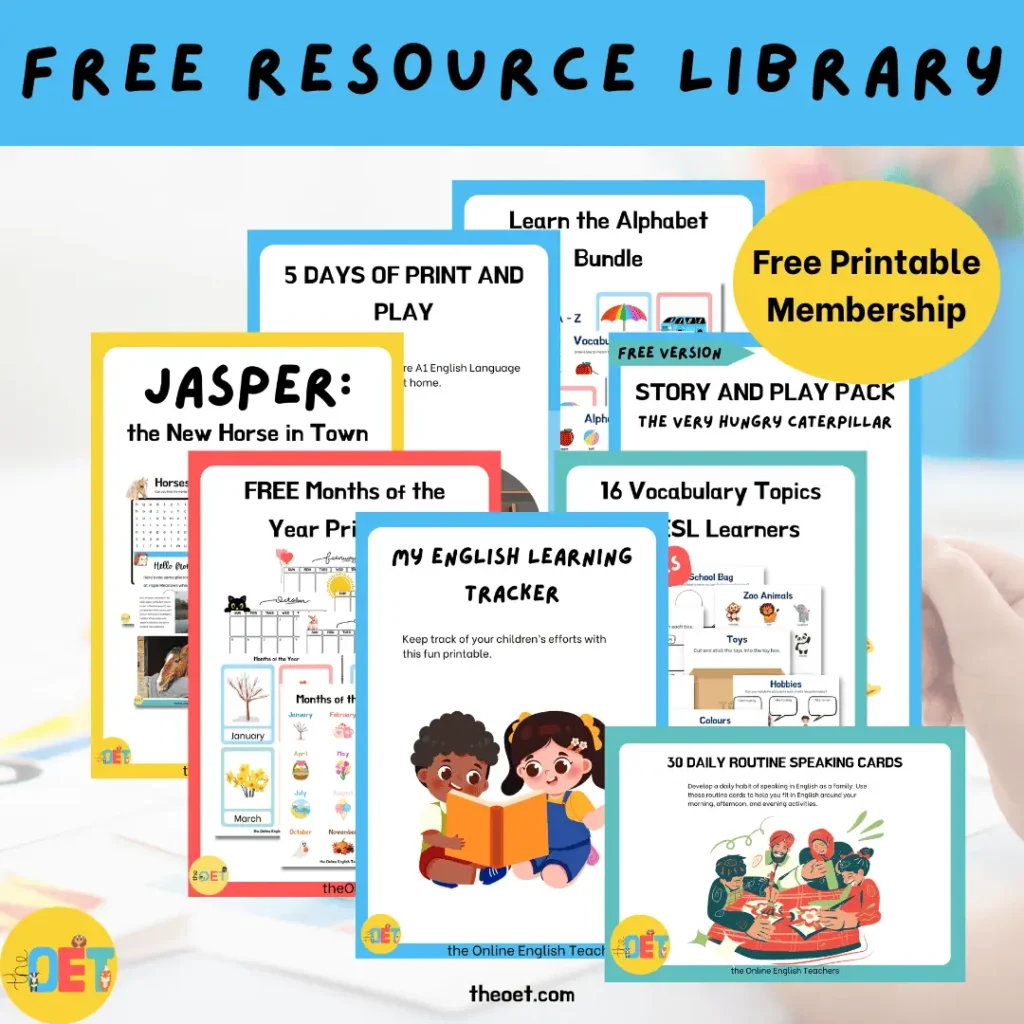
Join the FREE Resource Library
Looking for FREE quality printables, templates, and guides to help you teach your kids ESL at home?
Join theOET’s FREE Membership and gain access to 10s of resources designed by a qualified teacher to help your family learn English at home.
New resources are added every month. Save time, money, and stress with pre-made educational printables and guides.
Bedtime is calm, repeated, and perfect for language learning
Bedtime has three things that help children learn English well.
- A calm time of the day
At night, lights are softer, screens are off, and bodies slow down. Children feel safer and more open to listening. There is less noise and fewer things to distract them, meaning that their attention is focused on the story. - A set routine
When you read at the same time each night, English becomes part of your daily rhythm. Children start to anticipate that it is story time and they know what to expect, supporting concentration and participation. - Short, regular sessions
Ten or fifteen minutes each night is plenty. Daily, small amounts of English often work better than one long lesson at the weekend. Your children will slowly collect words, phrases, and sounds, that build upon their previous knowledge and help them expand their English skills naturally.
Stories help children remember English through emotion and imagination
Stories don’t simply offer new words but help your children to create images in their mind as the stories are read to them.
When your children hear a story, they picture the characters, the rooms, the monsters, the pets, etc. They feel emotions that help connect them to the story and the new language they are exposed to.
- A child hears “The dragon is scared” while seeing a picture of a shaking dragon.
- They feel the dragon’s fear and maybe their own.
- Next time they hear “scared”, they remember that feeling and image.
Children remember language much better when it is linked to a feeling or emotion, not just a list of words on a page.

Reading in English builds listening, speaking, and thinking skills
When you read bedtime stories in English, you build several skills at once.
Your children:
- Hear natural English sounds and rhythm
- Learn how sentences are build in English and how words connect together
- Pick up common phrases like “I am tired” or “Close the door”
- Start to predict what will happen next in the story
You can also encourage them to join in and repeat short lines or keywords. This gives them safe speaking practice when they are relaxed. Their pronunciation improves because they hear your English again and again, at a slow, clear speed, in a peaceful space.
How bedtime stories support different ages in the same family
You might think, “How can one story work for my toddler, my 7 year old, and my 10 year old?” But it is easier than it sounds.
Take a simple picture book at bedtime.
- Your toddler might learn simple words like cat, dog, bed, moon. They point at the pictures and say the words.
- Your younger school child might copy and use short phrases like “Good night, cat” or “I am sleepy”.
- Your older child might notice feeling words like “She is worried” or “He feels safe” and can talk about why the character feels that way.
Same story, same moment, different learning is taking place. All children can build upon their previous English skills with bedtime stories. Older children can even help take turns with reading the story for their younger siblings to listen to. Bedtime stories offer a core bonding moment where the whole family can learn English together.

How to Choose the Best Bedtime Stories to Teach English
The right book can make all the difference. You do not need a huge library at home, just a few good stories that you can read again and again. My own children still choose stories that we have read at least 30+ times now and still enjoy listening to them.
The more you read the same story over and over, the more chance for your children to pick up new words and you’ll notice that they start to get involved during storytime too; pointing out characters, reading repeated lines, or retelling pages in their own words. You can never read the same book too many times (though as caregivers, it’s ok to quietly hide certain books you’d like a break from!)
Pick simple, short stories with lots of pictures and clear language
For English as a second language, simple is usually better.
Look for:
- Short texts, not pages full of tiny print
- Clear, bright pictures that match the words
- Everyday topics, such as family, pets, bedtime, school, food
- Gentle adventures or family stories with a clear beginning and end
Good types of bedtime stories for English include:
- Picture books with repeated phrases
- Calm, sleepy stories where characters get ready for bed
- Simple fairy tales with clear actions, such as “run”, “open”, “sleep”
Avoid very long or very complicated stories at first. If you are tired, your children are tired, and the book is long, everyone will lose focus and bedtime stories start to become a chore rather than a relaxed, enjoyable bonding time.

Use repetition: series, favourite characters, and repeated phrases
Repetition is your friend.
Children love to hear the same story many times. In language learning, this is not a problem, it is actually very powerful and something I would actively encourage.
Each time you read the same story:
- Your children understand a little more
- They say more of the story with you
- They feel more confident with the English covered
Look for books with repeated lines or rhyming books. Some examples are:
- 10 Sleeps to Bedtime
- Guess How Much I Love You
- We’re Going on a Bear Hunt
Invite your children to say these lines with you. Let them finish the sentence, even if they aren’t 100% accurate. They will feel proud and will start to feel confident using English.
Series with the same character (for example, Hairy McClairy) can also help. Your children already know the world of the story, so they can focus on the English.
Match stories to different ages and English levels in your family
Try to choose one main story that is easy enough for your youngest child, then stretch it for the older ones.
For example:
- Read a simple picture book for everyone.
- Focus on single words and short phrases for your toddler.
- Ask your older child extra questions, or read them one extra page from another, slightly harder book.
You can also use a simple story but add richer talk for older children. For example, after a page about a monster, you might ask your 9 year old, “Why do you think he is scared?” while you ask your toddler, “Is the Monster happy or scared?”
The text stays the same, but you adapt your questioning to your children’s individual needs.
Mix English-only stories with bilingual or translated versions
Bilingual books, or books with an English version and a home language version, can make bedtime smoother.
You can:
- Read the story in English first, very simply.
- If your children look lost, give a quick, short summary in your home language.
- Next time, do the same story again, but keep the home language even shorter.
You do not need your children to understand every single word. The goal is to understand the story and enjoy it. Over time, more words will become clear.
Using bilingual books specifically at bedtime can be a great way to introduce English to your children. They can see familiar words side by side with new English words, which can help them feel more comfortable with the text.
A great place to find bilingual stories is Language Lizards. They offer over bilingual books in over 60+ languages around the world, with stories covering lots of different cultures, characters, and settings.

Where to find free or low-cost English bedtime stories
You do not need to spend a lot of money to build a bedtime English routine. Try:
- Your Local library: Many libraries have English picture books, even in non-English speaking countries.
- Second-hand shops or charity shops: You can often find cheap children’s books in English.
- Online story sites and apps: Look for simple, free stories that you can read on a phone or tablet, or print.
- Printable stories: Some education sites offer short printable tales with pictures.
- Your own stories: You can write very simple stories using your children’s names and draw basic pictures.
A few good, repeatable texts are enough. Quality is more important than quantity. Try to choose stories that cover your children’s interests, e.g. dragons, pirates, or animals. This will help draw in and retain their attention as you read.
Step by Step: How to Use Bedtime Stories to Teach English
Now, let us put it all together in a routine that works even when you are exhausted after a busy day.
Create a simple bedtime English routine that you can keep
Your routine might look like this:
- Brush teeth and put on pyjamas.
- Children choose one English book together.
- Turn off bright lights, use a small lamp.
- Cuddle up on the bed or sofa.
- Read in English for 10 to 15 minutes.
- Lights out.
You can set a clear rule, such as “One English story, then sleep.” Children like to know what will happen and what is expected from them. It is better to read a little every night than a lot on only one night a week.
Before you read: preview the story and key English words
Spend two or three minutes to “warm up” the story.
You can:
- Show the cover and ask, “What do you think will happen?”
- Point to 3 to 5 key pictures or words, for example, moon, pyjamas, monster, door, bed.
- Say the words in English, encourage everyone to repeat is.
- If needed, give the meaning in your home language.
In a family with different ages:
- Toddlers repeat single words, such as “moon”, “cat”.
- Younger school children use short sentences, such as “I can see the moon.”
- Older children make a prediction, such as “I think the monster is friendly.”
You set one story, but each child takes a slightly different role.
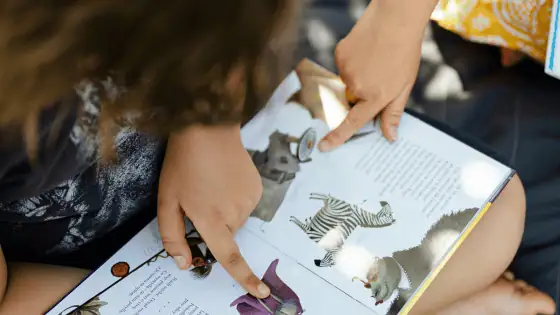
While you read: slow down, use your voice, and point to pictures
While you read, you are a role model for your children. You do not need to have a perfect accent, just try your best to be clear, and show your children that making mistakes is ok.
Try to:
- Read more slowly than you do in your home language.
- Use your voice to show feelings, for example, whisper for “I am scared”, or speak loudly for “Roar!”
- Pause after important lines, look at your children’s faces.
- Point to pictures when you say new words.
Repeat key phrases as you go. Invite children to join in.
For example:
- You: “Good night, moon.”
- Children: repeat “Good night, moon.”
Or:
- You: “I am not sleepy.”
- You: “Say it with me: I am not sleepy.”
You can also add simple actions:
- Yawn for “sleepy”
- Stretch arms for “wake up”
- Knock on a table for “knock knock”
These small actions help connect English words and their meanings together, making it easier to remember.
After you read: ask easy questions and let children speak
When the story ends, do not jump straight to “Goodnight”. Use two to five quick questions to offer speaking practice.
You could ask:
- “Who is your favourite character?”
- “Was the dragon happy or scared?”
- “What happens next?”
For beginners, ask yes or no questions, or questions with two choices.
- “Is the monster big or small?”
- “Is the boy happy?”
For more advanced children, use “why” or “how” questions.
- “Why is she worried?”
- “How did they solve the problem?”
Keep answers short and relaxed. Grammar does not need to be perfect. The most important thing is that your children feel safe and comfortable enough to try.
Using your home language wisely when teaching English at bedtime
You do not have to keep everything in English. Your home language is a tool, not a problem. It can help children connect new words to things they already understand in their mother tongue.
You might use it to:
- Quickly explain a tricky word.
- Check that everyone understands the main story.
- Talk about feelings or fears after a scary part.
One simple rule is:
- Story in English.
- Questions in English first.
- Home language for when children need a bit more support.
Mixing languages will not harm their English. At bedtime, comfort and understanding matter as much as vocabulary.

Adapting Bedtime Story Activities for Different Ages and Levels
You can use one story for all your children if you adapt what you ask each child to do.
For toddlers and very young children: focus on words, sounds, and rhythm
For children under about 4, keep goals very small. Focus on:
- Naming objects in pictures, such as “cat”, “bed”, “sock”.
- Repeating animal sounds: “moo”, “meow”, “woof”.
- Copying easy words, such as “night”, “hello”, “bye”.
- Clapping to the rhythm of a repeated line.
Use short phrases that they can copy, for example:
- “Good night, bear.”
- “Sleep, baby.”
Ask very simple questions:
- “Is this a cat?” (They say yes or no.)
- “Where is the dog?” (They point.)
Let toddlers touch the page, turn the pages, tap the pictures. They learn with their hands as well as their ears. A great series for toddlers is the Usborne “That’s Not My…” Series. It’s highly interactive, with different sensory experiences in each book, simple and repetitive vocabulary, and toddler-friendly images.
For early readers: build short sentences and everyday phrases
For children around 5 to 8, you can start to build full phrases and simple reading skills.
Ideas:
- Let them repeat whole lines from the book.
- Ask them to read one short page, or one sentence, each night.
- Play “find the word” on the page, for example, “Can you find the word ‘moon’?”
- Turn key lines into daily phrases, such as “I am sleepy”, “I am scared”, “Close the door”, “Turn off the light”.
You can also play quick games:
- “Say it in English”: Point to objects in the picture, such as “bed”, “door”, “cat”, and ask, “How do we say this in English?”
- “Who said it?”: You say a line from the story and your child says which character spoke.
Keep it simple. If your child is tired, read more yourself and ask fewer questions. Play it by ear each night to see how your children are feeling and what they can manage in that moment.
Focus on stories with lots of repetition. There are many picture books that have repeating choruses or lines throughout the story that help children feel more confident to get involved. Stories such as “The Gruffalo”, “Panda Bear, Panda Bear, What Do You See?”, and “The Gingerbread Man”.
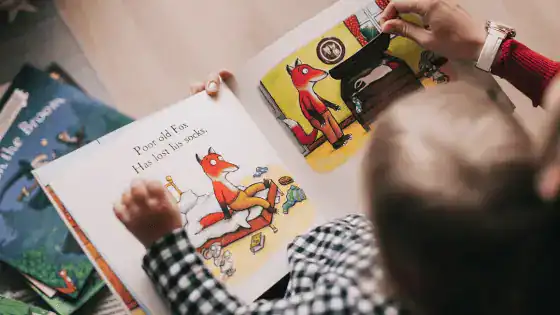
For older or stronger learners: add questions, opinions, and new grammar
Older children, or those with stronger English, need a bit more challenge to stay interested.
You can:
- Ask them to summarise the story in two or three sentences in English.
- Invite them to change the ending. “What if the monster was friendly? Tell me.”
- Ask them to describe feelings. “How does the girl feel now? Why?”
- Let them create one new line of dialogue for a character.
You can also pick one simple grammar pattern from the story and play with it, for example:
- “Can”: “The dragon can fly.” Then ask, “What can you do?” They answer, “I can swim”, “I can jump.”
- “Have got”: “The boy has got a red car.” Then, “What have you got in your room?”
- Past tense: “He opened the door.” Then, “What did you do today?” with short answers.
Keep grammar talk very simple rather than a complicated, dense lesson before bed. Focus more on incorporating it as part of the conversation and link it to the story.
At this stage, it really does depend on your children’s individual English language level. Folktales and Fairytales can be a great entrance point, then moving on to short chapter books. My own children have enjoyed series such as Zoe’s Rescue Zoo and the Pokemon books as they have familiar characters and fun adventures in each book, yet the language used isn’t too complicated.
Keeping everyone involved when your children have different levels
When your children have different levels, the secret is to give each child a role.
Some ideas:
- Let older children “help” explain easy words in English to younger ones.
- Take turns choosing the story, so everyone feels included.
- Give each child a special job, for example, page turner, picture pointer, repeated line leader.
Make it clear that this is not a test. It is family story time in English. If one child does not want to speak one night, let them just listen. Pressure kills motivation at bedtime, removes trust, and takes away previous confidence they may have built surrounding English.
Using small follow-up activities without delaying bedtime
You can add tiny follow-up activities after the story, but keep them short so bedtime stays calm.
Ideas that take 2 to 5 minutes:
- Ask your children to draw one scene from the story tomorrow and show it at bedtime.
- Act out one tiny part of the story, such as the monster knocking on the door.
- Choose one new word from the story and “hunt” for it the next day, in books, outside, or in the house.
- Say goodnight to objects in the room in English, for example, “Good night, pillow”, “Good night, teddy”.
These little extras help the English move from the book into real life, bringing additional language practice into your everyday routines.

Making Bedtime English a Habit Your Children Love
To see real progress, you want bedtime English to last for months and years, not just a week.
Set gentle goals and celebrate small English wins
Start with tiny, clear goals, such as:
- “We will read one English story every night.”
- “We will learn three new words this week.”
Celebrate small wins, for example:
- Your child uses a new word by themselves.
- They ask for a book in English.
- They repeat a full sentence from the story.
You might keep a sticker chart, choose a “word of the week”, or have a little family habit of saying, “I am proud of you for trying English tonight.” Warm praise is powerful and can be a strong motivator.
Rotate story types so children do not get bored
Even the best book can become tiresome if you read only that one week after week.
You can rotate:
- Funny stories
- Calm, sleepy stories
- Short poems or rhymes
- Picture books with few words
- Short chapter books for older children, read over several nights
- Stories from different cultures, including your own, in English
You might have:
- One or two “family favourites” that come back often, for comfort.
- One “new story night” each week, so there is some surprise.

Handle resistance, tiredness, and busy evenings
Some nights will be hard. You or your children will be too tired. That is normal and it’s ok.
On those nights, you can:
- Read a very short story, or even just one page.
- Tell the story from memory in simple English while looking at the pictures.
- Let your children choose between two very easy English books, so they feel in control.
The key idea is to keep some English, even a tiny bit, instead of skipping it. A one-minute English story is still part of the daily habit.
How to see progress when using bedtime stories to teach English
Progress with bedtime English can be quiet and slow, so you might miss it if you do not look for it.
Signs that your bedtime stories are working:
- Your children start to repeat phrases without you asking.
- They guess meanings from pictures instead of asking for translations.
- They ask for a particular English story.
- They use English words during playtime.
You can keep a small notebook and jot down new words or phrases that your children say in English. When you feel tired or doubt yourself, read back and see how far they have come. This keeps you motivated too.
Join the FREE Resource Library
Looking for FREE quality printables, templates, and guides to help you teach your kids ESL at home?
Join theOET’s FREE Membership and gain access to 10s of resources designed by a qualified teacher to help your family learn English at home.
New resources are added every month. Save time, money, and stress with pre-made educational printables and guides.
You now know how to use bedtime stories to teach English in a gentle, natural way. You can choose simple, picture rich books, follow a short routine, and adapt the same story for all your children, from toddlers to older siblings.
You do not need to be a perfect teacher or a native speaker. You only need consistency, warmth, and a few simple techniques like repetition, pointing, questions, and shared phrases. Over time, these tiny moments add up.
Tonight, pick one short story in English, set one small goal, and try a calm reading together. Those quiet minutes in the dark, with soft voices and shared stories, will slowly build strong English skills and happy family memories for every child in your home.


Related Posts
- Online English Stories for Kids: A Friendly Guide for ESL Families at Home
- Best Storybooks for Young ESL Learners at Home (Ages 3–8)
- The Lion and the Mouse Story in English
- Bilingual Storytime: Tips for Using Dual-Language Books to Learn English
- Engaging Your Child’s Imagination: Story-Based English Learning Activities

