
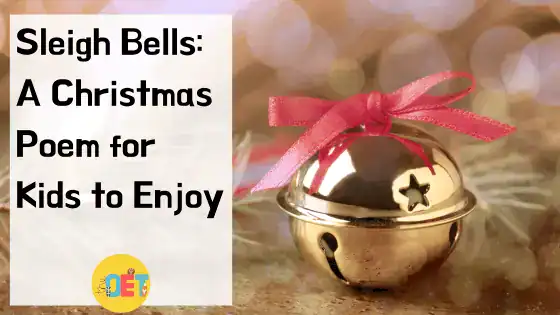
You know that cosy moment when you curl up with your children, the lights are soft, and you are ready for a short, seasonal story together? That is exactly the feeling you hear this Christmas poem for kids, Sleigh Bells by Evaleen Stein. With its gentle rhythm, sparkling winter images, and repeated sound words like tinkle, tinkle, tinkle, it is a lovely choice for bedtime, quiet time, or English practice at home.
In this post, you will find the full poem, ideas for how to use it as an ESL activity, and simple winter crafts and games you can add. You will also see how to build vocabulary in a playful way, so your children learn English while they enjoy a magical winter moment with you.
Sleigh Bells is a simple, short, yet magical Christmas poem for kids to listen to. They can enjoy the colourful images whilst picking up new, seasonal vocabulary words.
Discover “Sleigh Bells” by Evaleen Stein
Sleigh Bells is a short, musical Christmas poem for kids that fits perfectly into a family routine. It is calm and charming, and it invites your children to listen, imagine, and repeat simple English words.
The poem follows a happy winter moment with a baby, twinkling eyes, and sleigh bells that seem alive with fairies and tiny elves. The bells shake in the cold and finally “shiver into laughter”. Even though it is only a very short poem, it feels like a tiny, magical story when read aloud.
For children who are learning English, this kind of poem works very well. The rhythm helps them remember words, and the strong images give them something clear to picture in their mind. You can come back to it many times without it feeling long or tiring.
My own children have enjoyed watching this video and listening to the story on repeat. It’s gentle, charming, and ideal for the holiday season to add a bit of “magic” at home.
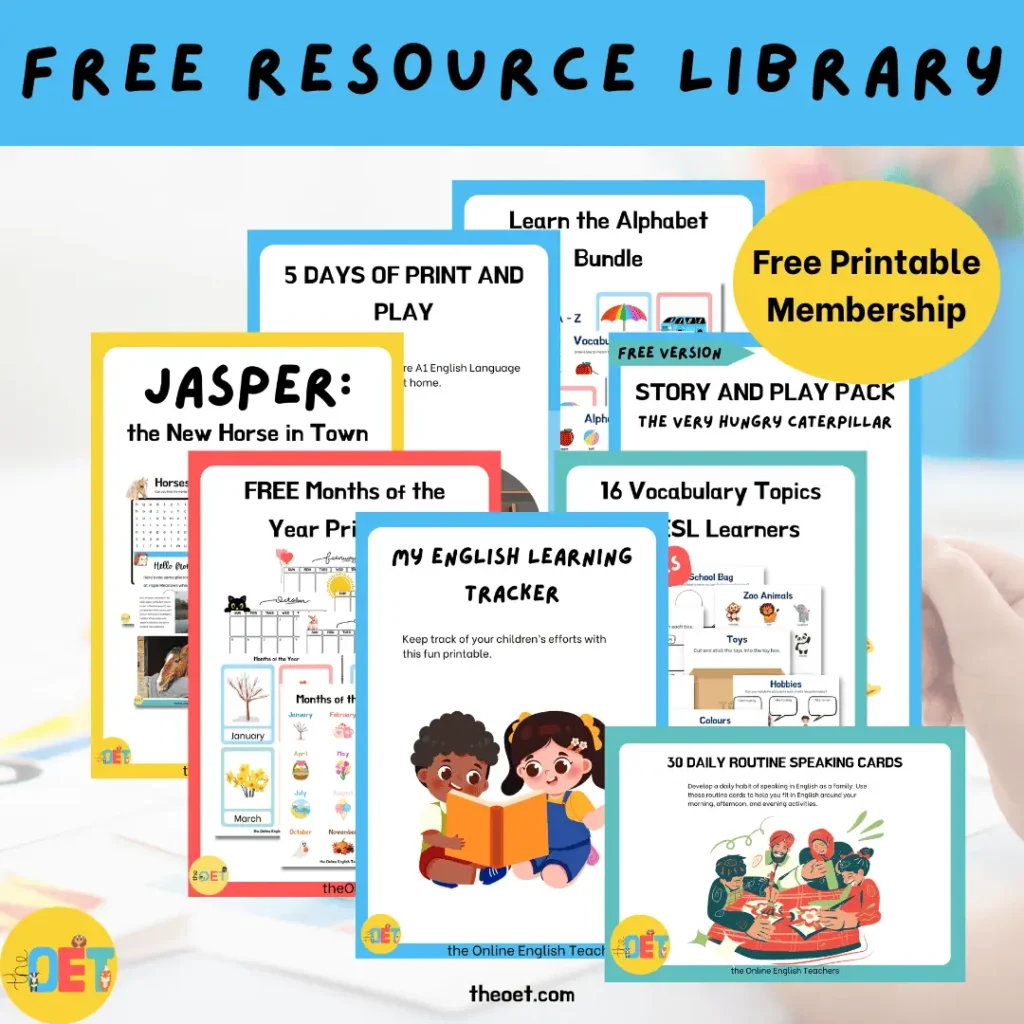
Join the FREE Resource Library
Looking for FREE quality printables, templates, and guides to help you teach your kids ESL at home?
Join theOET’s FREE Membership and gain access to 10s of resources designed by a qualified teacher to help your family learn English at home.
New resources are added every month. Save time, money, and stress with pre-made educational printables and guides.
A Cosy Read-Aloud Welcome From Me
In the video, I greet your children in a gentle, friendly voice. I introduce that I am going to read a winter poem, Sleigh Bells by Evaleen Stein, and then invite you to get cosy and ready to listen.
This simple welcome sets the tone. You can copy the same approach at home. You might dim the lights, turn on Christmas lights or your Christmas tree lights, sit on the sofa together with a favourite soft toy, and say something like, Are you ready? Let’s go. When you repeat the same routine every time, your children start to recognise the routine and feel excited for “reading time”.
The Full Poem Text for Reading Along
Here is the poem, line by line, so you can read along with the video or on your own:
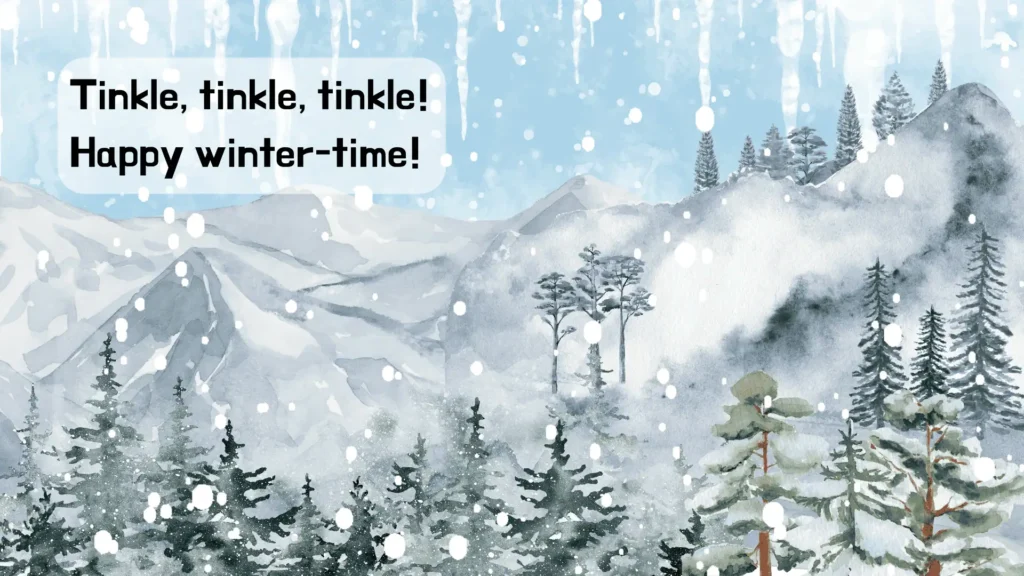
Tinkle, tinkle, tinkle!
Happy winter-time!
Baby’s eyes a-twinkle,
Hear the sleigh-bells chime!
Each one rings a merry
Ting-a-ling-a-ling!
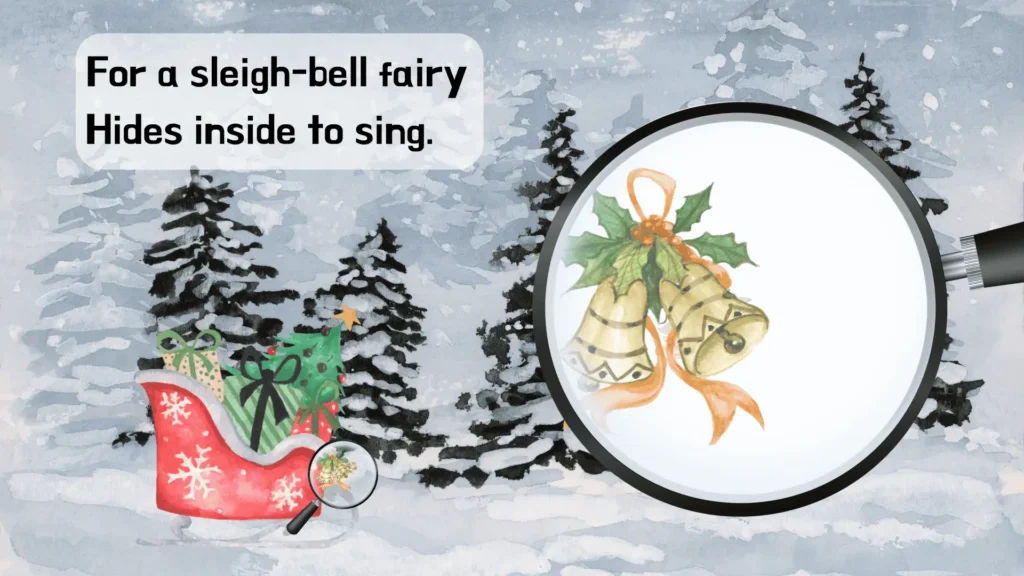
For a sleigh-bell fairy
Hides inside to sing.
See them quake and quiver,
Up and downward tossed,
Seems as if they shiver
In the nipping frost!
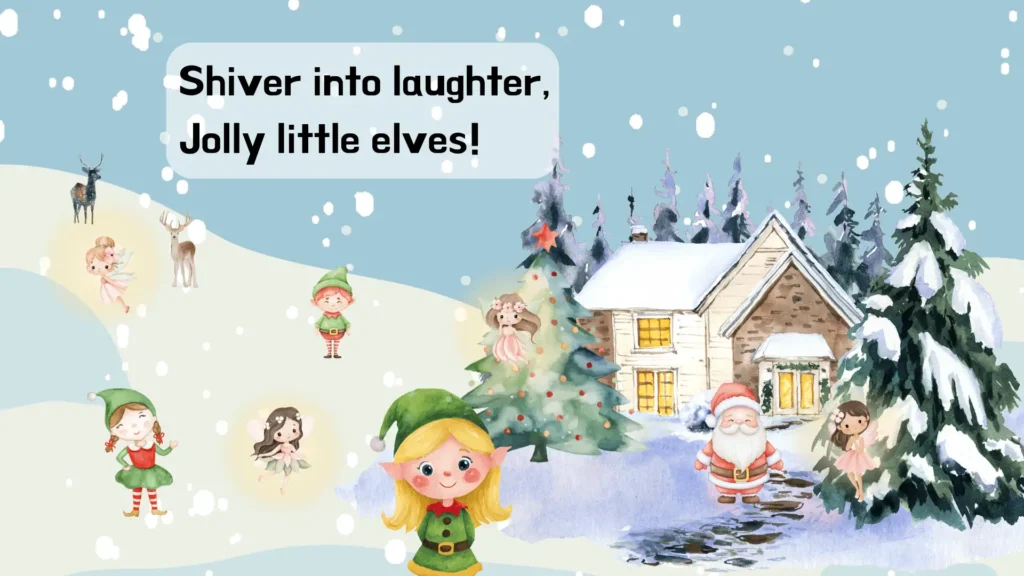
Shiver into laughter,
Jolly little elves!
Till we laugh thereafter,
Merry as themselves!
You might like to print these lines, write them out on a pretty card, or copy one stanza at a time for your children to decorate or copy. You can draw little bells that quake and quiver, fairies inside the bells, and tiny elves laughing. Turning the poem into something your children can see and colour helps them connect words, sound, and image.
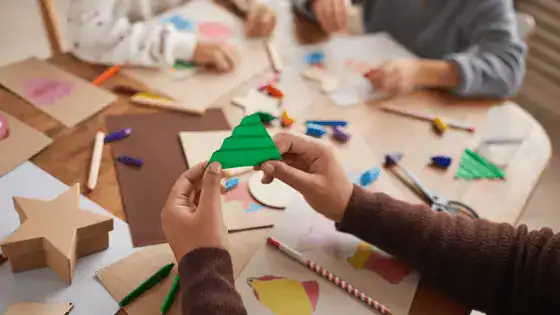
At home, we really enjoyed making our own paper craft bells after watching the video. We made something very similar to these bells here, but without the actual bell. Or you could try this version which are very cute and colourful.
Video Closing In The Same Warm Tone
At the end of the reading, I finish with a kind thank you: “Thank you ever so much for listening. Goodbye.”
You can mirror this at home by also closing your poem time in a calm, steady way. A simple Thank you for listening, that was lovely helps your children see that they have done something positive, that their listening skills matter, and you value their attention.
Fun Vocabulary From “Sleigh Bells” For Young Learners
One of the nicest things about this poem is the clear, interesting vocabulary. Each word links to a strong picture, so it is easier for children to remember and use later.
You do not need to “teach” every word at once. You can choose one or two words each time you read, talk about them, and maybe act them out.
Key Words Focused On Winter Joy
Here are the key words from the poem and video description, with simple meanings you can share:
- Winter: In the poem, “Happy winter time” paints a cold, joyful season with frost and bells. You might point to a picture of snow or a cold day.
- sleigh bells: “Hear the sleigh bells chime” refers to little metal bells on a sleigh. You can show a picture of a sleigh or jingle some keys to copy the sound.
- merry: “Each one rings a merry tingling” shows that the sound is happy and bright. Merry is similar to happy or cheerful.
- fairy: “For a sleigh bell fairy hides inside to sing” suggests a tiny magic person inside the bell. Many children already know fairies from stories.
- tossed: “Up and downward tossed” means the bells are thrown or shaken up and down, perhaps as the sleigh moves.
- shiver: “Seems as if they shiver in the nipping frost” shows the bells shaking like a person who is very cold. You can shiver with your body to show this.
- frost: “Nipping frost” is very cold air that seems to bite your nose and fingers. If you live in a warm place, you can use a freezer door or cold drink as an example.
- elves: “Jolly little elves” are small, playful helpers often linked to Christmas. You can point to pictures of Christmas elves if you have any decorations.
- laughter: “Shiver into laughter” shows how the cold and shaking turn into happy giggles.
You might say the word, ask your children to repeat, then link it to an action. For example, for shiver, you say the word, then you both hug your arms and shake. Movement turns vocabulary into a fun memory.
Perfect for ESL Kids and Beginners
If you are raising your children with more than one language, or if English is not your first language, this poem can fit smoothly into your routine. The lines are short, and many words repeat. That makes it much less scary for children who are just starting in English.
You can let your children listen first with no pressure, then later invite them to join in with just one word, like winter or merry. Over time, they may start to chant whole lines on their own.
Why This Poem Is Perfect for Winter and Christmas
You can enjoy Sleigh Bells at any cold time of year, but it feels perfect near Christmas. It has sleigh bells, tiny elves, and a fairy hidden inside the bells. The mood is gentle and joyful, and it never becomes too noisy or chaotic, which is helpful if your children are already excited by the holidays.
Image Of Sleigh Bells And Elves
The poem is full of strong, simple images that your children can picture:
- Sleigh bell fairies singing inside little bells.
- Bells that quake and quiver as if they are alive.
- A cold, “nipping” frost that makes even bells seem to shiver.
- Jolly little elves who laugh and make others merry.
You can also think about the senses:
- Hear: The “tinkle, tinkle, tinkle” sound, the “merry tingling”, and the sleigh bells that chime.
- See: The baby’s “eyes a tinkle”, the shaking bells, the idea of a fairy hiding inside.
- Feel: The cold “nipping frost”, the body shivering, then the warmth of laughter shared together.
Talking about what your children can see, hear, and feel in the poem supports both language and imagination. It also gives you natural chances to recycle the new words many times, without it feeling like a test.
Holiday Ties For Kids’ Story Time
This poem appears in a video titled as a Christmas Poem for Kids and a Winter Poem in English for Kids, and that is exactly how you can use it. It is short enough to read:
- after opening an advent calendar door
- before bedtime during December
- at the start of a home English session
You might pair it with other gentle Christmas stories, or use it as your “warm up” before singing a carol. If your family does not celebrate Christmas, you can still enjoy it as a winter poem about cold and bells and laughter.
Simple Activities To Learn English With “Sleigh Bells”
You can turn this one little poem into a whole set of learning moments. You do not need special training or a big box of materials. A few basic items and your own voice are enough.
1. Listen and point
Use the video and your own printed copy of the poem.
- Play the video once, just listening.
- Play again, and this time, point to each line as I read.
- Ask your children to point to one word they know, such as “baby” or “winter”.
If your children cannot read yet, they can still point to pictures to demonstrate their understanding. You can draw simple icons near each line, like a snowflake, a bell, a fairy, or an elf.
2. Echo reading with actions
Echo reading means you read a line, and your children repeat it. This offers a gentle practice of learning English, and it helps build confidence.
You can add simple actions to help:
- “tinkle, tinkle, tinkle”: wiggle your fingers like stars.
- “Baby’s eyes a tinkle”: point softly to your eyes.
- “Hear the sleigh bells chime”: cup your hand to your ear.
- “See them quake and quiver”: shake your hands like small bells.
- “Shiver into laughter”: pretend to shiver, then both giggle.
The actions give your children a clue to meaning, so even if they do not understand every word yet, they follow the story with their movements. You can then follow up afterwards with a word game such as charades, showing a movement for your children to guess the correct word.
3. Sound Hunt: tinkle, tingle, chime
This poem has wonderful sound words, sometimes called onomatopoeia, where the word imitates a sound.
You can:
- Repeat tinkle and tingling and stretch the sounds.
- Go around the house to find objects that can copy a light bell sound, like keys, a teaspoon on a cup, or a small toy.
- Ask, Does this sound like tinkle? Or more like bang? and sort the sounds together.
Your children hear the difference between soft and loud sounds and link this with English sound words.
4. Winter Bell Craft
A simple craft keeps little hands busy while you repeat the poem and creates a prop they can use during retelling.
You might:
- Use paper cups or folded card to make bells.
- Attach a small bead, metal washer, or button with string inside so it can jingle.
- Let your child draw a fairy or an elf on the outside of the bell.
As you shake the bells, say lines from the poem: Each one rings a merry tingling. Your children hear that line again and again, but in a natural way.
Remember you can follow this video to make some colourful bells, or read these instructions to create bells similar to what my own family made after reading the poem together.

5. Role-play with Elves and Fairies
If your children enjoy pretend play, you can turn the poem into a mini drama.
You might:
- Choose one person to be the “sleigh bell fairy” who sings.
- Let another person be a “jolly little elf” who laughs and makes others laugh.
- Have one person be the “nipping frost”, who makes everyone shiver.
You can say simple English lines while you act, such as I am cold, I am shivering, or I am a merry elf. This is especially helpful for ESL families, because it gives a reason to speak English in a fun way.
Using The Poem In Your Home ESL Routine
If you are teaching English at home, it helps to link the same poem to different skills, like listening, speaking, reading, and even early writing.
Here are a few practical ways to do that with Sleigh Bells.
Build a Short, Repeatable Routine
You do not need a long lesson every week. Ten to fifteen minutes a day can be plenty of English language practice for young children.
For example:
- Start with the video or your own read-aloud.
- Ask one or two simple questions, such as Cold or hot? while hugging yourself and shivering.
- Practise one key word, like winter, in a short phrase: It is winter. It is cold.
- Finish with a quick action, like shivering into laughter.
This kind of pattern helps your children know what to expect and keeps their focus.
My own children have really short attention spans and by offering topics in short, activity bursts has really helped them improve their skills, but also retain what we have covered too.
Support Reading and Writing in Gentle Steps
For slightly older children, you can:
- Highlight or circle all the “w” words, like winter and we.
- Ask them to copy their favourite line in their best handwriting.
- Cut the lines into strips and mix them, then help your children put them back in order.
You are still keeping the poem as a fun text, but you add chances to look closely at letters and structure.
Using the poem as copywork is another great opportunity for older children to practice writing in English and review grammar at the same time. Copywork is simply copying a section of text as it is written. It can help take away the pressure of coming up with new ideas on a blank piece of paper, and help children learn from a range of written English examples.
Free Resources and Ways to Connect
You do not have to plan everything alone. There are tools and resources ready for you, made with ESL families in mind.
Grab printables and more poems
You can join theOET’s free printable membership and download teaching materials, including activities you can pair with poems and stories. Visit the free resource library for printables to explore worksheets, story cards, and more ideas to support your home lessons.
You might use these printables to create your own winter-themed flashcards. Or maybe you will access the winter colouring pages or winter vocabulary poster.
Join the FREE Resource Library
Looking for FREE quality printables, templates, and guides to help you teach your kids ESL at home?
Join theOET’s FREE Membership and gain access to 10s of resources designed by a qualified teacher to help your family learn English at home.
New resources are added every month. Save time, money, and stress with pre-made educational printables and guides.
Join the Community
For more stories, teaching tips, and ideas on using short texts like Sleigh Bells in your home, you can read the main Online English Teachers blog. It offers guidance that fits family life, not just formal classrooms.
If you would like to meet other parents who are also raising children with English as a second language, you can join the Learn English for Kids Facebook group. Sharing what works for you, and hearing how others use poems and songs, can give you fresh ideas and encouragement.

Join the FREE Community
Gain lots of activity ideas, book recommendations, freebies, and support to help you with everything you need for your children to succeed in their English language learning journey.
A short, musical Christmas poem for kids like Sleigh Bells can become a small but powerful part of your English routine at home. With only a few lines, you give your children new words, clear sounds, and a warm picture of winter joy that you both can share.
You can listen, repeat, act, and create, all from this one poem, and each time you do, your children’s confidence with English grows a little more. The most important thing to do when reading this story, is to enjoy it together as a family. Your children will engage more if everybody is participating and will feel excited for the next story as an opportunity for important family bonding time.
Try reading or watching the poem again with your children today, then choose just one simple activity from this post to add. Turn it into a daily English routine by reviewing a story of the week and completing one fun, educational activity afterwards.
Learning English doesn’t have to be boring. Your children can thrive by learning through stories, play, and hands-on activities.
If you read along with this poem, share your experience in my Facebook group so other families can find value in this free resource.
Related Posts
- Winter Poem for Kids: The North Wind Doth Blow
- 20 Christmas Printables for Kids Learning English as a Second Language
- 20 Winter Printables for ESL Learners (including a FREE Download)
- How to Use Bedtime Stories to Teach English at Home
- Creating a Storytelling Routine: Incorporating English into Your Family’s Daily Life
Hi, I’m Catherine
I help children learn English at home through stories and play with affordable and accessible resources. With over 10 years of experience educating children and over 5000 online ESL classes, I’ve learnt what methods work to keep children engaged and motivated to learn.
I look forward to helping your children develop their English skills!


