Looking for a cosy way to learn English at home this winter? This classic winter poem for kids brings gentle rhythm, simple repetition, and lovely nature images that young learners can follow with ease.
You will meet familiar British creatures like the robin and honeybee, learn what they do in cold weather, and enjoy the comfort of a shared read-aloud. Not only that, but you will also find practical ideas for building vocabulary, speaking, and listening skills together as a family.
What You’ll Hear In The Poem
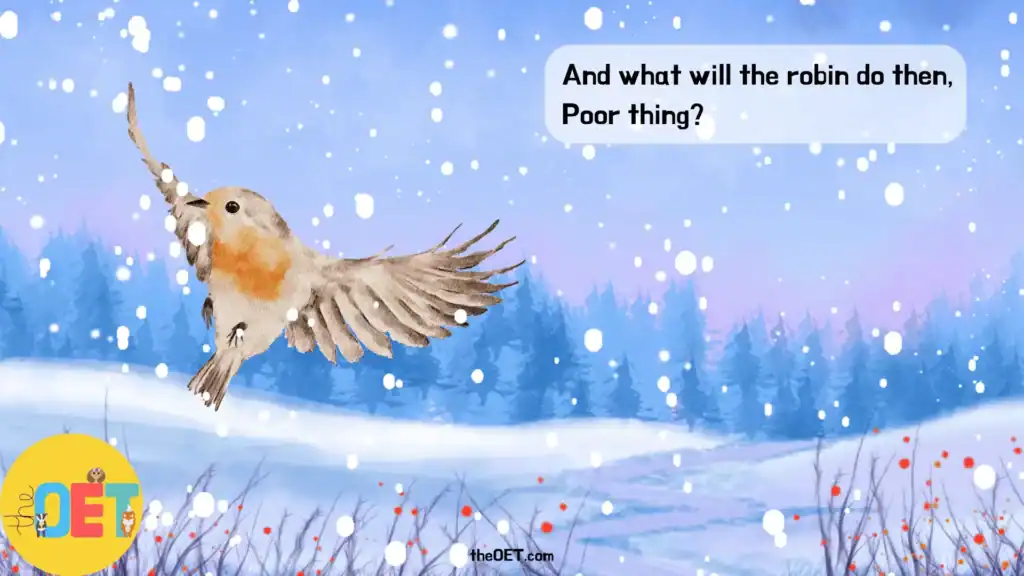
This traditional poem, first published in 1805, repeats a simple pattern that is ideal for early language learning. Each stanza starts with the line, “The north wind doth blow, and we shall have snow,” and then wonders what a creature will do in the cold. The repeated question, “What will the [animal] do then, poor thing?” invites empathy and prediction.
Across the verses, you hear how different animals and even children respond to winter:
- The robin shelters in a barn and stays warm.
- The swallow has already flown to a warmer country until spring.
- The dormouse curls up to sleep until warm weather returns.
- The honeybee stays in the hive during the cold.
- The children, after lessons, run and play to keep warm.
It is calm, rhythmic, and reassuring. The poem blends weather, animal habits, and daily life in a way that feels both educational and comforting.
Why Poetry Works For Family ESL Learning
Short poems with clear repetition are perfect for home learning. They give you an easy structure to copy, speak, and act out together. The repetition helps children internalise vocabulary and sentence patterns, and the rhyme supports pronunciation and rhythm. You can listen, repeat, move, and draw from the same set of lines.
Here are a few reasons this poem helps:
- Repetition: Key words return often, so children hear and use them many times.
- Rhyme and rhythm: These guide pronunciation and support memory.
- Prediction: Each verse asks a question, which encourages children to guess and speak.
- Context: Weather and animals are familiar topics, great for daily talk.
Key Vocabulary To Learn Together
Here are the main words you can practise from the poem. Say them, clap the syllables, and use them in short sentences.
- North: The direction that is opposite to south.
- Wind: Moving air that you can feel outside.
- Blow: What the wind does.
- Snow: Soft, white ice crystals that fall from the sky.
- Robin: A small bird with a red chest.
- Swallow: A bird that migrates to warmer places in winter.
- Spring: The season after winter when the weather gets warmer.
- Dormouse: A small mouse-like animal that sleeps through winter.
- Honeybee: A bee that lives in a hive and makes honey.
- Hive: The home of bees.
- Children: Young boys and girls.
You can add simple phrases too: “keep warm,” “hide his head,” “rolled up like a ball,” “sleep till warm weather,” “off long ago,” “in his hive”, to add details and descriptions.
What Each Creature Does In Winter
Use this table to talk about each verse. Read a stanza, then check the table together. It offers a quick way to review the meaning of different vocabulary words and practise speaking in sentences.
| Character | Where they go or what they do | Why it helps them in Winter |
| Robin | Sits in a barn, hides his head under his wing | Stays warm and safe from the cold |
| Swallow | Flies to a country where he will find spring | Migrates to find food and warmth |
| Dormouse | Rolls up like a ball in his snug nest and sleeps | Saves energy by hibernating |
| Honeybee | Stays in the hive till the cold is away | Keeps warm and waits for flowers |
| Children | Skip, jump, and run after lessons | Warm up through active play |
Model sentences:
- “The robin sits in a barn to keep warm.”
- “The swallow flies away to find spring.”
- “The dormouse sleeps in his nest until it is warm.”
A Simple Read-Aloud Routine You Can Use
Try this 10-minute routine to make the most of your reading time. Keep it friendly and flexible. If your children want to repeat a favourite verse, do it again.
- Warm up with weather words. Say wind, blow, snow. Make wind noises and hand motions.
- Play the video once. Just listen and enjoy.
- Echo lines. Pause after each line and repeat together.
- Act it out. Fold arms like wings for the robin, pretend to fly like the swallow, curl into a ball like the dormouse, buzz softly for the honeybee.
- Quick questions. What does the robin do? Where does the swallow go? Which animal sleeps?
- Repeat the chorus. Say “The north wind doth blow, and we shall have snow,” together.
- Finish with a pick-a-verse. Let your children choose their favourite stanza and perform it.
- Create a new verse. Offer the repeated sentence phrases from the poem and ask your children to fill in the gaps with a new character, e.g. “And what will the fox do now, poor thing?”
Small, regular practice beats long sessions. Aim for a few minutes most days.
Pronunciation And Rhythm Tips
Poetry is great for sound work. Focus on a few features each time:
- The th sound: north, doth. Place your tongue gently between your teeth and blow air.
- The w sound: wind, will, wing, warm. Round your lips slightly.
- The long o: blow, snow. Hold the vowel a touch longer.
- Word stress: NORTH wind doth BLOW, and WE shall have SNOW. Clap the strong beats.
Try call-and-response. You read a line, and your children repeat. Add a soft beat by clapping on the stressed words.
Conversation Starters In English
Use the poem as a springboard for natural talk. Keep questions short and open.
- What is the weather like today? Cold, warm, windy, snowy?
- Which animal do you like best? Why?
- How do you keep warm in winter?
- Where do bees live? What is the name of their home?
- What do you think the children do after lessons?
Encourage full sentences. If your children answer with one word, model a complete sentence, then let them try again.
Build A Mini Winter Word Bank
Create a simple word bank on paper or a whiteboard. Add words from the poem and words from your day. Keep it visible and easy for your children to access and refer back to:
- Weather: wind, snow, cold, warm
- Animals: robin, swallow, dormouse, honeybee
- Places: barn, nest, hive, country
- Actions: blow, sit, hide, sleep, fly, run
Play quick games with the word bank:
- Point and say. You point, your child says the word.
- I spy with a twist. “I spy a word that means the home of a bee.”
- Word match. Match words to simple pictures you draw together.
Hands-On Activities To Learn English With The Poem
Here are a few activities that make language learning active and fun at home.
- Picture sequencing: Draw or print simple pictures for each verse. Mix them up, then put them in poem order. Say the lines as you go.
- Animal charades: One person acts as the animal in winter. The rest guess using full sentences, for example, “You are the dormouse. You are sleeping.”
- Rhyme hunt: Find and circle rhyming words you hear, for example, wing and thing, spring and thing.
- Build-a-verse: Keep the first line, then invent a new animal verse. “The north wind doth blow, and we shall have snow. And what will the hedgehog do then, poor thing?” Decide together what the hedgehog does, then act it out.
- Winter map: On a world map, find a country that is warmer in winter. Say, “The swallow goes to a warm country.” This builds simple geography talk.
- Cosy corner reading: Create a small reading spot with a blanket and soft light. Ritual helps children focus and feel calm.
Simple Worksheets You Can Make In Minutes
You do not need fancy printables to learn well, although ready-made resources can help save you a lot of time. Try these easy homemade sheets:
- Match and draw: On one side, write the animal. On the other side, draw the place they are in the poem. Draw lines to match, for example, robin to barn, honeybee to hive.
- Fill the gap: “The north wind doth ___, and we shall have snow.” Words to choose: blow, fly, sleep.
- Sentence builder: Cut up words from a verse and rebuild the line together.
- Sort the words: Make two columns, Animals and Places. Sort: robin, swallow, dormouse, honeybee, barn, nest, hive, country.
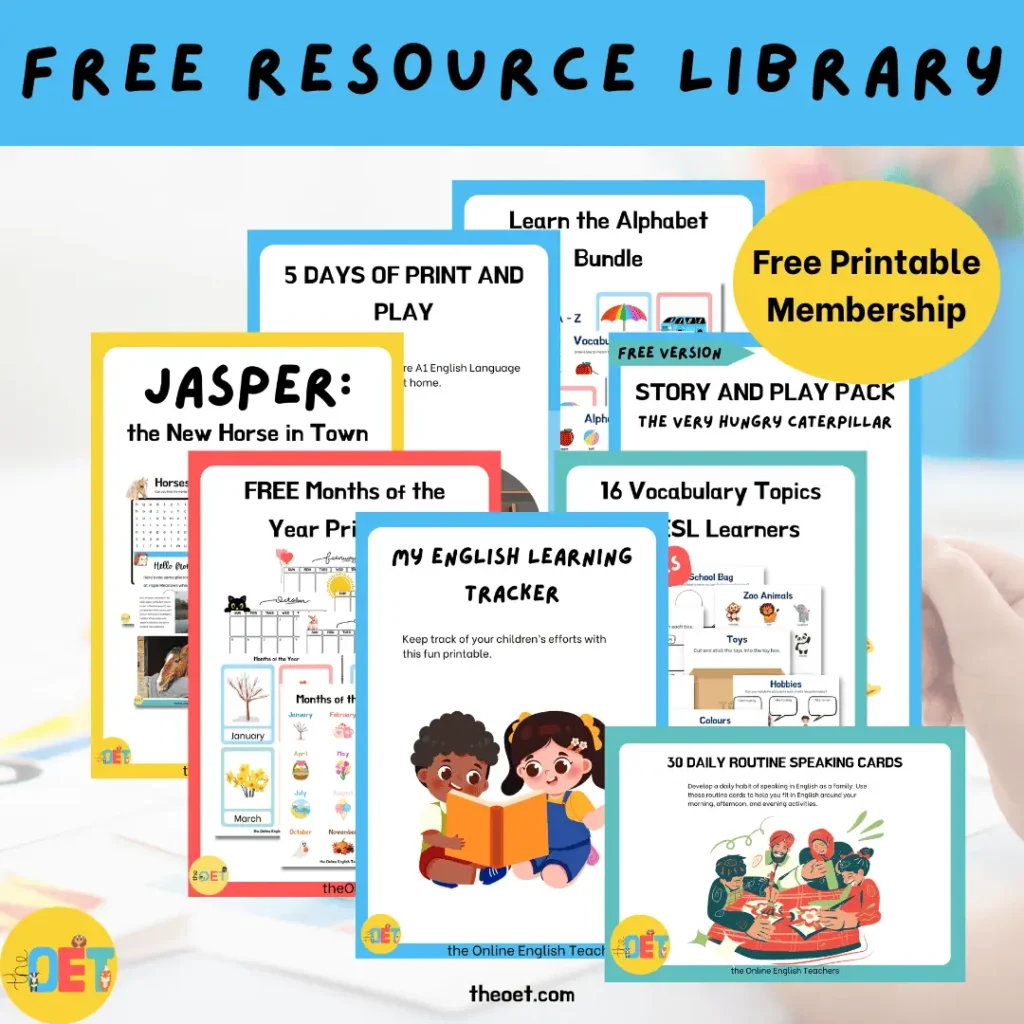
If you want ready-to-use materials, you can browse the family ESL blog at theOET or download printables from the free resource library.
Join the FREE Resource Library
Looking for FREE quality printables, templates, and guides to help you teach your kids ESL at home?
Join theOET’s FREE Membership and gain access to 10s of resources designed by a qualified teacher to help your family learn English at home.
New resources are added every month. Save time, money, and stress with pre-made educational printables and guides.
Extend Learning With Nature And Play
Bring the poem into real life, making it more meaningful for your children. Talk about it on a walk or during play.
- Nature watch: Look for birds in winter. Can you spot a robin? Describe what it is doing.
- Weather diary: Each morning, write two sentences. “It is windy. We will wear hats.”
- Build a mini hive: Use blocks or paper to make a “hive,” then act out bees coming out in spring.
- Barn play scene: Use toy animals to set up a barn. The robin can “sit in a barn and keep warm.”
Keep language simple and repeat patterns from the poem.
Support For Parents
If you are teaching English at home, you don’t have to do it all alone. Try to maintain a consistent routine for learning English, e.g. 10 minutes every day. These small steps can lead to big, positive outcomes over time.
For a sense of community and to gain fresh ideas, you can connect with others in the ESL Families Facebook group. Share what worked for you, ask questions, and pick up tips from other families.
A Short Guide To Repetition, Review, And Routine
Children thrive on routine. Here is a gentle pattern you can repeat during the week:
- Monday: Watch and listen. No pressure to repeat.
- Tuesday: Echo-read the first two verses with actions or story props that you can draw yourselves from the story.
- Wednesday: Review vocabulary with a quick game, then read all verses together.
- Thursday: Do a worksheet, drawing from the poem, or create a craft e.g. making a bird feeder for the winter.
- Friday: Perform a favourite verse for the family, review key vocabulary, and celebrate effort.
Keep sessions relaxed, hands-on, and fun. Praise effort rather than focusing on perfection. If a sound is tricky, be positive and encourage your children to try again together.

Frequently Asked Questions From Parents
- How old should my child be for this poem?
- Young children and beginner learners are the perfect age to enjoy this poem. The rhythm supports listening to early phonics sounds, it has great repetition to repeat catchy lines, and offers simple vocabulary and sentence structures.
- What if my child mixes up words like dormouse and door mouse?
- That is normal. Say the word slowly, show a picture, and use it in a sentence. Over time, they will retain the correct spelling. It’s important to make spellings fun rather than a chore, such as spelling drills. Use them in play, hands-on activities, or games.
- Can we use our first language?
- Yes. A quick explanation in your home language can reduce frustration. Then return to English for practice.
- How often should we repeat the poem?
- Little and often works best. A few minutes a day builds confidence fast. I like to recommend at least 10-15 minutes each day for beginner language learners.
A Note On Cultural And Nature Links
This poem gives a tiny glimpse into animal behaviour and seasonal change. The swallow migrates for warmth, the dormouse sleeps, the honeybee stays in the hive, and the robin finds shelter. Use this as a soft introduction to seasons in the UK. Compare winter in your country to winter in the poem. Is it snowy where you live? Do you see robins or different birds?
Bring It All Together
By the end of a week with this poem, you will likely notice a few wins: clearer pronunciation of th and w sounds, stronger recall of winter words, and more confidence speaking in short sentences. You may also find that your children ask to hear the same verse again. That is a good sign. Repetition means learning is happening, and they are enjoying it, which is a huge bonus.
A classic winter poem for kids can be both a cosy story time and a gentle English lesson. With simple repetition, clear images, and supportive questions, this poem makes speaking and listening feel easy.
Try the read-aloud, add a few actions, and keep a small word bank on the wall to refer to. When you are ready for more, explore ideas on the family ESL blog at theOET and print helpful activities from the free resource library. If you want more friendly support, the ESL families Facebook group is a welcoming place to share progress and pick up fresh ideas. Keep it warm, simple, and consistent, and you will build real confidence.
Join the FREE Resource Library
Looking for FREE quality printables, templates, and guides to help you teach your kids ESL at home?
Join theOET’s FREE Membership and gain access to 10s of resources designed by a qualified teacher to help your family learn English at home.
New resources are added every month. Save time, money, and stress with pre-made educational printables and guides.