
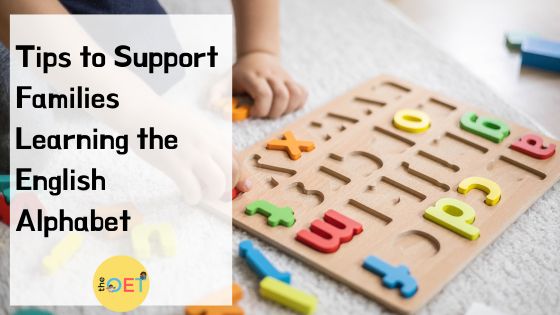
Learning the English Alphabet is often the first element many families tackle when teaching their children ESL. It offers a good starting point as it introduces children to all of the letters they will have to learn, handwriting practice to form each letter, and moving on to learn the relevant phonetic sounds.
But learning the alphabet doesn’t have to be boring by simply reciting it over and over again. There are ways you can make learning the English Alphabet fun by incorporating play and multisensory activities. By familiarising your children with the alphabet, you’re helping them make an excellent start in their English language journey. Here’s what you’ll find in this post:
- The basics: Understanding each letter’s sound and role in words.
- Engagement: Tips to make learning fun and effective.
- Progress: Building confidence and fluency with practice.
With these insights, you and your children can embrace a rewarding English language learning experience together.
Table of Contents
- A Look at the English Alphabet
- Learning Strategies for the English Alphabet
- Practical Applications of the English Alphabet
- Resources for Learning the English Alphabet
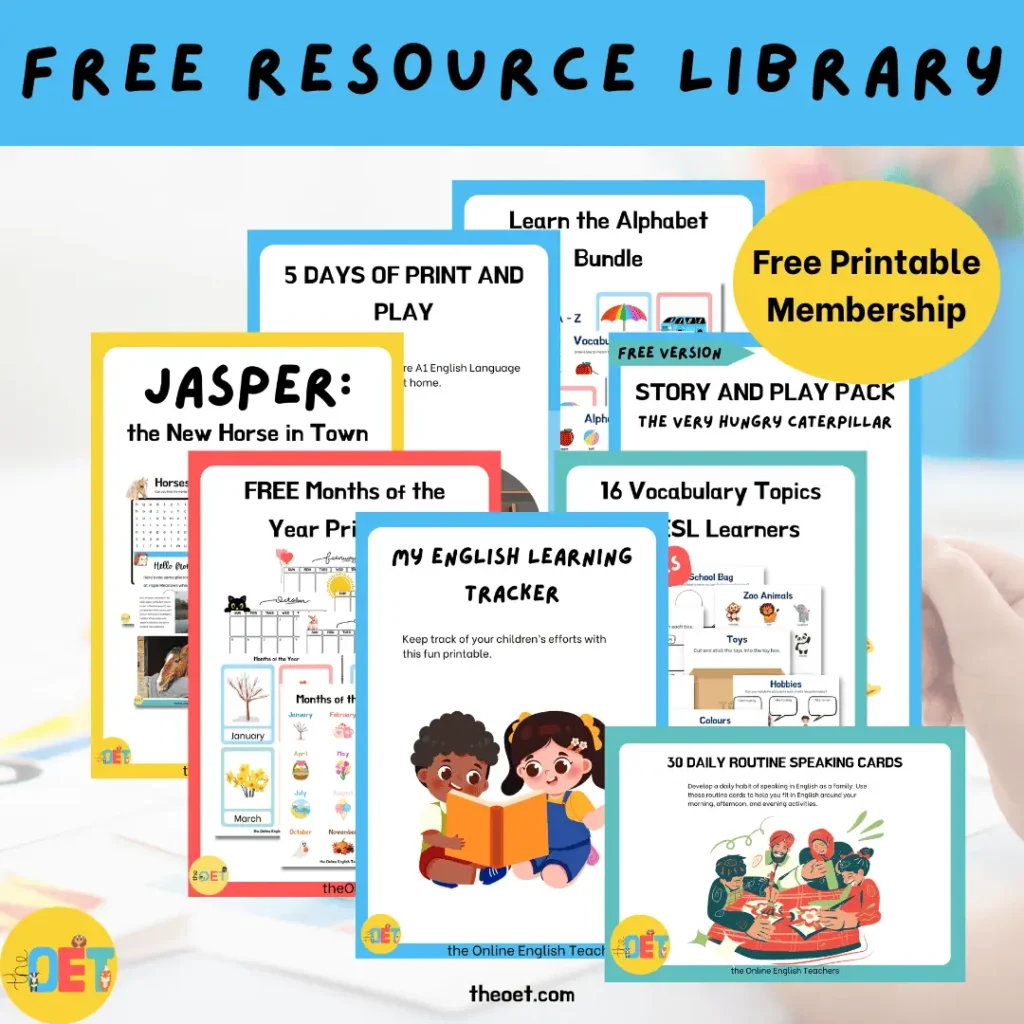
Join the FREE Resource Library
Looking for FREE quality printables, templates, and guides to help you teach your kids ESL at home?
Join theOET’s FREE Membership and gain access to 10s of resources designed by a qualified teacher to help your family learn English at home.
New resources are added every month. Save time, money, and stress with pre-made educational printables and guides.
Disclaimer: This post contains affiliate links. If you choose to make a purchase using these links, I may earn a small commission at no additional cost to you. You can view the full affiliate disclosure here.
A Closer Look at the English Alphabet
Understanding the English alphabet is essential for English language learners. It’s not only about recognising the letters but also understanding their individual roles and how they come together to form words and meanings. If you’re a parent with children in ESL (English as a Second Language), grasping this fundamental concept can significantly enhance their learning experience.
Structure of the English Alphabet
You might know the English alphabet has 26 letters. These letters are divided into two categories: uppercase and lowercase. The uppercase variants appear at the start of sentences or in names, while lowercase letters are more common in everyday text.
Here’s a quick summary:
- 5 Vowels: A, E, I, O, U
- 21 Consonants: All the rest e.g. b, w, j, r, etc.
- Uppercase: A B C
- Lowercase: a b c
Each letter has its own sound, or sometimes several sounds. This is crucial in the pronunciation and understanding of English words. By familiarising your children with both forms, uppercase and lowercase, you’re setting them up for reading and writing success.

Learning Strategies for the English Alphabet
When teaching your children the English alphabet, it is important to consider different learning styles that best fit your children’s needs. Here are three for you to consider: visual, kinesthetic, and auditory learning. By tailoring your approach to your children’s preferences, you can make learning the alphabet both fun and effective.
Visual Learning Techniques
Visual learners are those who benefit from seeing and visualising information. If your children learn best with pictures, these techniques could be ideal:
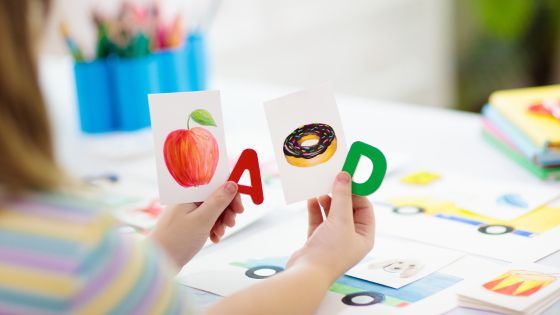
- Flashcards: Create a set of colourful flashcards illustrating both uppercase and lowercase letters. You can also add pictures of objects starting with each letter—like ‘A’ for apple—making the connection between the letter and its sound tangible and memorable.
- Alphabet Charts: Hang an alphabet chart in a visible spot at home. A constant visual reminder helps reinforce recognition and recall. Encourage your children to point out letters and perhaps name words that start with them every day.
- Educational Videos: There are many educational videos featuring animations and songs about the English alphabet that both educate and retain your children’s attention. Watching these can be a fun way for your children to learn independently.
Kinesthetic Learning Approaches
For those children who learn best by doing, kinesthetic methods focus on active participation. Here are some engaging activities:
- Letter Tracing: Provide your children with tracing worksheets or use apps that simulate tracing on a touchscreen. This hands-on practice helps cement the shape and form of each letter in their memory.
- Playdough Letters: Let them mould letters out of playdough. This activity is not just playful but also practical, as it helps strengthen fine motor skills while learning the English alphabet.
- Alphabet Games: Interactive games, like alphabet puzzles or scavenger hunts for objects that start with a given letter, turn learning into an adventure. These activities make the process less daunting and more like playtime.
Auditory Learning Methods
If your children have an ear for soaking up information from listening, consider integrating auditory strategies into their learning routine. Here are some examples:
- Songs and Rhymes: Use catchy songs and rhymes that incorporate the English alphabet. The rhythmic and repetitive nature of songs aids memorisation. You might start with classics like the “ABC Song” or explore newer educational tunes available online.
- Storytelling with Alphabet Sounds: Incorporating specific alphabet sounds into storytelling can really bring it to life. You could create stories where each main character’s name starts with a different letter, helping your children associate sounds with letters.
- Listening Games: Engage your children with pronunciation games where they have to listen and identify the letter being sounded out. These games enhance listening skills and phonetic understanding.
By embracing these diverse strategies, you can support your children’s journey in learning the English alphabet, ensuring it’s not just an educational task but a joyful experience.
Practical Applications of the English Alphabet
Learning the English alphabet isn’t just about reciting letters from A to Z. It’s a powerful tool that can build the foundation for reading and writing. As a parent, you might be wondering how exactly mastering these letters can support your children’s language journey. Here are some examples of the real-world benefits that come from knowing the alphabet inside and out.
Join the FREE Resource Library
Looking for FREE quality printables, templates, and guides to help you teach your kids ESL at home?
Join theOET’s FREE Membership and gain access to 10s of resources designed by a qualified teacher to help your family learn English at home.
New resources are added every month. Save time, money, and stress with pre-made educational printables and guides.
Reading Development
Understanding the English alphabet is the cornerstone of developing strong reading skills. Often, the alphabet is learnt alongside teaching phonics. Mastery of these letter sounds helps to:
- Recognise Words: By knowing each letter’s sound through phonics, your child can start to decode words. This is the key to transforming letters into stories and information.
- Enhance Comprehension: When your children confidently identify and sound out words, understanding what they’re reading becomes much simpler.
- Build Vocabulary: Familiarity with the alphabet promotes quicker learning of new words. They can spot and remember unfamiliar words more easily, expanding their lexicon in a natural, engaging way.
Writing Skills Improvement
Writing is another crucial aspect of language development, and the alphabet plays a pivotal role here too, with:
- Letter Formation: Learning the alphabet helps your children form each letter correctly and consistently. Practising letter shapes enhances their pencil control and strengthens their writing skills.
- Spelling Accuracy: As your children become familiar with the formation and sounds of letters, they begin to spell words more accurately.
- Creative Expression: With the alphabet as a tool, your children can express thoughts and ideas more freely. This leads to extended sentences, improved creativity, and confidence in their writing skills.
By equipping them with these essential skills, you’re setting the stage for success in their future learning endeavours.

Resources for Learning the English Alphabet
When it comes to learning the English alphabet, the right resources can make a significant difference. Whether you’re looking for printed materials, online tools, or community support, there’s something for every learner. Here’s how you can equip your children’s learning toolkit.
Physical Books
Books remain the number one choice for teaching the alphabet. They offer a tactile experience that digital resources can’t replicate, and can become a cherished part of your children’s learning journey. Here are a few options:
- “The Alphabet Book” by Dr Seuss: Known for his comical stories and fun rhymes, this book utilises the same drawing style whilst helping children learn their ABCs with lots of illKnown for his whimsical rhymes and vibrant illustrations, Dr Seuss makes learning letters an adventure.
- “Chicka Chicka Boom Boom” by Bill Martin Jr. and John Archambault: This is a simple yet fun, rhythmic tale of letters climbing a coconut tree helping children learn letters without overwhelming them.
- “Big Book of ABC” by Usborne: A beautifully illustrated larger book with a full page dedicated to each letter. This book not only helps children learn the alphabet but will also expand their vocabulary.
- “Animal ABC” by Jonny Lambert: A beautifully illustrated book introducing the alphabet through animals perfect for animal-loving children.
- “Underwater ABC” by Barbara Pinke: A good choice for older children who are just starting to learn English. In this underwater-themed book, children are introduced to different sea creatures as well as fun facts about each animal.
These books not only introduce the English alphabet but also engage your child through entertaining narratives and interactive activities.
Workbooks and Worksheets
Though I wouldn’t rely on learning the English alphabet solely through workbooks, they still have their place in supporting your children.
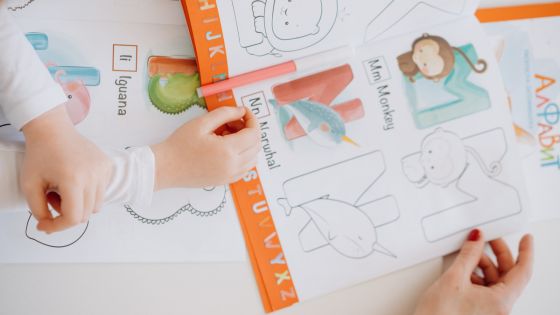
Workbooks enable your children to review the alphabet, and upper and lower case letters, and practice early handwriting skills. Many physical workbooks are often wipeable with a whiteboard pen included, enabling your children to practice their letters multiple times per page.
With worksheets, though they are not wipeable, they are often cheaper, easy to access by printing at home, and can be made more durable when laminated.
Here are some suggested resources:
- “Alphabet Tracing Workbook for Kids“: A workbook full of tracing activities and letter exercises to reinforce letter recognition, the difference between upper and lowercase letters, and writing skills.
- “Alphabet A-Z Learning Bundle”: An affordable digital download for children to learn the English alphabet. It includes a poster, individual flashcards, vocabulary matching, and handwriting practice.
Workbooks and worksheets are effective alongside other resources such as physical activities, books, and songs.

Online Resources
With so many people able to access the internet now, there are 100s of websites and apps that make learning fun and accessible. Here are just a handful to get you started:
- Starfall: A website offering games and interactive activities focused on phonics and the English alphabet.
- ABCmouse: An app designed for young learners, featuring songs, puzzles, and games that teach letters and sounds.
- ABC Tracing and Phonics App: This app incorporates games and lots of visual stimuli to engage young learners and help them practice letter recognition. (Google Play / Apple App Store)
These resources allow your child to learn at their own pace, offering both flexibility and fun.
Community and Classroom Support
Involvement in local or online communities can enhance your children’s overall learning experience. Connecting with others offers unique benefits and can aid your children in understanding the alphabet and letter sounds. Consider:
- Local ESL Classes: Many communities offer English as a Second Language classes where children can learn the alphabet alongside peers. These classes provide structured support and chances to practise speaking and listening.
- Online Communities and Forums: Platforms like Facebook and dedicated language learning forums create spaces where you can share tips and resources or seek advice from experienced parents and teachers. Consider joining theOET’s Facebook community group: Learn English for Kids.
- Library Storytime Sessions: Many local libraries host regular storytimes that focus on letter recognition and phonemic awareness.
Engaging with these resources helps build a supportive environment for your children’s journey in mastering the English alphabet.
Learning the English alphabet is a good starting point when introducing your children to English. Helping them recognise letter forms will lead to improved writing skills and reading once you move on to introduce letter sounds.
Encourage daily practice with these foundational blocks:
- Regular Engagement: Make learning a consistent part of daily routines.
- Creative Activities: Integrate fun exercises like storytelling or songs.
- Explore Resources: Use books, apps, and community classes to diversify learning.
Keep fostering an environment of curiosity and support, adapt activities to suit your children’s learning styles, and help create an enjoyable educational experience from the very start.
Join the FREE Resource Library
Looking for FREE quality printables, templates, and guides to help you teach your kids ESL at home?
Join theOET’s FREE Membership and gain access to 10s of resources designed by a qualified teacher to help your family learn English at home.
New resources are added every month. Save time, money, and stress with pre-made educational printables and guides.
Related Posts
- 28 Of The Best English Apps For Children To Improve Their English Language Skills
- Top 11 Fable Stories for Kids to Build English Language Skills
- 12 Classic Fairy Tales for English Language Learners
- 30 Engaging Fairy Tale Activities for Kids Learning English
- A Guide to Helping Your Children Learn Phonics Sounds

