If your children are learning English, winter can be the perfect time to build new words together. Snow, ice, wind, and cosy days inside all give you real things to talk about in English. With my video, winter weather vocabulary for kids, your children can learn seasonal vocabulary in a calm, friendly way, and you can join in as a family.
In this guide, you walk through all 20 words from the video, see simple example sentences, and get practical activity ideas you can use at home. You do not need to be a teacher or a fluent English speaker. You just need a few minutes, curious children, and a bit of winter to help set the scene.
Discover Fun Winter Words
In the video, I speak slowly and clearly, so young learners and beginners can follow along. I say each word, explain it with a short example sentence, and repeat key words several times. This makes it easier for your children to hear the sounds and copy them.
You can watch the video together, pause when you need, and repeat the words as a family. Many parents find that when they join in too, children feel more relaxed and more willing to try.
The video covers three simple groups of vocabulary:
- Winter basics, like winter, snow, and ice
- Weather conditions, like fog, wind, and snow storm
- Nature features, like pine tree, frozen lake, and mountains
You can use these groups to organise your own practice at home, which helps your children feel that English has a clear structure, not just a list of random words and will help them retain new language through word association.
Essential Winter Weather Vocabulary
This section gathers all the weather words from the video, with the same example sentences your children hear when watching. You can read them together, or use them later to review without the screen.
Core Winter Conditions
Here are the key words for basic winter weather. Say the word first, then read the example aloud. You can encourage your children to repeat after you.
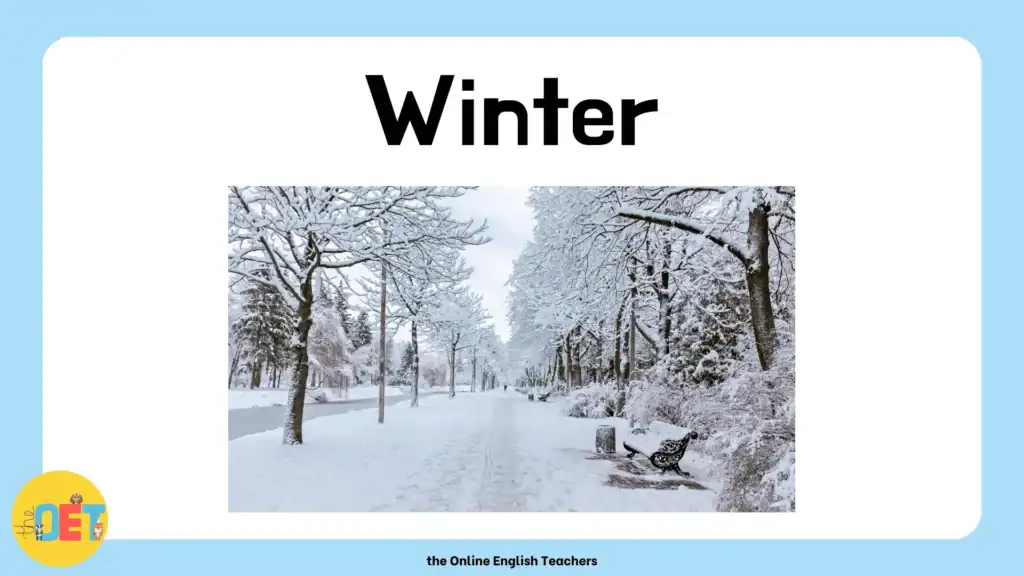
- Winter: It is cold in winter.
- Snow: Snow is white. Snow is wet. Snow is cold.
- Snowfall: The snowfall was heavy last night.
- Ice: The ice is slippery.
- Frost: The leaves are covered in frost.
A simple pattern can help your children remember. You might point out that winter is the season, snow and ice are things you can see and touch, and frost is a thin layer of ice on surfaces. These small links help your children to connect related words together and build their understanding.
Windy and Stormy Words
Now you can move on to the stronger winter weather. These words help your children talk about what they see as well as how the weather might make them feel.
- Wind: There can be lots of wind in winter.
- Snowstorm: There was a big snowstorm yesterday.
- Cloud: There are many white clouds in the sky.
- Fog: The fog is thick in the forest.
- Freezing: It is freezing outside today.
You can hear that some words describe things you can see, like cloud and fog, and some describe how it feels, like freezing or windy (explained in the sentence about wind).
To practise these at home, you can use a short routine:
- Say the word slowly three times, for example: “snowstorm, snowstorm, snowstorm”.
- Read the example sentence aloud, for example: There was a big snowstorm yesterday.
- Ask your children to repeat the word on its own.
- Ask your children to repeat the whole sentence with you.
- Finally, try using the word in a new sentence about your own life, even if it’s simple, such as “There is fog in our street today.”
When I used to teach this way to my students, it could become quite boring just repeating the same word again and again. Your children will soon lose interest without adding in any alterations.
To make it more fun, I changed my voice, e.g. say the word in a whisper, squeak like a mouse, or shout as loudly as possible. My students loved this and would soon repeat words after me so that they could also have fun with their voice.
This kind of step-by-step practice builds confidence and helps the word move from short-term memory to long-term memory.
Winter Nature Vocabulary to Explore
Winter is not only about the weather. It is also about what you see in nature when it is cold: trees, water, mountains, and tiny details like snowflakes and icicles. These words are lovely for children because you can link them with stories, drawings, and play.
Snow and Ice Features
These words focus on snow and the shapes it can make. The format below is easy to follow: word, plus example sentence.
- Snowflake: I like to catch snowflakes in winter.
- Icicles: There are many icicles hanging from the door.
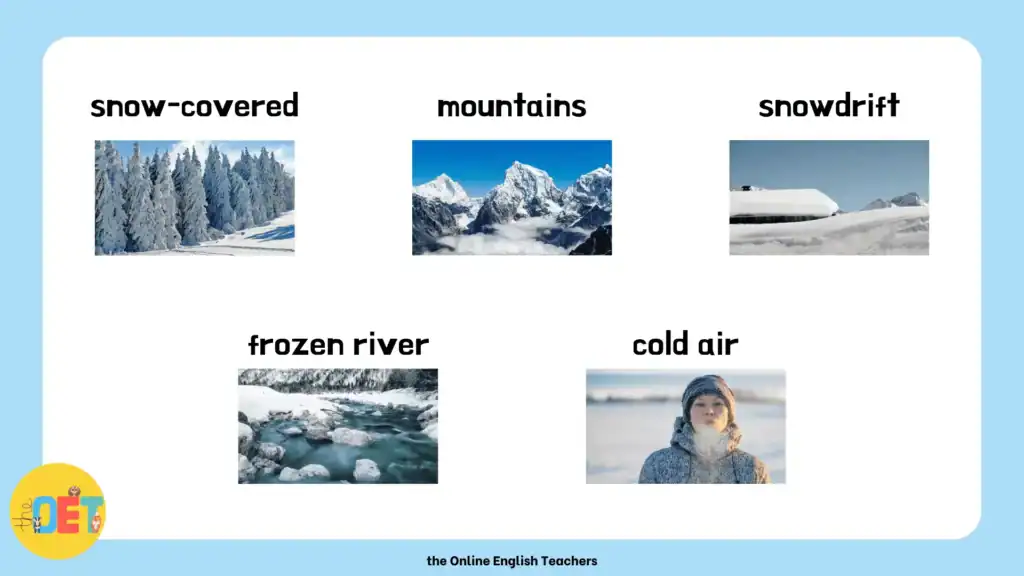
- Snow-covered: The snow-covered forest is beautiful.
- Snow drift: Oh no, there’s a big snow drift outside my house.
You might notice that snowflake is about one tiny piece of snow, and snow drift is about a big pile of snow pushed by the wind. Children often enjoy comparing opposites like small and big, light and heavy, so you can play with that idea in your own language as well as in English.
You could model the difference between snow and snow drift using material such as cotton wool. One small piece of cotton wool could be “snow”, then spread out more wool to make “snow-covered ground”, and finally create a big pile to demonstrate “snow drift”.
You could then use the words this way to make their meanings clearer:
- “One snowflake.”
- “Many snowflakes.”
- “A snow drift.”
- “A snow-covered forest.”
Repeat the pattern two or three times while looking at a picture or out of the window if you are lucky enough to have snow.
Trees, Water, and Landscapes
The last group of nature words helps your children talk about what winter looks like in the wider world.
- Evergreen trees: Evergreen trees keep their leaves in winter.
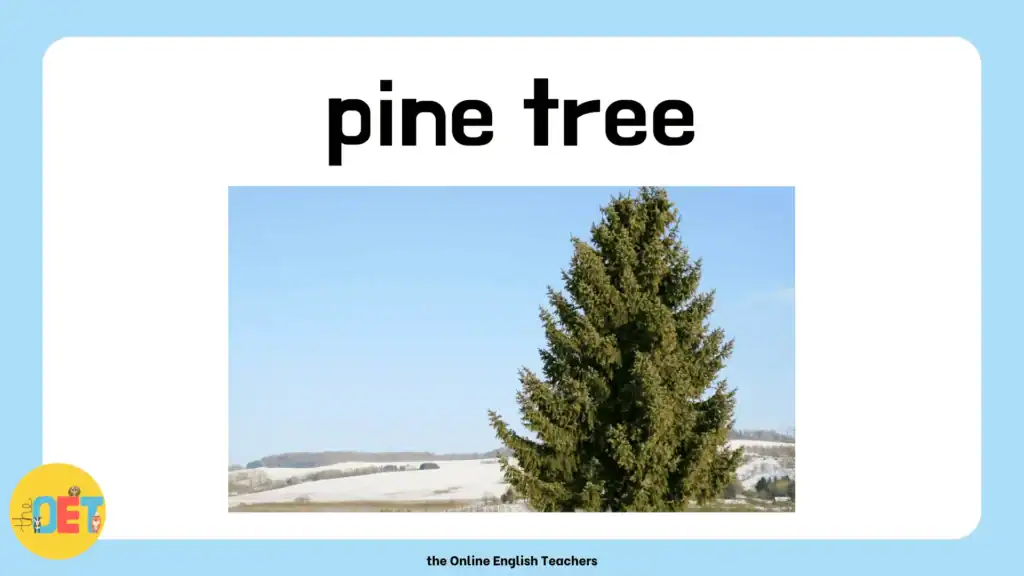
- Pine tree: The squirrels climb the pine trees in winter.
- Frozen lake: I can skate on the thick ice on the frozen lake.
- Mountains: The mountains have snow on the top.
- Frozen river: The fish swim under the frozen river.
- Cold air: The cold air makes my nose turn red.
You can also link mountains with the idea of snow-covered mountains, which appears in the video as a short recap. That image is quite strong in a child’s mind, especially if they have seen picture books or films with snowy mountain scenes.
To use these words with pictures or real views, you can try this quick routine:
- Point to a picture or object, for example a tree or a river in a photo.
- Say the word, for example: “pine tree” or “frozen river”.
- Read or say the example sentence, for example: The fish swim under the frozen river.
- Ask your children to point and say the word by themselves.
- Finish by asking a simple question, like “Can you see trees near our home?” so your children start to link English to their own world.
You could also add actions to different words too to make them more real and meaningful to your children. For example, when teaching “frozen river”, put your hands together and wiggle them as you move forward, motioning a fish swimming up the river.
This can be a great way for children to remember new vocabulary words as it interlinks different senses, e.g. sound, touch, movement, etc, and it’s a lot of fun for them as well.
Practice and Play with Winter Words
You build stronger language when you use the same words in different ways. The video gives you a clear model of pronunciation and sentences, and you can then turn those words into games and family routines.
Next Steps from the Video
At the end of the lesson, I invite children to join a guessing game in the next video: Guess the winter word with me in our next video. This kind of game helps your children listen carefully and remember what each word means. Make sure to take a look at that video here.
If you want more support away from the screen, you can also download Winter flashcards and a Winter vocabulary poster from theOET. These free printables are available in the Free Resource Library for parents and teachers. You can print them, put them on the wall, or use them for simple games at the table.
Home Activities to Extend Learning
Here are some practical ideas you can try at home to go beyond watching and repeating. You can pick one or two activities that fit your children’s age and energy level.
1. Winter window watch
Look out of the window together and talk about what you see.
- On a cloudy day, say: “Cloud. There are many white clouds in the sky.”
- On a cold day, open the window for a moment and say: “Cold air. The cold air makes my nose turn red.”
- If you see frost on cars or grass, say: “Frost. The cars are covered in frost.”
You can repeat this quick routine each morning during winter to keep the words fresh.
2. Draw and label a winter picture
Give your children paper and crayons and ask them to draw a winter scene. It could include:
- Snow
- A snowflake
- A snow-covered house
- Evergreen trees or a pine tree
- A frozen lake or frozen river
- Mountains with snow on top
When the drawing is finished, write the English words next to each part. Say them together, using the example sentences, for example: The mountains have snow on the top.
Your older or intermediate-level children could then create a short story based on their drawing and the vocabulary words they’ve used.
3. Vocabulary action game
Turn the words into simple actions:
- Snow: Wiggle fingers down like falling snow.
- Wind: Move arms to one side as if the wind is blowing.
- Freezing: Hug yourself and shiver.
- Snowstorm: Move arms in big circles and make a whooshing sound.
- Fog: Cover your eyes with your hands.
Say a word and ask your children to do the action. Then swap roles so your children say the word for you to act. This keeps energy high and helps with memory.
4. Winter word treasure hunt (with pictures)
Print or draw small pictures for each word from the video. Hide them around the room.
When your children find a picture, they bring it to you and say the word, for example: “Icicles.” Then you say the sentence together: There are many icicles hanging from the door.
You can keep the pictures in a small box and use them again on another day.
5. Story time with winter words
Make a very simple story using as many words as you can. For example:
“In winter, it is cold. There is snow and ice. The mountains have snow on the top. Evergreen trees keep their leaves in winter. The cold air makes my nose turn red.”
Read the story slowly and point to pictures or act things out as you go. Then ask your children to help you change details, such as “big snowstorm” or “frozen river” instead of “frozen lake”.
You could even turn this into a game but choosing one word each. The first person makes a sentence, then the next person must use another word and add the next sentence to the story, and so on.
Another idea I used to do with my students was to use as many words as possible in a paragraph. Students were given a timer to think about their sentences, and then, when the timer finished, they had to share their idea and whoever used the most words correctly from a list of words, was the winner and could choose the next game.
6. Matching game with flashcards
If you download my set of Winter flashcards from the Free Resource Library, you can play a matching game:
- Place picture cards on the table.
- Keep word cards in your hand.
- Read a word card aloud, for example “snow drift”.
- Ask your child to find the matching picture.
This activity helps children connect the spoken word, the written word, and the image.
Quick Review List of All Winter Words
To help you see everything in one place, here is a recap of the vocabulary from the video, grouped by theme.
Weather words:
- Winter
- Snow
- Snowfall
- Ice
- Frost
- Wind
- Snowstorm
- Cloud
- Fog
- Freezing
Nature and landscape words:
- Snowflake
- Icicles
- Snow-covered
- Snow drift
- Evergreen trees
- Pine tree
- Frozen lake
- Mountains (including snow-covered mountains)
- Frozen river
- Cold air
You can keep this list on your fridge or in a notebook and tick off words as your children become more confident with them.
When you use a clear, focused lesson like this winter weather vocabulary video, then add a few simple family activities, you give your children a calm and strong start in English. You are not only teaching words like snowflake or frozen lake, you are also teaching your children that learning can feel safe, fun, and shared.
You can go back to the video as often as you like, try the guessing game in the next lesson, and explore more content from the Online English Teachers for topics beyond winter. If you enjoy seasonal themes, you can even build small routines around them, such as “winter words week” or a mini winter word wall at home.
Thank you for taking the time to support your children’s English vocabulary. With steady practice, a friendly video, and a few playful activities, your family can turn learning English into a fun bonding experience for everyone.
If you find this helpful, you might like to look for more winter weather and English for kids resources from theOET and keep your children’s language journey growing step by step.