If you want a fun way to help your children learn English at home, incorporating word games does just that! Instead of worksheets or long word lists, your children can learn by guessing pictures, saying new words out loud, and celebrating every correct answer with you.
In this post, your children can participate in the winter weather vocabulary game for kids and will see every winter word from the video, understand how the game works, and get simple ideas to keep practising after you watch. It is perfect for families learning ESL together, as well as preschool and early years children who love interactive games.
Dive into the Guessing Game Fun
The video begins with a warm greeting to set the tone of the video. From the very first moment, your children are invited to join in, listen, and repeat key winter words.
The video is linked to previous Winter Vocabulary lessons, so you can use the two together to strengthen vocabulary knowledge. You can watch the lesson-style Winter Vocabulary for Kids video first, then play this guessing game to review the words, and finally practice using each word in sentences with the Winter reading practice video.
Game Rules and Excitement
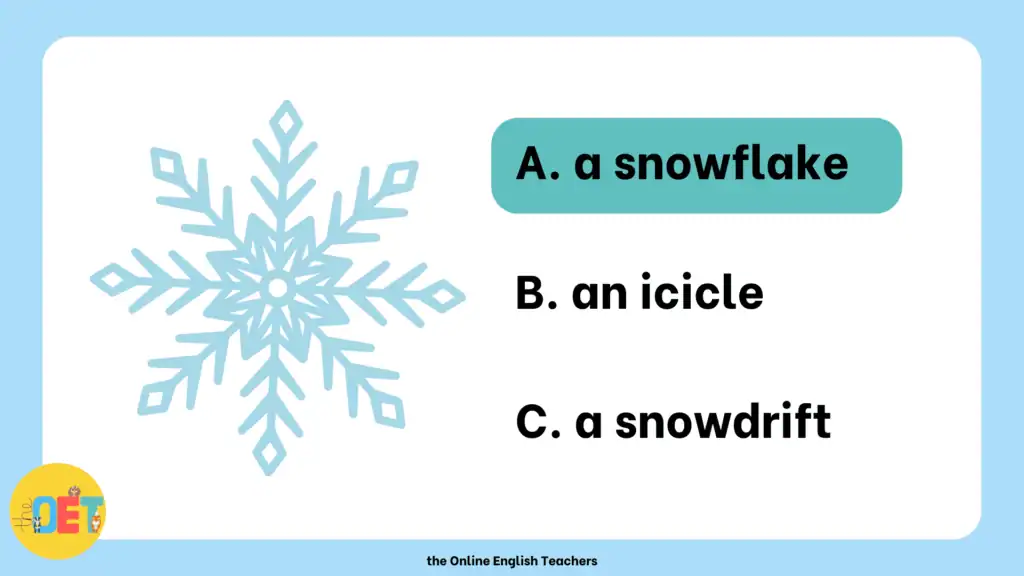
The game is wonderfully simple, which makes it easy for young learners and beginner English speakers. Your children see a winter picture, then hear three choices. I repeat the question to build suspense:
- “What is it? What is it? Is it a snowflake, an icicle, or a snow drift?”
- Then I reveal the answer with a clear sentence: “It is a snowflake.”
This pattern repeats for each word. Children listen, think, and guess aloud, then hear the correct word and full sentence. The rhythm helps them remember both vocabulary and sentence structure.
Perfect for ESL families or preschoolers practising British English at home, without any pressure.
Every Winter Word Revealed from the Game
The video covers 20 key words about winter weather and nature. Hearing them in a game helps your children remember them more easily than if they only read them on a page.
Winter Weather Words
These words focus on weather, conditions, and what you might see in the air during winter. They are ideal if you want to build strong winter weather vocabulary.
Here are the weather words used in the game:
- Snowflake: Options: snowflake, icicle, snow drift.
- Cold air: Options: snow, winter, cold air.
- Fog: Options: snow, fog, cloud.
- Freezing: Options: cold air, freezing, snow.
- Snowfall: Options: snowfall, frozen river, snowflake.
- Snow drift: Options: mountains, snow drift, snowfall.
- Cloud: Options: cloud, snowflake, fog.
- Snowstorm: Options: snowstorm, snow drift, snowflake.
- Wind: Options: fog, wind, cloud.
- Snow: Options: icicles, snow, mountains.
These repeated sentences, “It is…” and “They are…”, help your children build grammar at the same time as vocabulary. They are not just learning words, they are learning how to use the words in real sentences.
Winter Nature Words
The game also explores winter nature vocabulary, such as trees, ice, and landscapes. These words help your children describe what they see outside or in storybooks.
Here are the nature words from the game, with the style of choices your children hear:
- Evergreen trees: Options: winter, evergreen trees, fog.
- Mountains: Options: mountains, snow drift, snow covered.
- Pine tree: Options: frozen lake, pine tree, mountain.
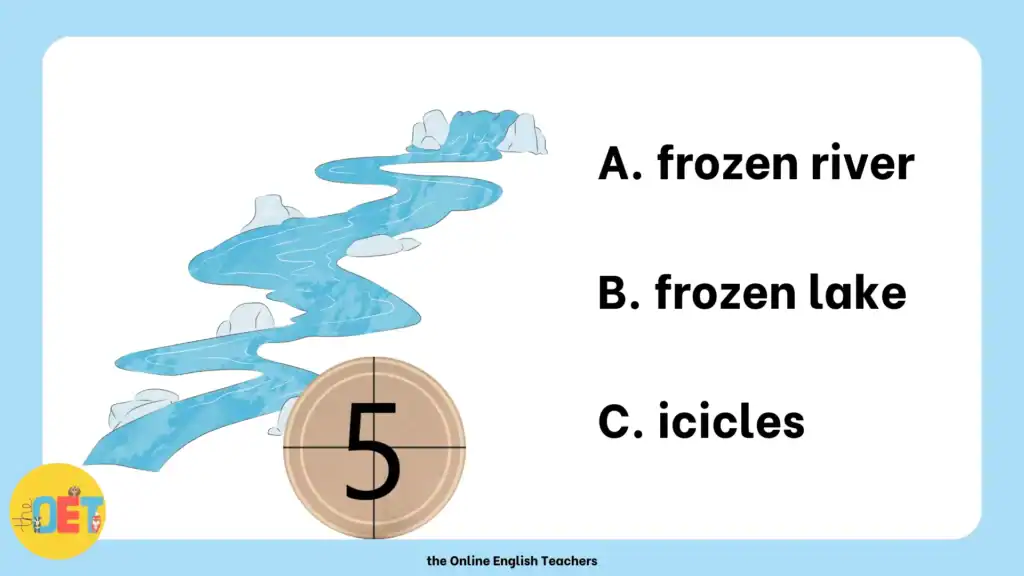
- Frozen river: Options: frozen river, frozen lake, icicles.
- Icicles: Options: icicles, frozen lake, winter.
- Winter: Options: snow, winter, frozen lake.
- Frozen lake: Options: cloud, snow, frozen lake.
- Frost: Options: frost, winter, cold air.
- Snow covered trees: Options: mountains, snow covered, frozen river.
- Ice: Options: cold air, ice, snow.
Together, these 20 words give your children a rich set of expressions to talk about winter weather and nature in English. When you watch the video a second or third time, you will notice how quickly they start to shout out the answers with confidence.
Play the Game at Home and Boost Learning
You can use this winter weather vocabulary game in lots of different ways, depending on your children’s ages and English level.
Step-by-Step Tips to Recreate the Game at Home
Here is a simple way to turn the video into an active family learning session:
- Play the video and pause at each “What is it?” so your children can guess before they hear the answer.
- Say the options aloud together, for example, “Is it snow, fog, or a cloud?” to practise pronunciation.
- After I give the answer, repeat the full sentence as a family, such as “It is a snowflake.”
- Watch the video again on another day and see how many words your children remember without help.
- Write some of the new words on paper and let your children point to the right one when they hear it in the video.
If you want extra support, you can print vocabulary materials from the free resource library.
Why This Winter Weather Vocabulary Game Works So Well for Kids
Children learn languages best when they feel relaxed, playful, and successful. This video is built around that idea and offers many benefits:
- It covers 20 winter vocabulary words, so children get a strong group of related words.
- It supports English as a second language learners, with slow, clear speech and repetition.
- It works for mixed ages, from preschoolers to early primary, because the format is visual and simple.
- It helps with listening skills, as children focus on hearing the three options and the final answer.
- It encourages speaking, since your children can repeat each word and full sentence.
If you want to share ideas with other parents and carers who are also teaching English at home, you can join the community Facebook group and see how they use the same videos.
5 Simple Activities to Extend Winter Vocabulary Learning
Once your children enjoy the game, you do not have to stop there. You can keep using the same winter words in everyday play, which is where real learning happens.
Here are five easy activities you can try after watching the video.
1. Winter picture hunt around your home
Look through picture books, old magazines, or photos on your phone and search for anything that matches the words from the game. When your children spot snow, ice, mountains, or trees, pause and ask, “What is it?” in the same way as the video.
Encourage them to answer in a full sentence, such as, “It is a cloud,” or “They are evergreen trees.” This links the game language to real-life images.
2. Draw and label a winter scene
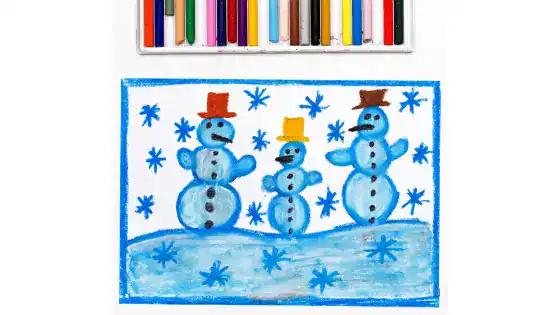
Give your children paper and crayons and ask them to draw a winter picture with as many of the words as possible. They might add snowflakes, a snow drift, a frozen lake, and some snow covered trees.
Help them write short labels next to each item. For example, snowstorm, fog, icicles, or pine tree. This supports spelling, reading, and speaking, all in one simple activity.
3. Act out the weather
Turn your living room into a mini weather studio. Call out a word from the game, such as wind, snowstorm, or freezing, and let your children act it out with movement and sound.
You can take turns giving a short weather report, saying things like, “It is winter. It is very cold. There is a snowstorm.” This gives your children a chance to use the words in simple sentences that feel real and fun.
4. Make your own guessing cards
Together with your children, create small cards with pictures or simple drawings of each winter word. On the back, write the three choices, just like the video, for example, snowflake, icicle, snow drift.
Take turns being the “teacher”. One person shows the picture, asks, “What is it?”, reads the options, then the others guess. This mirrors the winter weather vocabulary game and helps children take ownership of the words.
5. Tell a winter story as a family
Sit together and build a short, shared story using as many of the 20 words as possible. You might start with, “It is winter. It is freezing.” Then your children can add ideas such as, “There is a snowstorm,” or “We walk past evergreen trees and a frozen river.”
You do not need perfect grammar. The aim is to keep the winter vocabulary alive in your daily talk, so your children hear and use the same words many times in different ways.

Next Steps for More Winter Fun
Connect and Keep Learning
At the end of the video, I say, “Yay. Well done, friends. You played that game really well. Did you guess all of the pictures correctly? You’re amazing. Thanks so much for playing this winter guessing game with me. I’ll see you real soon for our next video. Bye, friends.”
You can echo that same encouragement at home. When your children feel proud of their answers, they are more likely to keep trying new English words. Keep the winter weather vocabulary game as a regular part of your routine, and you will see their confidence grow week by week.
If this kind of gentle, playful learning fits your family, you can keep exploring more videos and activities that focus on English for kids in everyday life.
Must-Visit Resources for ESL Families
To support your children even further, you might like to explore:
- The free resource library for printable activities and vocabulary cards you can use alongside the video.
- The community Facebook group to connect with other families learning ESL together and swap ideas.
- The Winter Vocabulary for Kids lesson video and the Winter Reading Sentences video which both help to introduce each word and use them in sentences.