
If your children have just finished Phase 2 phonics, you’ll know how big that feels. Yay for all the blending, sounding out, and early reading wins. Now you’re moving into phase 3 phonics sentences, where children start meeting new sounds and using them in short, readable lines that build confidence fast.
This reading practice focuses on the Phase 3 sounds j, v, w, x, y, z, using simple sentences that your children can read along with, then try independently. If your children are still getting used to these sounds, you can also support them with the Phase 2 Phonics Playlist, which helps with sound learning, blending, and early sentence reading.
Jumping into Phase 3 Phonics After Phase 2
Phase 3 is where reading can start to feel more like real reading. Your children move from single sounds and simple words into sentences that have a clear meaning. That matters, especially for families learning ESL at home, because understanding the sentence helps children comprehend each individual word.
In this lesson, your children practise reading short sentences again and again, using the same small set of words (box, fox, jam, jet, van, wet, win, big). This repetition is key as it’s how children build fluency. The words become familiar, and then your children can focus on reading smoothly.
The video also supports children as they read. Words are highlighted as each word is read, and there are simple pictures to help children understand what the sentence means. That extra support is helpful when English is new at home, because children don’t have to guess the meaning from the text alone.
This kind of practice works well if you want:
- A short phonics session you can use at home
- Clear, steady reading practice for young children
- Extra support for ESL learners who need repetition and simple language
- Confidence with sounds like j, v, w, x, y, and z
Join the FREE Resource Library
Looking for FREE quality printables, templates, and guides to help you teach your kids ESL at home?
Join theOET’s FREE Membership and gain access to 10s of resources designed by a qualified teacher to help your family learn English at home.
New resources are added every month. Save time, money, and stress with pre-made educational printables and guides.
Mastering the Six Phase 3 Sounds
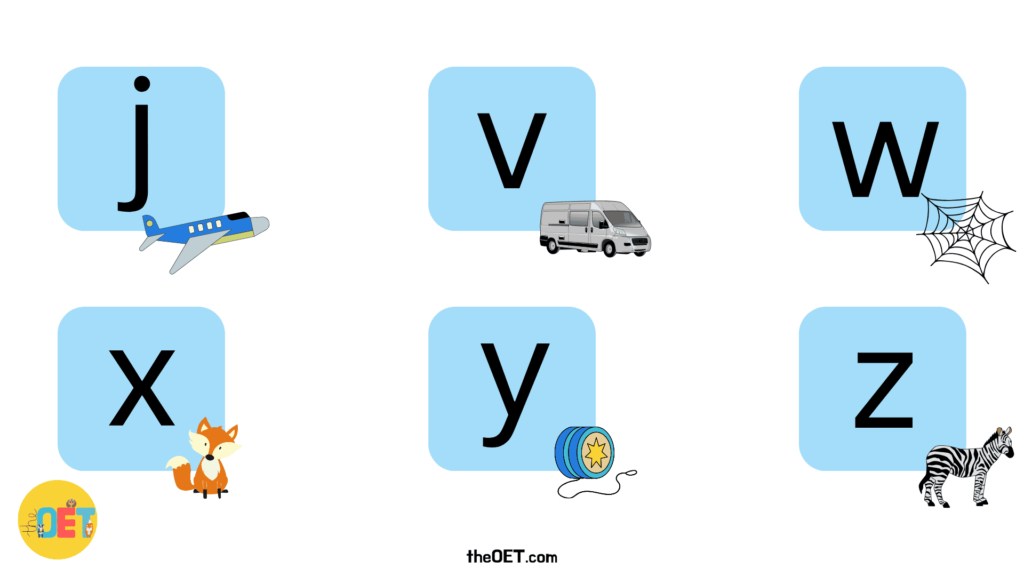
You’re practising six key sounds here: j, v, w, x, y, z. Some of them show up clearly in the sentences, and some are part of the wider Phase 3 set for early reading and spelling.
Sounds your children see in the sentences
The sentences use words that help your children connect sounds to meaning. These are the standout examples used in the reading practice:
- J: jam, jet
- V: van
- W: wet, win
- X: box, fox (this supports the x sound at the end of words)
- Z: included as part of the lesson sound focus, even if it appears less in the sentence set
If your children need a slower start with the letter sounds, it helps to watch the sound introduction video first (the one that teaches the sounds before sentence reading). Then come back to this sentence practice when they’re ready to blend.
Why these sounds matter for reading
When your children can spot a sound in a word, they can blend it more quickly. Then, when they can read a word quickly, they can focus on the whole sentence.
That’s why you hear so much encouragement in this lesson. The goal isn’t for children to be able to read perfectly straight away, it’s steady progress. Each sentence is another chance to practise and feel successful.
The 3-Step Reading Practice Method (How to Use the Video)
The lesson follows a simple routine that works well for early readers. Each sentence is read three times, so your children get support, then independence.
- Normal speed: your children listen first, so they hear how the sentence should sound.
- Slowly: your children read with the teacher, word by word.
- Your turn: your children read the sentence on their own.
This routine gives you a clear pattern to follow at home. It also makes the practice feel safe. Your children hear it, try it with help, then try it alone. And the little celebrations along the way, like “Well done”, “Fantastic effort”, and “Yay”, keep the mood light and positive.
Tip: Pause the video after the “your turn” prompt. Give your children a few extra seconds to read, then press play to carry on.
Sentence Reading Practice: What Your Children Will Read
The sentences start very small, then grow. That’s on purpose. Children need easy wins early on, then they can handle longer lines without feeling stuck.
Below, you’ll see the same sentence groups used in the lesson, so you can practise away from the screen too (at the breakfast table, in the car, or before bed).
Simple starter sentences (build confidence quickly)
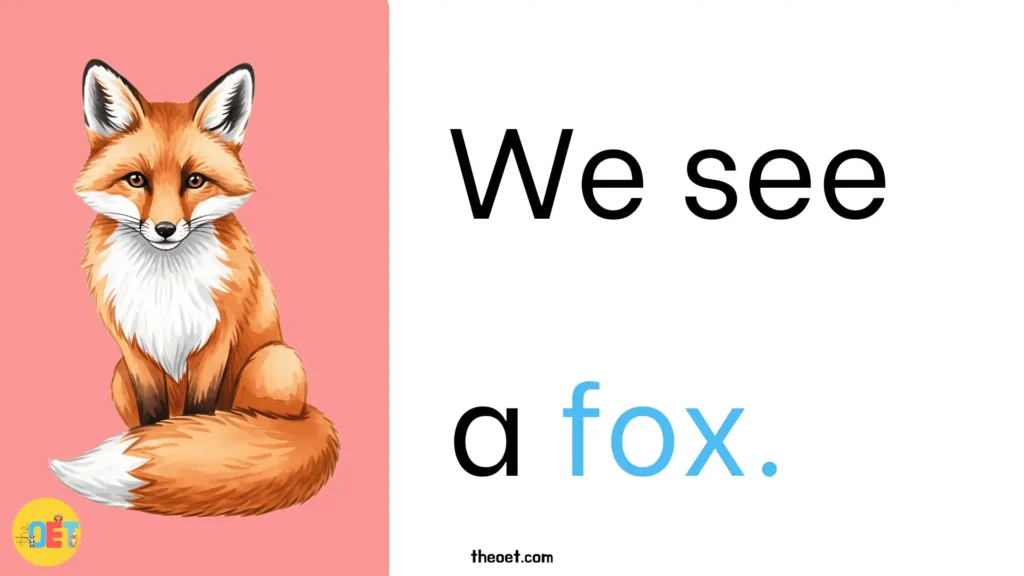
The first sentences are short and clear. They use “I see” and “We see”, which is great for ESL families because the pattern repeats, and your children don’t have to learn a new sentence shape each time.
Try reading these exactly as they appear:
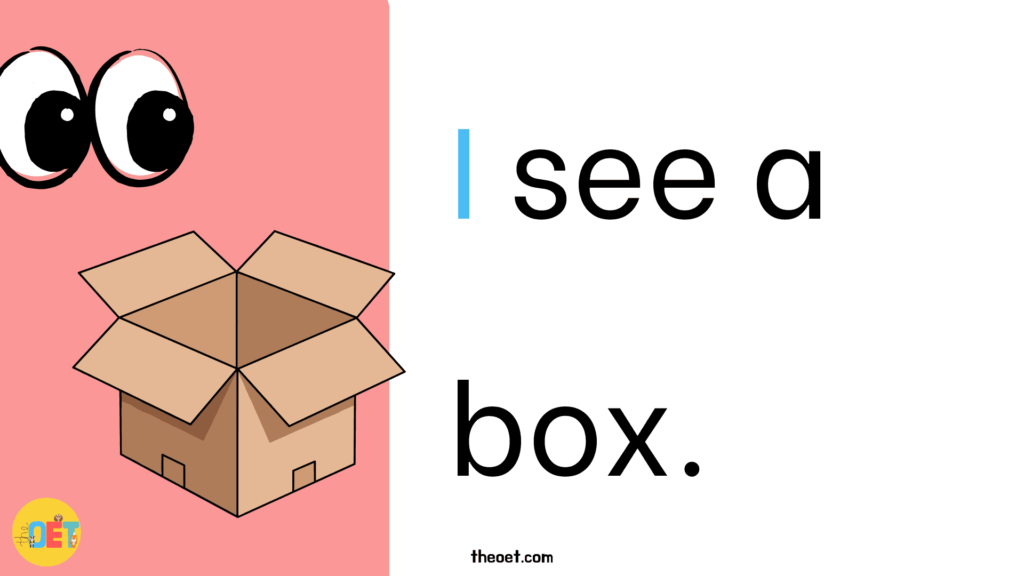
- I see a box.
- We see a fox.
- I see jam.
- We see a jet.
- I see a van.
If your children struggle with any word, you can break it into sounds, then blend it back together. Keep it calm and quick. Then reread the whole sentence, so it still feels like reading, not a test.
A simple way to support at home is to point under each word as your children read. The video highlights words for this reason, it helps children keep their place and stops them from guessing.
Adding describing words (big, wet)
Once your children can read a basic sentence, the lesson adds describing words. This is a big step because it teaches children to hold more words in their head and keep the meaning clear.
These sentences practise that skill:
- The box is big.
- The fox is wet.
- The van is big.
- The jet is big.
“Wet” is especially useful because it gives extra practice for the w sound. You can also talk about meaning for a moment. What does wet look like, how would a wet fox feel, where might it have been? A quick chat like that helps children connect reading to real language.

Action sentences (win, go)
Next, your children read sentences with action words. This keeps children engaged because something is happening in the sentence.
These are the action sentences from the lesson:
- We win a box.
- We go to the van.
- We go in the van.
If English is new in your home, “go to” and “go in” are useful phrases to practise in real life too. You can say them while you play with toy cars, or when you’re getting ready to leave the house (even if you’re only “going to the kitchen”).

Longer sentences (strong blending practice)
Toward the end, the sentences get longer. This is where your children practise reading across a full line, keeping the words in order, and still understanding the meaning.
These are the longer sentences used:
- The fox is in the box.
- The box is on the van.
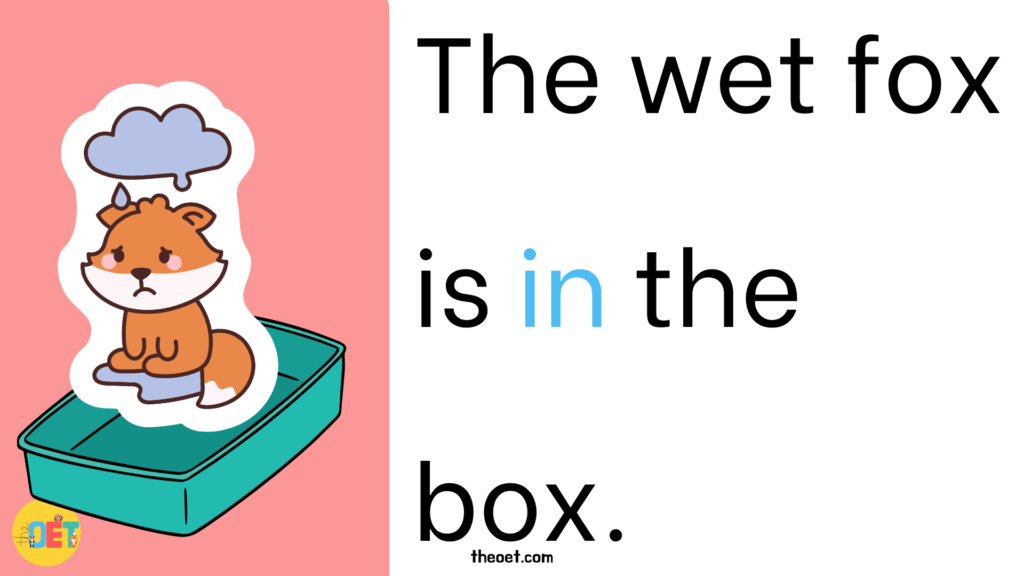
- The wet fox is in the box.
- Yes, we go in the van.
- We win the big box.
- The big box is on the van.
That final sentence is a great “last try” line because it includes several familiar words. Your children can succeed by recognising what they already know.
If your children read one sentence well, keep going while the confidence is high. If they get tired, stop and return later. Short sessions work better than long ones for young children.
A Simple Home Routine That Fits Into Busy Days
You don’t need a full lesson plan. What helps most is a small routine you can repeat.
Here’s a gentle structure you can use with this video:
- Watch once and let your children listen and join in when they want.
- Watch again and encourage your children to read during the “your turn” parts.
- Choose 3 sentences to practise off-screen later the same day.
- Repeat the next day, but swap in 3 different sentences.
Keep your tone warm. The video uses lots of praise for a reason. When children feel safe, they try harder.
Extra Activities After Watching (No Printing Needed)
After the video, your children can practise the same sounds without feeling like they’re doing “more reading”. These quick activities work well for families learning ESL at home because they use simple language and everyday items.
1) Sound hunt around the house
Choose one sound, then look for objects that match a keyword from the lesson.
- J: jam (in the kitchen, on a shopping list, on a label)
- V: van (in a toy box, in a book, on the street)
- W: wet (bath time, washing hands, raincoat)
Say the word, then ask your children to repeat it. If they can, ask them to say the first sound clearly.

2) Make your own “I see…” sentences
This keeps the sentence pattern but swaps in your real world.
You can say: “I see a cup.” “We see a bag.” “I see a hat.”
Even if the objects don’t include the focus sounds, you’re building sentence confidence, which supports reading.
3) Toy play retell (box, fox, van)
If your children like role play, this is an easy one.
Use toys or simple items (a small box, a toy animal, a toy car) and act out:
- The fox is in the box.
- The box is on the van.
- We go in the van.
Then ask your children to say the sentence back to you. Speaking and reading support each other, especially for ESL learners.
4) Quick “read it, point it, say it” practice
Write 3 words from the lesson on small bits of paper: box, fox, van, jam, jet, wet, win, big.
Then play this mini game:
- Your children read the word.
- They point to a matching picture, object, or toy (or you quickly draw one).
- They say a full sentence using the word.
It’s simple, but it helps children move from single words to meaning.
If you’d like more support at home, you can use the phonics teaching ideas on the Online English Teachers blog and the Free Resource Library with printables for families.
Join the FREE Resource Library
Looking for FREE quality printables, templates, and guides to help you teach your kids ESL at home?
Join theOET’s FREE Membership and gain access to 10s of resources designed by a qualified teacher to help your family learn English at home.
New resources are added every month. Save time, money, and stress with pre-made educational printables and guides.
Keep the Phonics Fun Going
Your children have already done something important by reading full sentences out loud. That’s not small. It takes focus, sound knowledge, and confidence, especially when you’re learning English at home.
Come back to these phase 3 phonics sentences often, even if it’s just five minutes at a time. The more familiar the words become, the more your children can read without stopping. Then your children can move onto the next video in the sequence and continue developing their early reading skills.
Related Posts
- Fun Phase 2 Phonics Sentences for Beginners
- A Guide to Helping Your Children Learn Phonics Sounds
- Phase 2 Phonics Sounds for Kids: Supporting Early Reading Skills
- Winter Reading Practice for Kids: Simple Sentences About Winter Weather and Nature
- What Age Should a Child Read Fluently?
Hi, I’m Catherine
I help children learn English at home through stories and play with affordable and accessible resources. With over 10 years of experience educating children and over 5000 online ESL classes, I’ve learnt what methods work to keep children engaged and motivated to learn.
I look forward to helping your children develop their English skills!


